At the S.P. Korolev Samara National Research University, it was proposed to "blow away" space debris with the help of a special device. This approach will protect space stations and satellites from accidents in a collision. This was reported by the press service of the university.
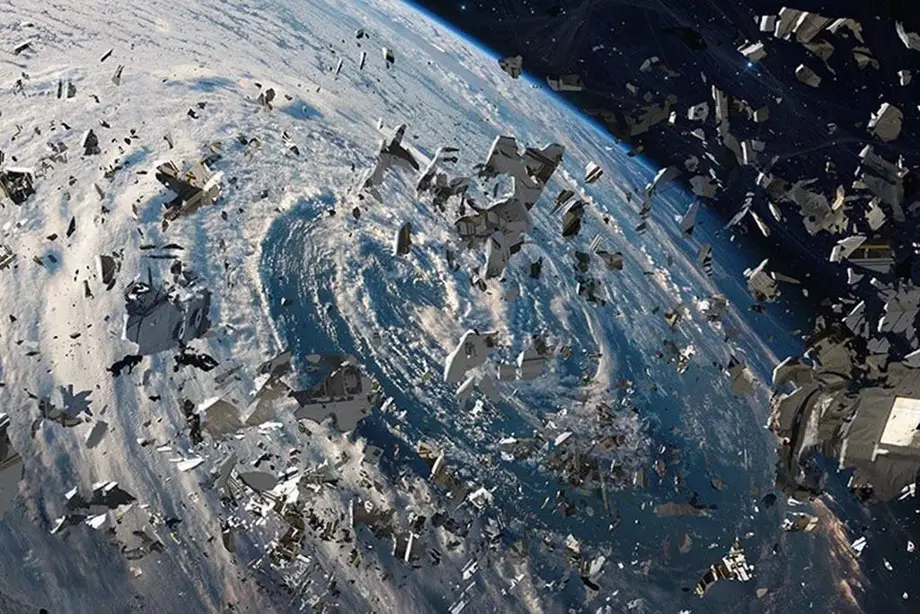
Experts from Samara University said that contact with any object in space can, in some cases, lead to the complete destruction of even such large objects as the International Space Station (ISS). Today, the station is protected by adjusting its orbit using its own engines or the engines of ships docked to it. However, this requires high fuel costs.
The new method of protecting the ISS from space debris involves placing a special space cleaning apparatus on the object.
We calculated the maneuver of the spacecraft: it undocked from the ISS, flew to the plane of the space debris orbit, approached it at a distance of 10 meters, directed a stream of ions created by an electric propulsion engine at it, the ions crashed into the surface of the space debris and thereby created a small braking force.
The scientist emphasized that their development will reduce fuel costs by 10 times.
A classic ISS orbit correction maneuver requires about 2000 kg of fuel. Our spacecraft will spend just over 200 kg.
The space debris cleaning apparatus can be used repeatedly. After eliminating the problem, it will return to the ISS for refueling and maintenance before the next flight.
Earlierwww1.ru reported that "Progress"is going according to plan, and the sending of Crew-8 with cosmonaut Grebenkin to Earth has been postponed.
Read materials on the topic:
The Russian orbital station may receive manipulator arms
Non-flying weather at NASA: Russian cosmonaut Alexander Grebenkin remained on the ISS
Now on home

Start of deliveries scheduled for 2027

Over 51,000 new motorcycles were sold in Russia in 2025

The car will take at least a year to assemble

The application's audience has reached 20 million users
The model will be included in the list of cars for taxis, price - from 2.25 million rubles

All parking lots of the "Administrator of the Moscow Parking Space" are connected to the service

The cars will be supplied to the Moscow Transport Service Directorate
Deliveries to India may begin in 2028
The technology provides automated search for all types of defects in power units
The plane flew 500 km, accelerating to 425 km/h

The plant stated that the information about the termination of purchases for models 6 and 8 is not true
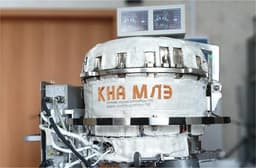
Scientists are using the "Ekran-M" installation