The Indian Ministry of Defence is preparing to adopt an advanced version of the Pralay ballistic missile (created by employees of the Defence Research and Development Organisation) with a range of 400 km, as well as the long-range Nirbhay cruise missile, capable of hitting targets at a distance of up to 1000 km, Eurasian Times reported.
The Defence Acquisition Council has approved the deal for these missile systems.
Our missile programme is progressing at the desired pace, under which DRDO is conducting research and development to increase the range, accuracy and lethality of both ballistic and cruise missiles.
The General also said that engineers are developing hypersonic missile technologies, which demonstrates India's desire to become a leader in this field.
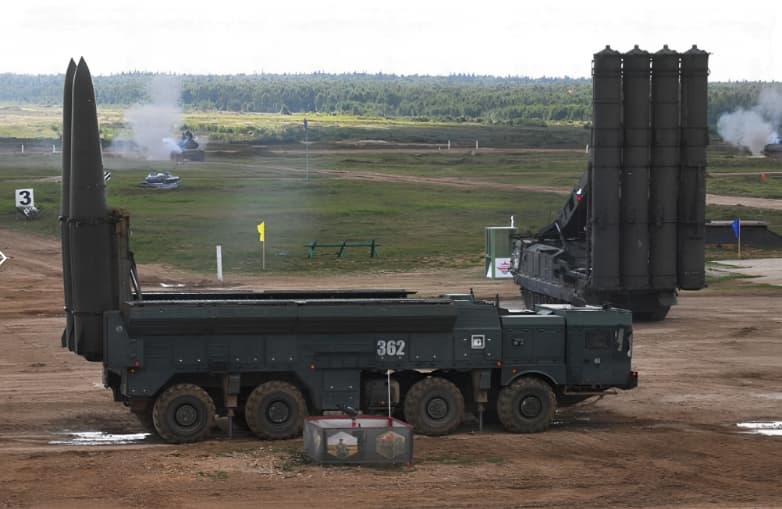
The Pralay missile is an analogue of the Russian Iskander-M quasi-ballistic missile, which has gained a formidable reputation.
According to him, the Iskander-M and Pralay are impressive in their accuracy, deviating from the target by only 10 m. This is due to the fact that the missiles have modern guidance systems using digital mapping.
Read more on the topic:
Takes no prisoners: Iskander-M continues to instill fear in the enemy
Iskander-M Destroys M270 MLRS MLRS: Epic Footage of a Devastating Strike
Return fire from all MLRS: Russian and Belarusian artillerymen struck at HIMARS and M270 MLRS
Now on home

Start of deliveries scheduled for 2027

Over 51,000 new motorcycles were sold in Russia in 2025

The car will take at least a year to assemble

The application's audience has reached 20 million users

The model will be included in the list of cars for taxis, price - from 2.25 million rubles

All parking lots of the "Administrator of the Moscow Parking Space" are connected to the service

The cars will be supplied to the Moscow Transport Service Directorate

Deliveries to India may begin in 2028

The technology provides automated search for all types of defects in power units

The plane flew 500 km, accelerating to 425 km/h

The plant stated that the information about the termination of purchases for models 6 and 8 is not true

Scientists are using the "Ekran-M" installation