Translated with AI from the Russian original.
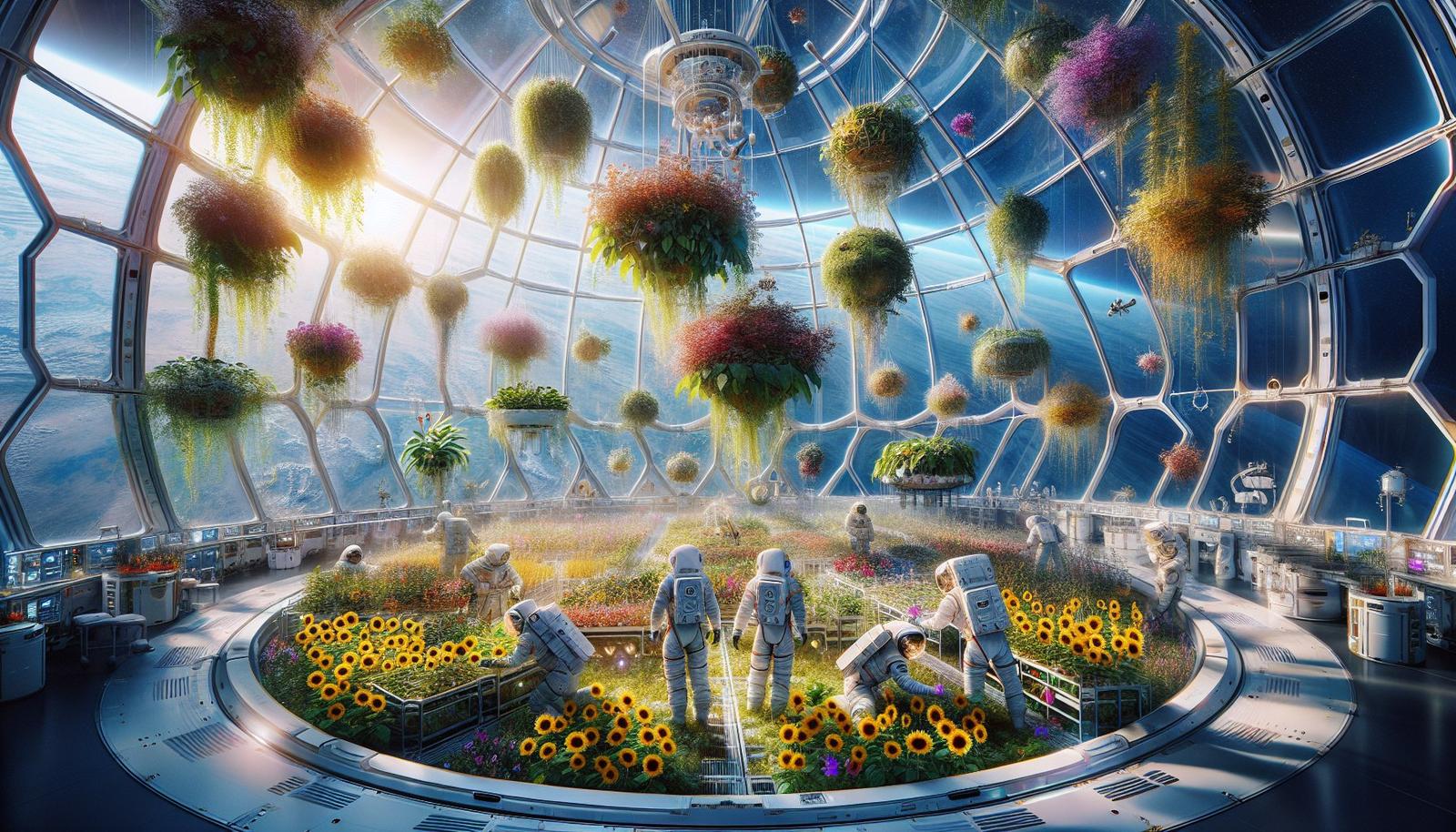
The greenhouse is designed to provide cosmonauts with fresh herbs and vegetables on the ISS and ROS, lunar bases, flights to Mars, and other space missions. Supplies from Earth cannot fully provide cosmonauts with fresh products now, and with long space flights, the need for them to maintain the health of cosmonauts will increase.
As Anastasia Gross, a leading specialist in the quality department of the Faculty of Space Research at Moscow State University, noted in an interview with "Scientific Russia," unique test benches have already been created in Russia that simulate space loads, and a centrifuge where plants go through stages such as the launch of a spacecraft, vibrations, and overload.
This is the only greenhouse of its kind in the world where the maximum number of parameters are simultaneously studied for their impact on plants: radiation, overload, electromagnetic field, gravity, and others. Instead of soil, the containers contain tapioca plates, but this is only one of the options for space soil, and other options are being considered.
The greenhouse allows you to grow any plants up to 30 cm high. A lot fits this criterion: peas, dwarf varieties of tomatoes and peppers, microgreens, etc. The greenhouse chamber is divided into two parts, into which special cassettes with seeds are inserted. All plants grown in the new greenhouse will be edible. We want to make sure that all plants are diverse, including visually. Diversity is important for maintaining the healthy psychological state of cosmonauts. We hope that thanks to such a “grass near the house” they will feel closer to Earth.
At the same time, cosmonauts will be minimally involved in gardening and agricultural experiments. Data on the performance of the greenhouse and scientific experiments will be transmitted to Earth via telemetry in real time.
Now scientists face two major problems for the implementation of the space greenhouse project. The first is that space weather is very changeable, the trajectory of the space station runs differently, so it is not possible to accurately repeat the future conditions for the greenhouse to work "live" on Earth. The second is that it is quite difficult to collect and correctly interpret all the data obtained from different plant cultivators in the experimental greenhouse. New data visualization programs are needed.
Read materials on the topic:
A new installation for testing the quality of composites in aviation and space has been developed in Russia
The Russian "Fregat" is ready to launch a new complex for monitoring space weather "Ionozond" into orbit
Russian satellites will provide Internet in long-distance trains of Russian Railways in 2026
Never miss our newsAdd this site to your preferred sources to see us more oftenAdd on Google

















