Translated with AI from the Russian original.
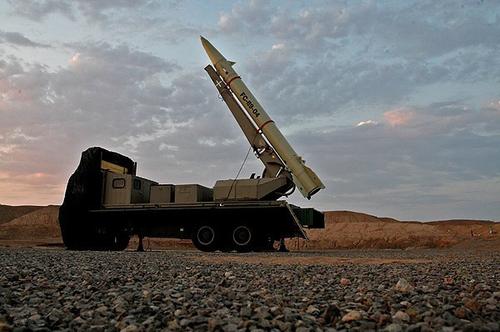
European officials warn that Iran is ready to supply Russia with ballistic missiles of its own design. This indicates the inevitable transfer of such weapons, given the military-technical cooperation between the two countries, writes Bulgarian Military.
Anonymous sources said that Iran has already provided hundreds of drones. However, the possible transfer of ballistic missiles is expected to strengthen the Russian army.
One of the interlocutors noted that deliveries could begin in the coming days.
As Bulgarian Military writes, Iran, which is under Western sanctions, has developed a wide range of ballistic missiles in recent years. These include the short-range solid-propellant missile (300-500 km)Fateh-110. Its upgraded version Zolfaghar hits at 700 km.
Iran also created its ownShahab-3 missile based on the North KoreanNodong missile. The liquid-propellant missile has a range of up to 2000 km. It is accurate and forms the basis of the Islamic Republic's missile forces.
Sejjil is a two-stage solid-propellant missile with a flight range of about 2000-2500 km. As one of Iran's most advanced ballistic missiles, it provides a faster launch compared to liquid-propellant counterparts.
In addition, Iran hasQiam-1 missiles. It hits a distance of up to 800 km and is an upgraded version ofShahab-2.
Read more on the topic:
Reuters: Russian military are being trained in Iran to use Fath-360 ballistic missiles
Army Recognition: Iran has deployed Russian Murmansk-BN electronic warfare systems against Israeli Air Force F-35 aircraft
Russia and Iran have launched joint naval patrols
Never miss our newsAdd this site to your preferred sources to see us more oftenAdd on Google

















