The Russian army has begun using plywood Geran drones to target missiles, Reuters reported on Wednesday, July 31. These inexpensive drones, costing no more than $10,000, allow the detection of both mobile and stationary air defense groups.
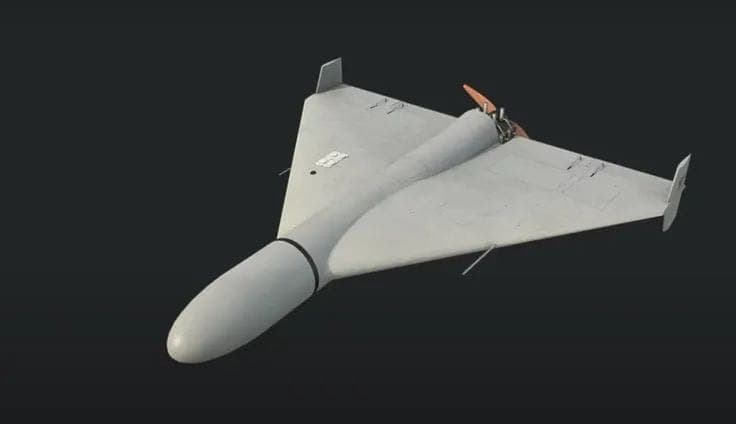
According to journalists, sometimes groups of flying Gerans consist of so-called "decoys." Visually, they look like ordinary kamikaze drones, but are made of foam and plywood, do not have a warhead or are equipped with a minimal amount of explosives, and also use thin sheet metal to create reflective surfaces. It is impossible to distinguish such a kamikaze drone from a regular one from the ground.
Plywood drones are equipped with SIM cards from one of the enemy's telecom operators. These devices monitor both stationary and mobile air defense groups. All information received is transmitted to Russian operators in real time, which allows them to adjust the course of flying missiles or change targets for other drones.
Plywood drones can stay in the air for a long time at an altitude of up to 1000 meters, remaining out of reach of automatic weapons and machine guns. Such UAVs create significant problems for air defense systems, forcing them to change positions and spend expensive missiles on inexpensive decoys.
Read more on the topic:
"Deadly, cheap and massive": it became known what the new Geran UAVs might look like
Range - up to 1300 km: the latest Geran-2 reconnaissance UAVs were spotted on the front line
Now on home

Start of deliveries scheduled for 2027

Over 51,000 new motorcycles were sold in Russia in 2025

The car will take at least a year to assemble

The application's audience has reached 20 million users

The model will be included in the list of cars for taxis, price - from 2.25 million rubles

All parking lots of the "Administrator of the Moscow Parking Space" are connected to the service

The cars will be supplied to the Moscow Transport Service Directorate

Deliveries to India may begin in 2028

The technology provides automated search for all types of defects in power units
The plane flew 500 km, accelerating to 425 km/h

The plant stated that the information about the termination of purchases for models 6 and 8 is not true
Scientists are using the "Ekran-M" installation