The Russian Armed Forces have begun testing a new unmanned vehicle, the "Chisel." Specialists from the engineering troops have shown interest in it, and the development was presented by the "Remdiesel" company.
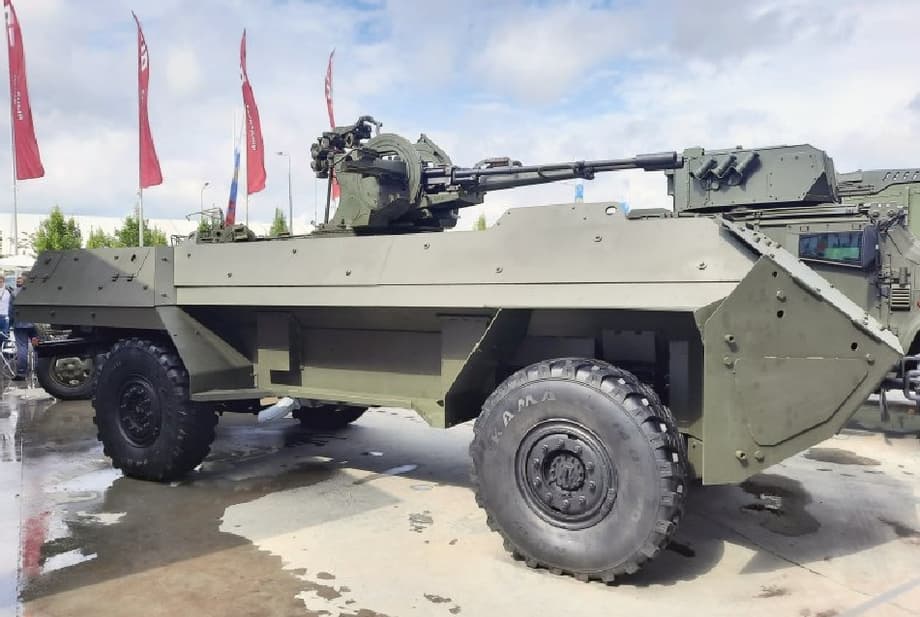
The "Chisel" is being tested in various branches of the military, and there is interest in it. In particular, from the engineering troops of the Russian Federation. The Armed Forces are trying to use unmanned technology to minimize personnel losses.
The "Chisel" unmanned armored vehicle was first presented at the "Army-2023" forum. It is a 4x4 wheeled vehicle designed to provide fire support with a 23-mm rapid-firing anti-aircraft gun ZU-23-2.
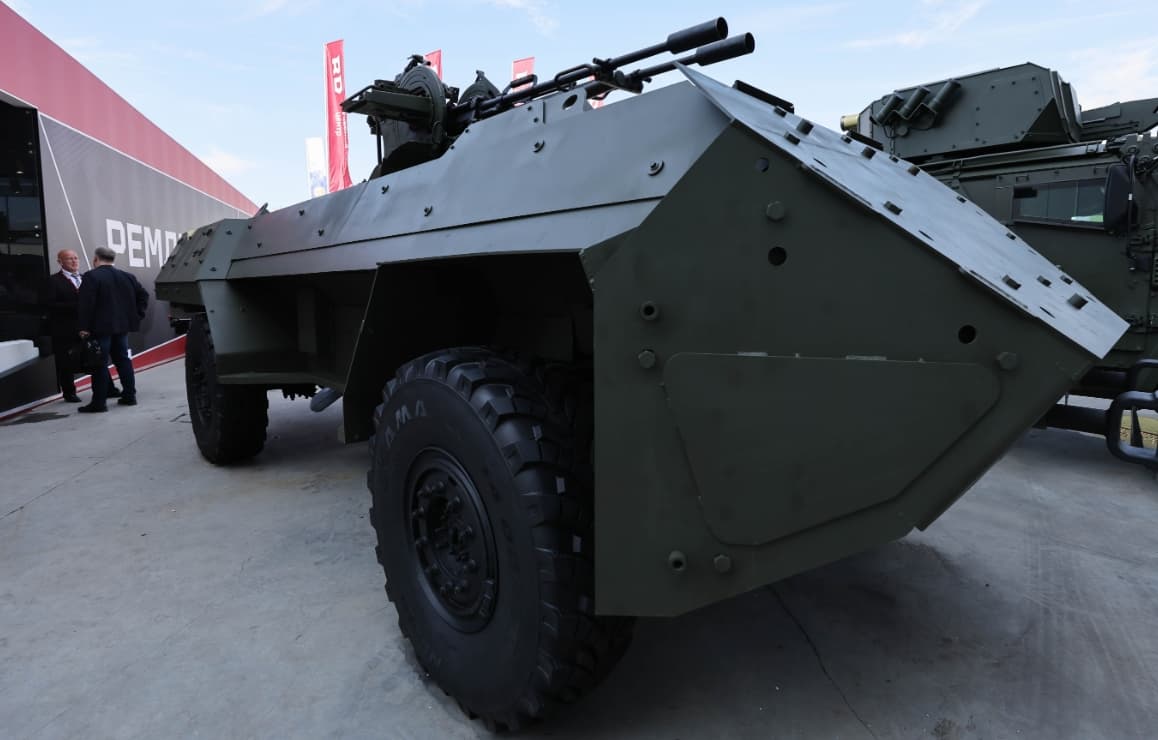
The armor of the frontal part of the vehicle can withstand a hit from a 30-mm cannon. All the capabilities of the vehicle are still being worked out, but the developer is considering increasing the autonomy of the vehicle.
Earlier www1.ru reported that the Russian Armed Forces turned the RBU-6000 naval rocket launcher into a ground weapon. The ground installation uses modified 212-mm RGB-60 reactive bombs for firing.
Read more on the topic:
Fooled the enemy: the Russian Armed Forces set up a fake Grad MLRS model for a drone strike
"Without a receiver, gas tube, and forend." The famous Kalashnikov assault rifle can shoot "naked"
Now on home

Start of deliveries scheduled for 2027

Over 51,000 new motorcycles were sold in Russia in 2025

The car will take at least a year to assemble

The application's audience has reached 20 million users

The model will be included in the list of cars for taxis, price - from 2.25 million rubles

All parking lots of the "Administrator of the Moscow Parking Space" are connected to the service

The cars will be supplied to the Moscow Transport Service Directorate
Deliveries to India may begin in 2028

The technology provides automated search for all types of defects in power units

The plane flew 500 km, accelerating to 425 km/h

The plant stated that the information about the termination of purchases for models 6 and 8 is not true
Scientists are using the "Ekran-M" installation