Specialists from the United Engine Corporation "Saturn" (part of Rostec Group) have developed two new heat-resistant alloys that are resistant to corrosion. The invention is planned to be used for creating blades for marine gas turbine engines. This was announced by a representative of the developing company at the International Naval Salon "Fleet-2024."
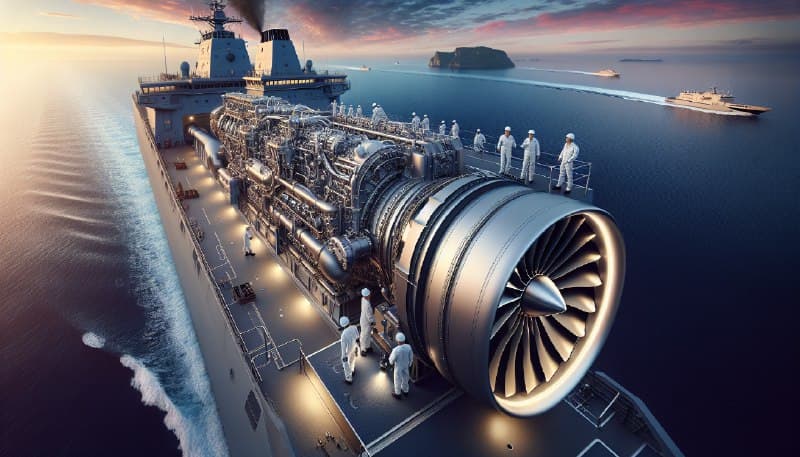
The new alloys can withstand high temperatures - up to 1000 °С and are highly resistant to metal corrosion, which is important in operating conditions in salty seawater. Developers from UEC "Saturn" have received the necessary documentation and refined the technological processes for the production of components from new materials.
They will be used for working and nozzle turbine blades operating in harsh conditions, including thermal stress and complex mechanical loads. The new materials make it possible to increase the efficiency and power of a marine gas turbine engine, which paves the way for the creation of advanced marine power plants of a new level.
The alloys are planned to be used not only in the creation of new marine engines, but also to increase the power of existing analogues. The development has received a technical passport and is ready for use in gas turbine technology.
Earlier www1.ru reported that in Russiadeveloped a replacement for titanium alloys in the aviation and oil and gas industries.
Read materials on the topic:
Russian scientists have created a new alloy for automobile engines
Russian scientists have found a way to create high-strength alloys with specified properties
Now on home

Start of deliveries scheduled for 2027

Over 51,000 new motorcycles were sold in Russia in 2025

The car will take at least a year to assemble

The application's audience has reached 20 million users

The model will be included in the list of cars for taxis, price - from 2.25 million rubles

All parking lots of the "Administrator of the Moscow Parking Space" are connected to the service

The cars will be supplied to the Moscow Transport Service Directorate
Deliveries to India may begin in 2028
The technology provides automated search for all types of defects in power units

The plane flew 500 km, accelerating to 425 km/h

The plant stated that the information about the termination of purchases for models 6 and 8 is not true
Scientists are using the "Ekran-M" installation