Bashkir inventor Yaroslav Litvinov, with the support of the team that created the Shulgan-Tash museum complex, has designed a drone for underwater monitoring of rivers and lakes. This was announced by the head of the region, Radiy Khabirov.
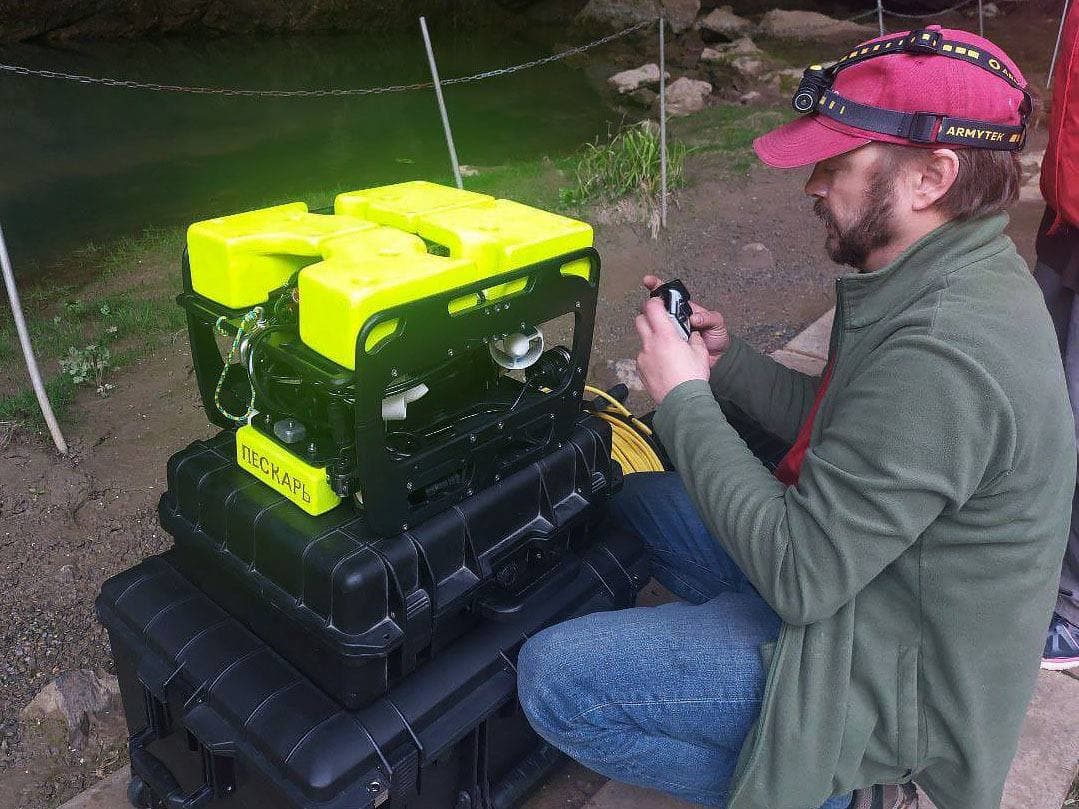
The device will be used to study the Shulgan River, which flows through the bowels of the Kapova Cave and flows into the Blue Lake. Speleologists have already tried to explore the reservoir, diving to 80 meters, but have not been able to assess its real depth. The "bottomless" underground system poses a threat to divers.
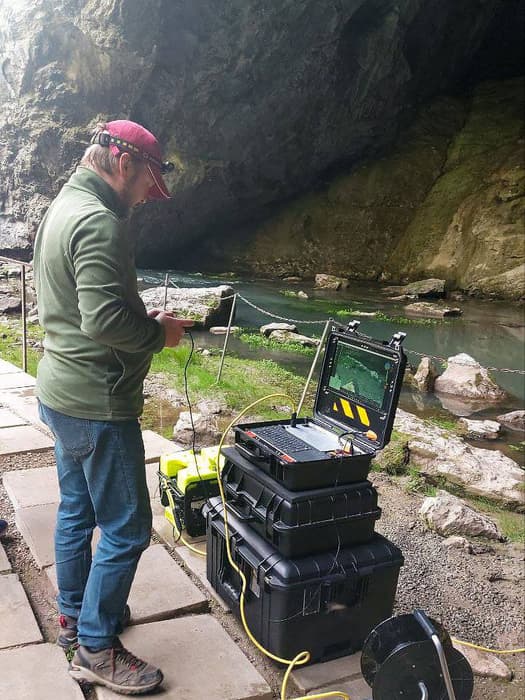
The developers plan to connect hydroacoustic equipment to the device. This will make it possible to create a map of the Kapova Cave and continue monitoring the Shulgan River.
Equipment for measuring the quality and composition of water can also be connected to the underwater drone.
The drone was successfully tested in the Sarva spring lake in the Nurimanov district. The next dive is planned for the Blue Lake and the underground Shulgan River, it will take place in August 2024 and January 2025.
Earlierwww1.ru reported on another underwater drone for research - JSC "Tetis Pro"created the Marlin-KN remotely operated unmanned underwater vehicle (ROV).
Read related materials:
Two Kalan unmanned hydrographic vehicles appeared in Russia for studying water bodies
Automatic immersion and surfacing: Russian scientists have developed the Vinci underwater robot
Now on home

Start of deliveries scheduled for 2027

Over 51,000 new motorcycles were sold in Russia in 2025

The car will take at least a year to assemble

The application's audience has reached 20 million users

The model will be included in the list of cars for taxis, price - from 2.25 million rubles

All parking lots of the "Administrator of the Moscow Parking Space" are connected to the service

The cars will be supplied to the Moscow Transport Service Directorate

Deliveries to India may begin in 2028

The technology provides automated search for all types of defects in power units

The plane flew 500 km, accelerating to 425 km/h

The plant stated that the information about the termination of purchases for models 6 and 8 is not true

Scientists are using the "Ekran-M" installation