Translated with AI from the Russian original.
Moscow's year-round electric ships, which have been running since mid-2023 from Kievsky railway station to the pier on Shelepikhinskaya embankment and along the "ZIL-Pechatniki" route, continue to operate even in snow and frost. They are assisted by the icebreakers of the Mosvodostok municipal fleet, "Rif" and "Nord".
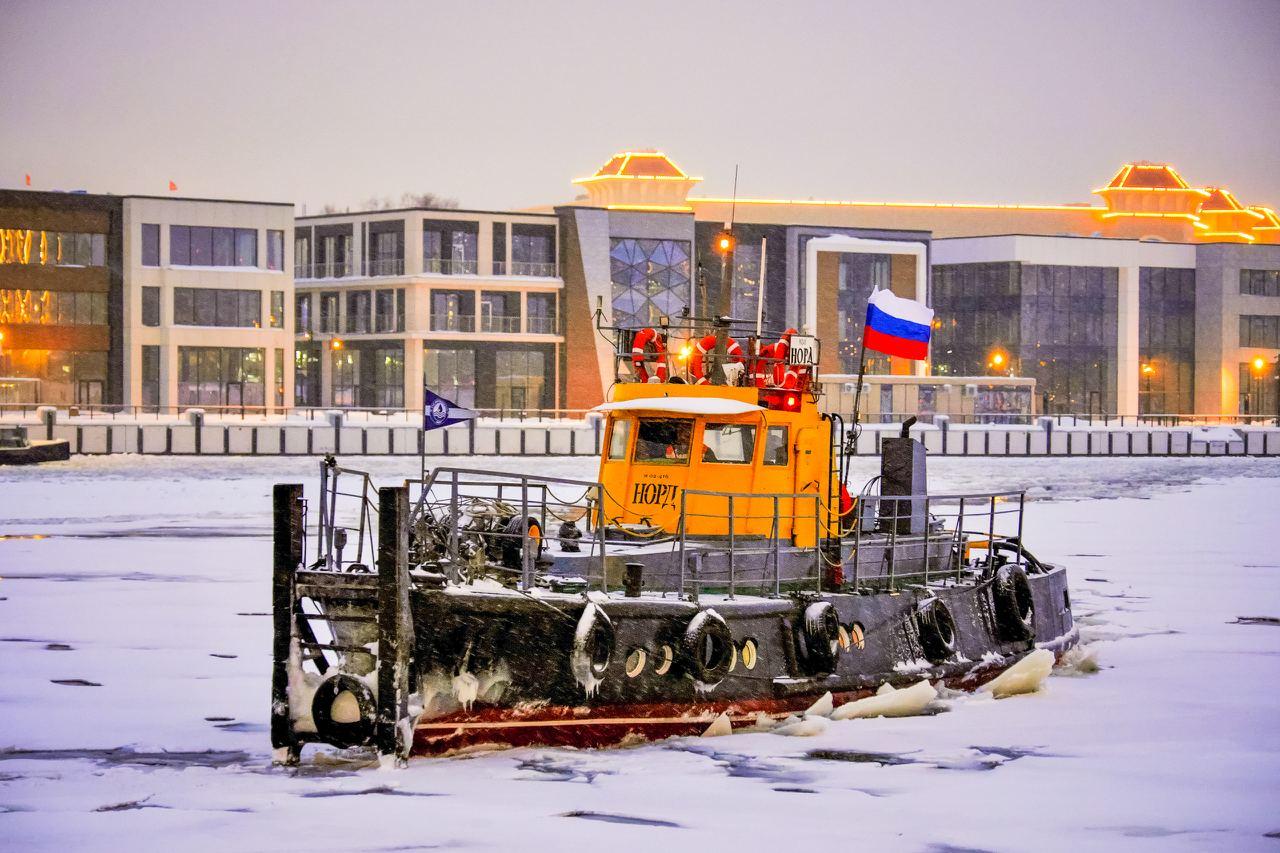
As Moscow Mayor Sergey Sobyanin noted in his Telegram channel, the pair of 70-ton icebreakers are already over 30 years old, having been built in Kostroma.
Despite their age, they "in some characteristics even surpass more modern vessels."
Icebreakers daily ensure the movement of not only electric ships, but also vessels of municipal and emergency services. They can also clear ice-bound ships at the piers and monitor the cleanliness of the water area. And when river navigation begins, "Rif" and "Nord" tow non-self-propelled barges that clear the Moscow River.
Why do electric ships need icebreakers?
Electric ships have their own ice class. But for them, according to experts, there are two problems that icebreakers help solve.
The first is large crushed ice. It is crushed by icebreakers and other vessels. The second is the increased energy consumption of electric ships when making their way through ice. As Konstantin Trofimenko, Director of the Smart City Research Center at the Higher School of Economics, noted in an interview with Vedomosti, the two existing routes will help to understand what resources are needed to better ensure year-round operation of electric ships.
These pilot routes were chosen to understand the economics of operating vessels. How everything will function, whether something will break down more often, can only be seen in practice.
Moscow's experience will be useful to both domestic and foreign specialists. The capital's electric ships have received certification at the global level - as the world's first regular year-round river electric transport, and at the Russian level - as the first such transport in the country.
Never miss our newsAdd this site to your preferred sources to see us more oftenAdd on Google

















