The Prospective Aviation Complex for Long-Range Aviation, known as PAK DA, will significantly expand the capabilities of the Russian Aerospace Forces, eventually replacing the Tu-95MS "Bear." The aircraft may make its first flight as early as 2027.
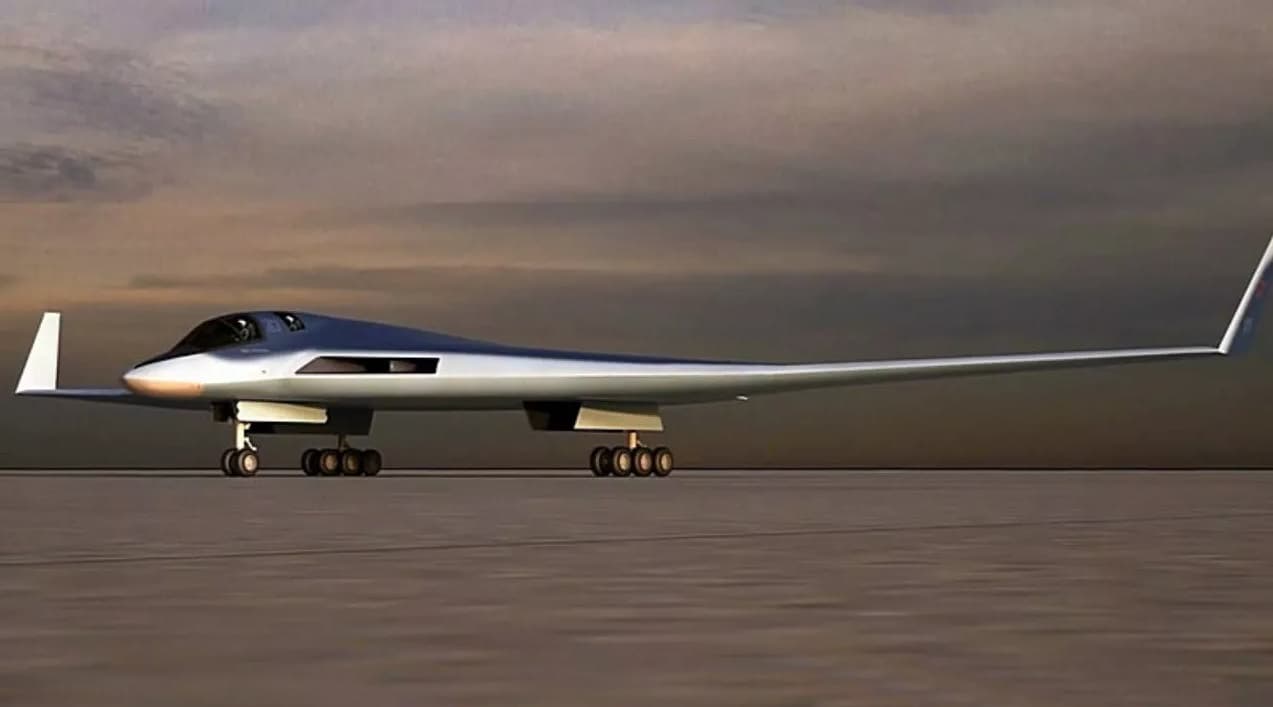
The new missile-carrying bomber is being developed according to the "flying wing" aerodynamic configuration. This design allows it to avoid detection by enemy radar systems, making it more effective when penetrating well-defended airspace.
According to open sources, the PAK DA's flight range will be up to 12,000 km, and its duration up to 30 hours, allowing the crew to carry out long-range missions without refueling.
The PAK DA is designed for a maximum payload of up to 30 tons, which may include both conventional and nuclear weapons. This arsenal will allow it to deliver a wide range of ammunition to the target, from high-precision bombs to hypersonic missiles. One of the features of the PAK DA will be its ability to carry hypersonic weapons.

It is expected that the cruise speed of the missile carrier will be about 800 km/h, and the service ceiling will be 22 km. Despite being subsonic, advanced electronic warfare capabilities and stealth compensate for the lack of supersonic speed.
In addition, hypersonic weapons can travel at speeds exceeding Mach 5, making them extremely difficult to intercept with modern missile defense systems. This capability will give Russian aviation a significant advantage in terms of both offensive and defensive operations.
Earlier,www1.ru reported thatRussia's fiery fist TOS-2 "Tosochka" has increased its firing range by almost 50%.
Read more materials:
Combat equipment of light fighters Yak-130M revealed: onboard radar 130R will detect a tank at 35 km
The military named the main technical disadvantage of kamikaze drones with fiber optic control
Now on home

Military Analyst Shlepchenko: Mesh Modem Efficiency Lower on the Ground Than in the Air

Revenues of the Beriev Aviation Plant decreased by 3.8 times in 2025
Il-86VzPU managed to capture during refueling

Extreme flight to Belukha for hockey on a frozen reservoir raised questions about compliance with aviation regulations

The main task of the specialists is to establish stable operation of engines in severe cold

The project, launched in 2021, will be completed in 2027, increasing capacity by 15 MW

Vladimir Popov: "Checkmate will definitely be better than the F-35"

New design reduces the weight of the traction module without loss of power

Haval F7x and Haval F9 experience operational difficulties

The project is being implemented by Belarusian MAZ and the Russian company "Itelma"

The corporation needs a specialist with at least five years of experience

The results are used to develop automated control systems for agricultural machinery