Translated with AI from the Russian original.
Russian T-72B3M main battle tanks need to be equipped with ultraviolet sensors to counter anti-tank guided missiles (ATGMs). This opinion was expressed by military expert Evgeny Damantsev.
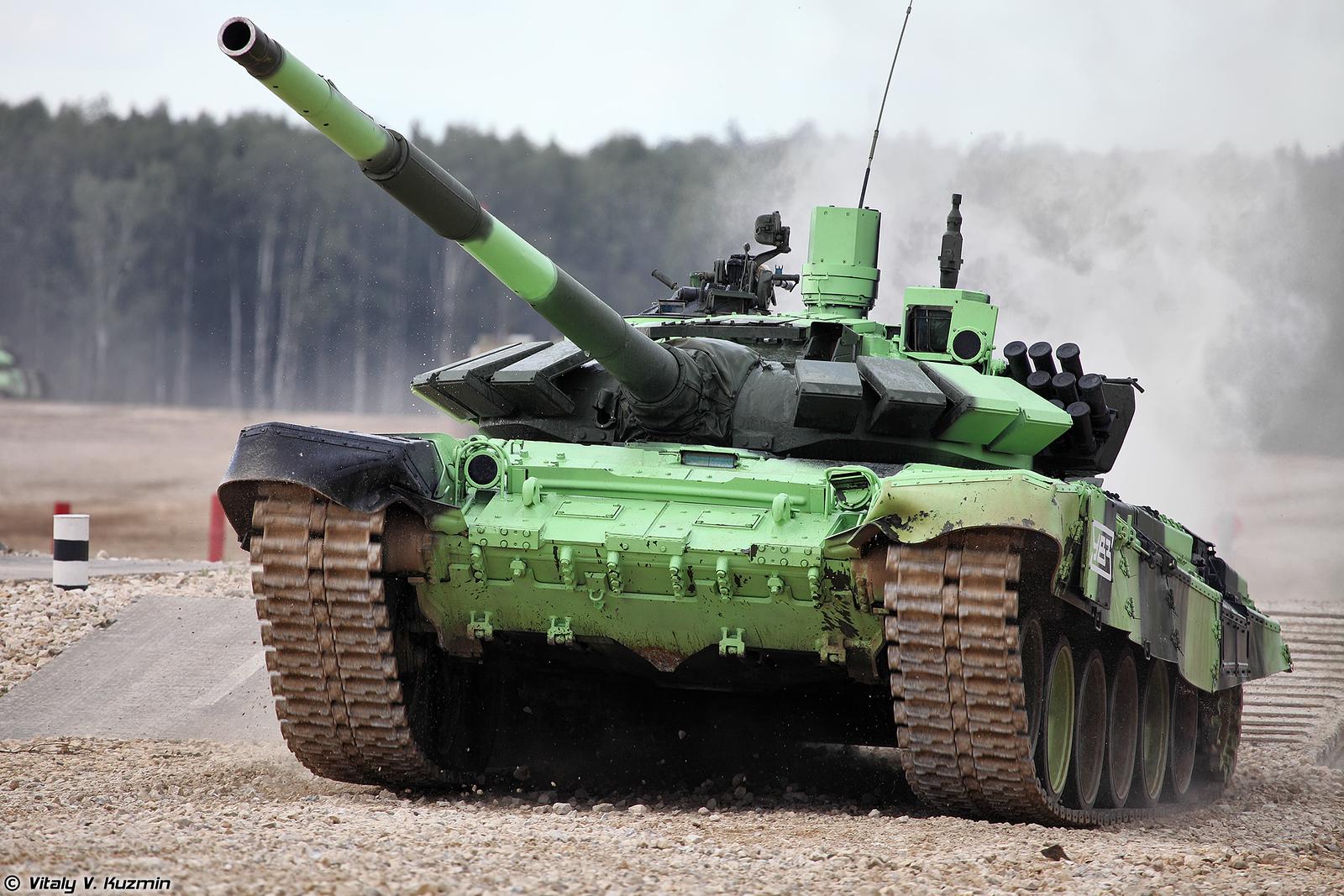
The analyst referred to the experience in critical situations, as told by the mechanic-driver of a T-72B3M tank of one of the guards air assault mountain units with the call sign "Argon."
If we are shooting from a closed firing position, the mechanic, having a small view, never looks around. He should always look straight ahead and observe, because often you can see, for example, an ATGM flying. As soon as he sees an ATGM flying towards him, he must abruptly leave this position, without even warning the tank commander, that is, he takes responsibility, turns on reverse gear and tries as much as possible to avoid being hit by the ATGM.
Damantsev clarified that in conditions of smoke and dust in the area of fire contact, the eyes of the mechanic-driver, operating in the visible optical range of waves, may not detect the flare and smoke trail of the ATGM immediately after the start, but only when the missile has already traveled more than 50% of its trajectory.
If the tanks are equipped with even relatively inexpensive ultraviolet sensors, the detection of the ATGM will occur much earlier, and the mechanic will have a much larger time "window" to "roll back" even in the same reverse gear.
The duration of this time "window" can be critical, because the reverse speed of the T-72B3M and T-90M in combat conditions on a ground surface varies from 8 to 12 km/h (for the Leopard-2A6 - 25-30 km/h).
The analyst summarized that in the case of the BGM-71F or "Stugna-P" ATGM, all hope remains on the keen eye and good reaction of the mechanic, as well as on the elements of dynamic protection 2S22 "Kontakt-5."
Earlierwww1.ru reported that the fiery fist of Russia TOS-2 "Tosochka" increased the firing range by almost 50%.
Read more materials:
Combat equipment of light fighters Yak-130M revealed: airborne radar 130R will detect a tank at 35 km
The military named the main technical disadvantage of kamikaze drones with fiber optic control
Never miss our newsAdd this site to your preferred sources to see us more oftenAdd on Google

















