In the next two to three decades, Russia will begin transplanting organs grown in labs. This was announced by Egor Plahotnyuk, leading engineer at the Laboratory of Additive Technologies and Bioengineering of the Troitsk Institute for Innovation and Fusion Research (part of Rosatom).
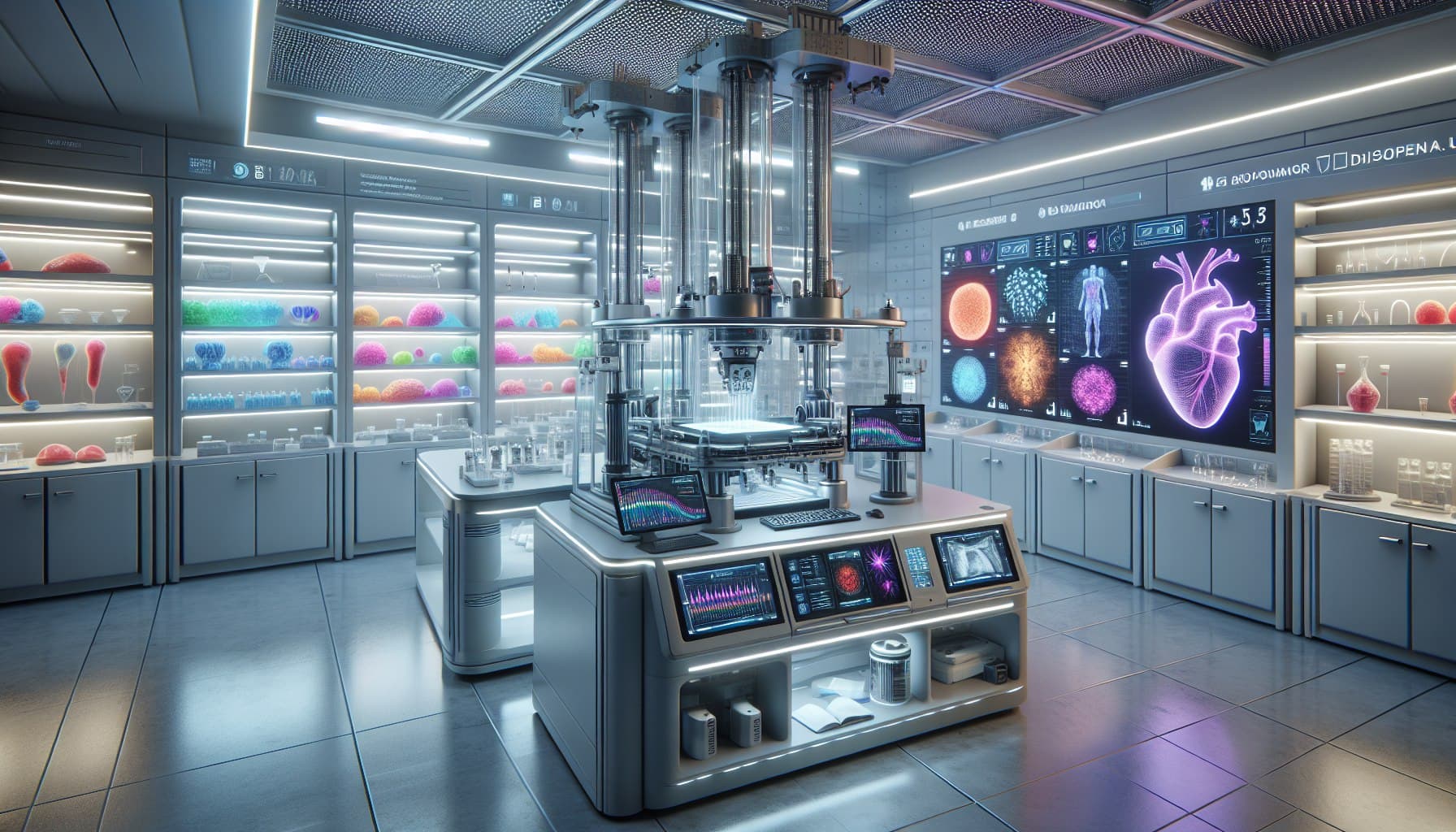
According to the scientist, the laboratory is currently developing a technology for the phased formative printing of organs.
Formative printing means giving the necessary shape in one go, and we start with small structures that allow us to build a system capable of feeding itself. So far, we have managed to build a small equivalent of a blood vessel.
So far, scientists are using an acoustic field to form cellular material in volume. In the future, it is planned to use a magnetic field. This will allow solving more complex problems.
According to the scientist, the creation of vessels is currently being finalized in the laboratory. In the future, specialists will begin developing endocrine glands, and then move on to growing the liver and kidneys. The patient's cells are used as the base material.
That is, as I said, to work out those small nodes and start using them in larger products. Including creating full-fledged organs. Roughly speaking, within 20-25 years, technology will allow this to be done.
A test operation on an animal is planned in the near future. The technology is planned to be developed in two ways.
The first is that we are given cells, and from them we produce a tissue equivalent of the necessary organ or tissue and transfer it for transplantation. But we would prefer the second - that we can supply complexes of biofabricators for the creation of such tissues to medical centers.
The scientist emphasized that the bioprinting system will be put on stream. Vessel transplantation will be possible by 2030.
Earlier www1.ru reported that Rosatom will master bioprinting technology by 2030.
Read materials on the topic:
Blood vessels, stomach, intestines: cosmonauts on the ISS will begin printing human organs
A technology for 3D printing human tissue from living cells has been developed in Russia











