A convertible twin-boom subsonic dual-purpose aircraft capable of vertical takeoff has been developed in Russia. The project has already been registered with the Federal Institute of Industrial Property (FIPS), and it describes an aircraft with a low-mounted wing, a forward horizontal tail, and an H-shaped tail.
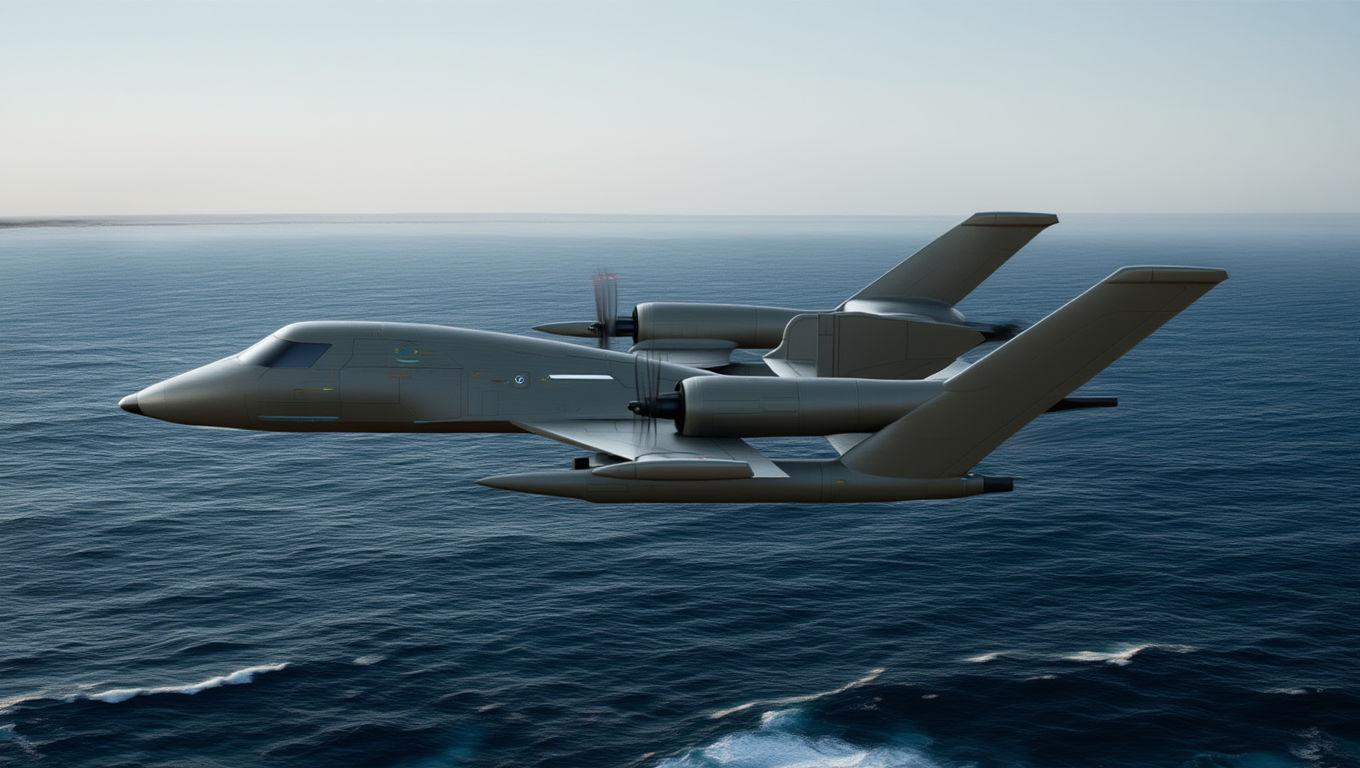
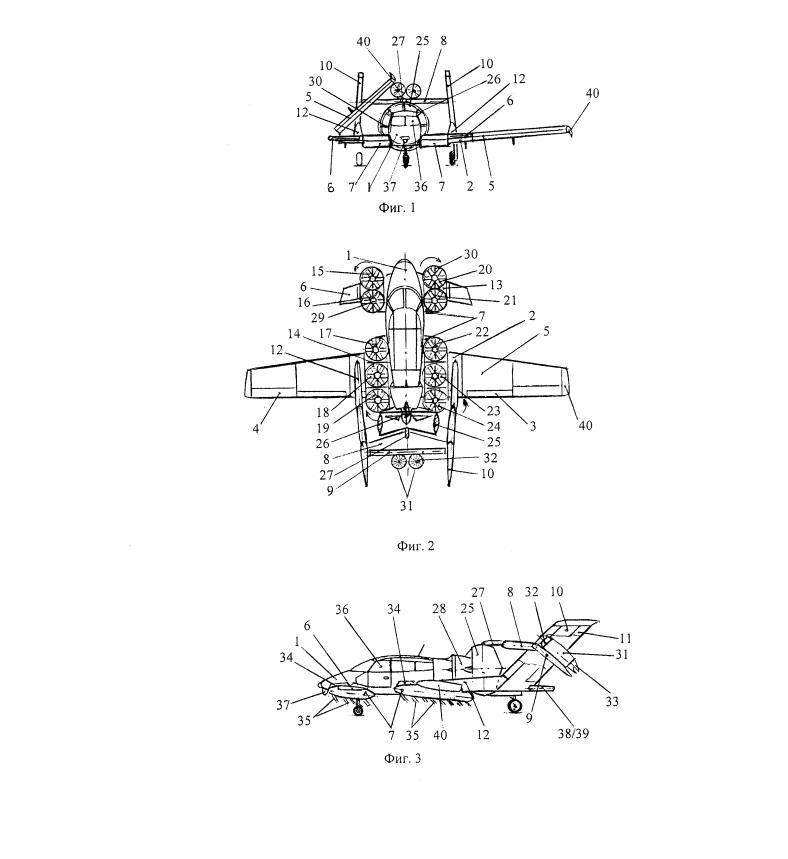
The power plant of the promising machine combines rotary-piston, turboprop, and electric engines. The authors of the project proposed to place air and lifting propellers in several stationary ring channels in the root nacelles of the wing and in the rear of the fuselage.
In vertical takeoff mode, lift is created by several propellers at once, forming distributed thrust. Pitch, roll, and yaw control is performed by changing the propeller speed without complex mechanical turning units. When transitioning to horizontal flight, some of the propellers stop and are fixed, and the aircraft flies in a classic aircraft configuration.
The patent separately emphasizes the reduction of thermal and acoustic signature. The design allows flights at low altitudes with terrain following and automatic control. The aircraft is designed for thrust redundancy — in case of failure of individual engines, the remaining ones provide a safe landing.
The authors also described military application scenarios. The aircraft allows the installation of weapons, anti-submarine equipment, magnetometers, and optoelectronic systems. The project is focused on transport-strike and anti-submarine tasks, including deck-based operations and covert flights over the sea.
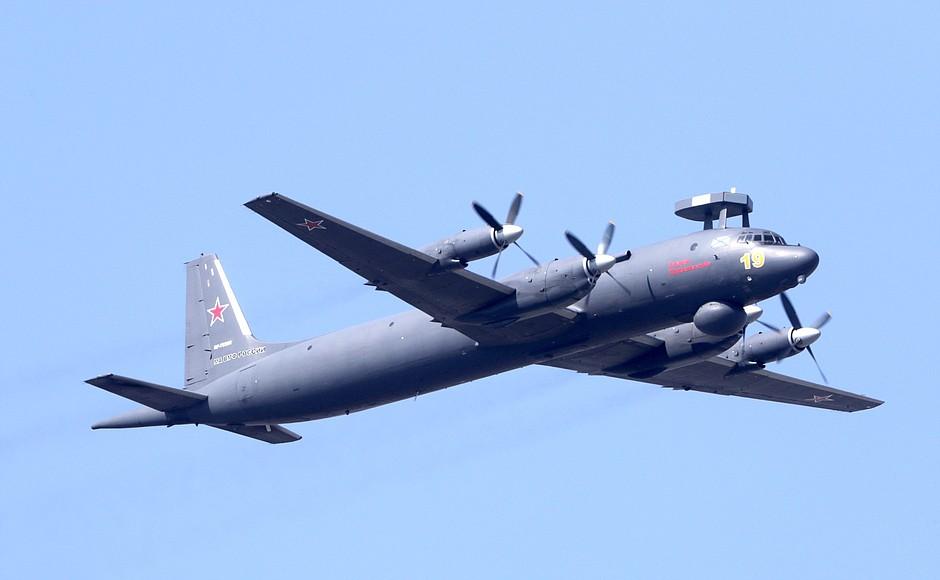
Among the most similar analogues in service with the Russian Navy are long-range maritime reconnaissance aircraft — turboprop Tu-124 and Il-38N of the Soviet era. The equipment with such engines is traditional for maritime patrol aviation, they provide a longer flight duration and economy at low speeds.
Read more on the topic:
- Fire control outside the vehicle: a new module for armored vehicles has been patented in Russia
- A key element for a supersonic passenger aircraft was invented in Russia
- A fighter with a double wing for short takeoff and landing was invented in Russia
Never miss our newsAdd this site to your preferred sources to see us more oftenAdd on Google

















