Russian engineers have developed a gas generator design for a ramjet air-breathing engine (ramjet) that ensures uniform mixing of fuel with air across the entire cross-section of the combustion chamber. The patent for the new product has already been registered in the FIPS database.
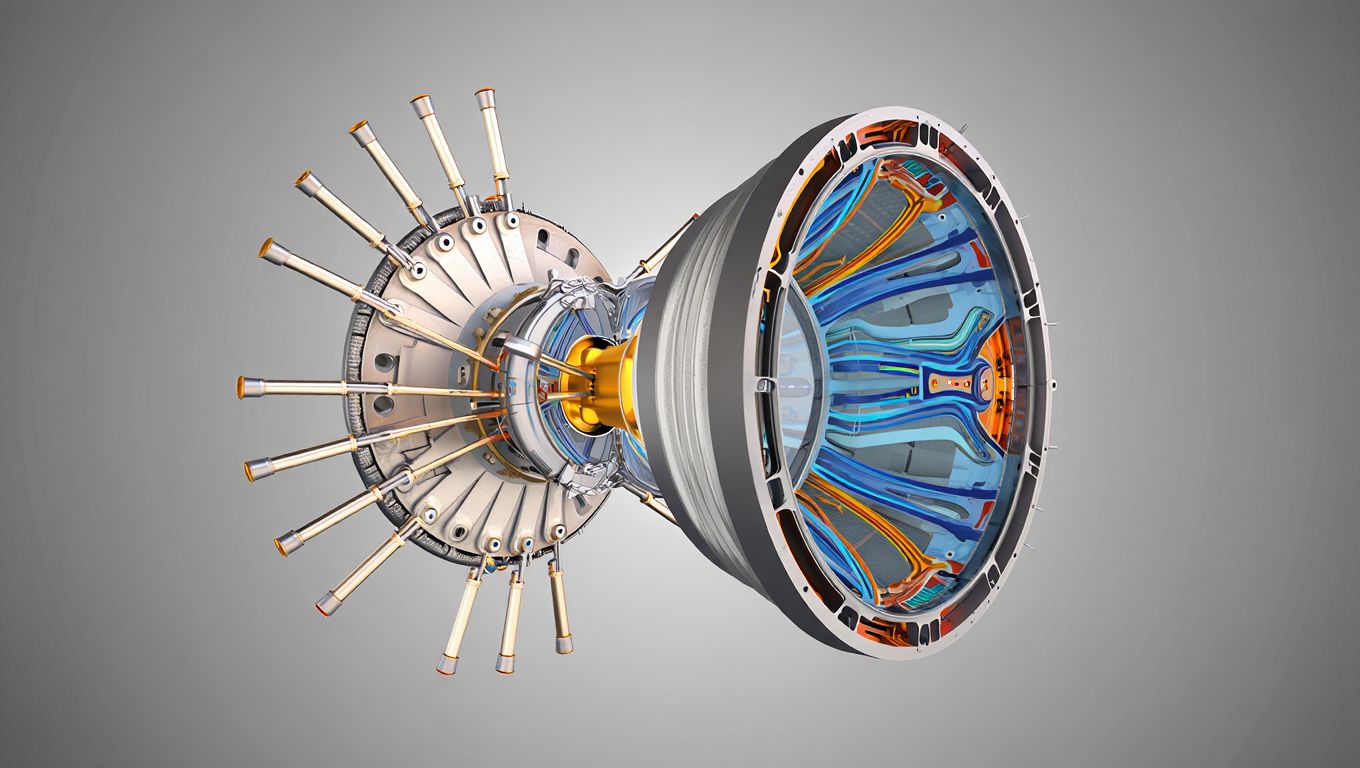
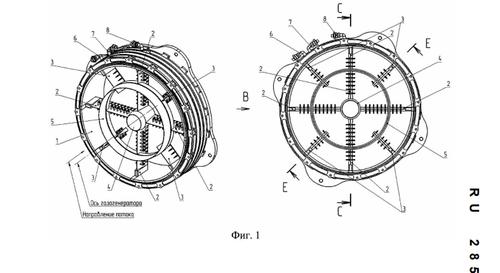
The development is based on a distribution flange with radial manifolds, pylons for continuous fuel supply, and shortened switchable pylons.
At the center, the engineers proposed placing a hollow cylindrical body with a wedge-shaped leading edge at an angle of 10–15 degrees. This solution forms a flow deceleration zone and stabilizes fuel supply at high speeds.
In this case, the annular manifold is located coaxially with the flange and has a diameter two times smaller. It uses centrifugal nozzles that spray fuel along the flow. Jet nozzles operating perpendicular to the airflow are mounted on the pylons. As a result, a fuel-air "curtain" is created, evenly filling the combustion chamber.
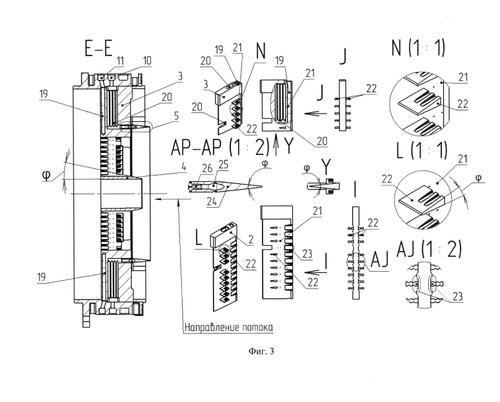
The main feature is the ability to switch off some of the pylons without losing cooling. When fuel consumption decreases, the system shuts off the channels in the shortened pylons, while the continuous supply through the annular manifold continues to remove heat from the leading edge. This increases reliability and prevents destruction of structural elements.
The authors emphasize that the wedge-shaped form of all edges reduces aerodynamic drag and makes it possible to precisely regulate fuel consumption. As a result, the engine receives a homogeneous fuel-air mixture and maintains stable thrust over a wide speed range.
At the same time, it is unclear from the patent exactly which engine the new gas generator was developed for—an existing one or a prospective one—but from the context it can be concluded that this is a power plant for combat aviation.
High fuel metering precision, switchable pylons, aerodynamic optimization, stable thrust over a wide speed range—all this is clearly designed for maneuverability and high loads, which are characteristic of military aircraft.
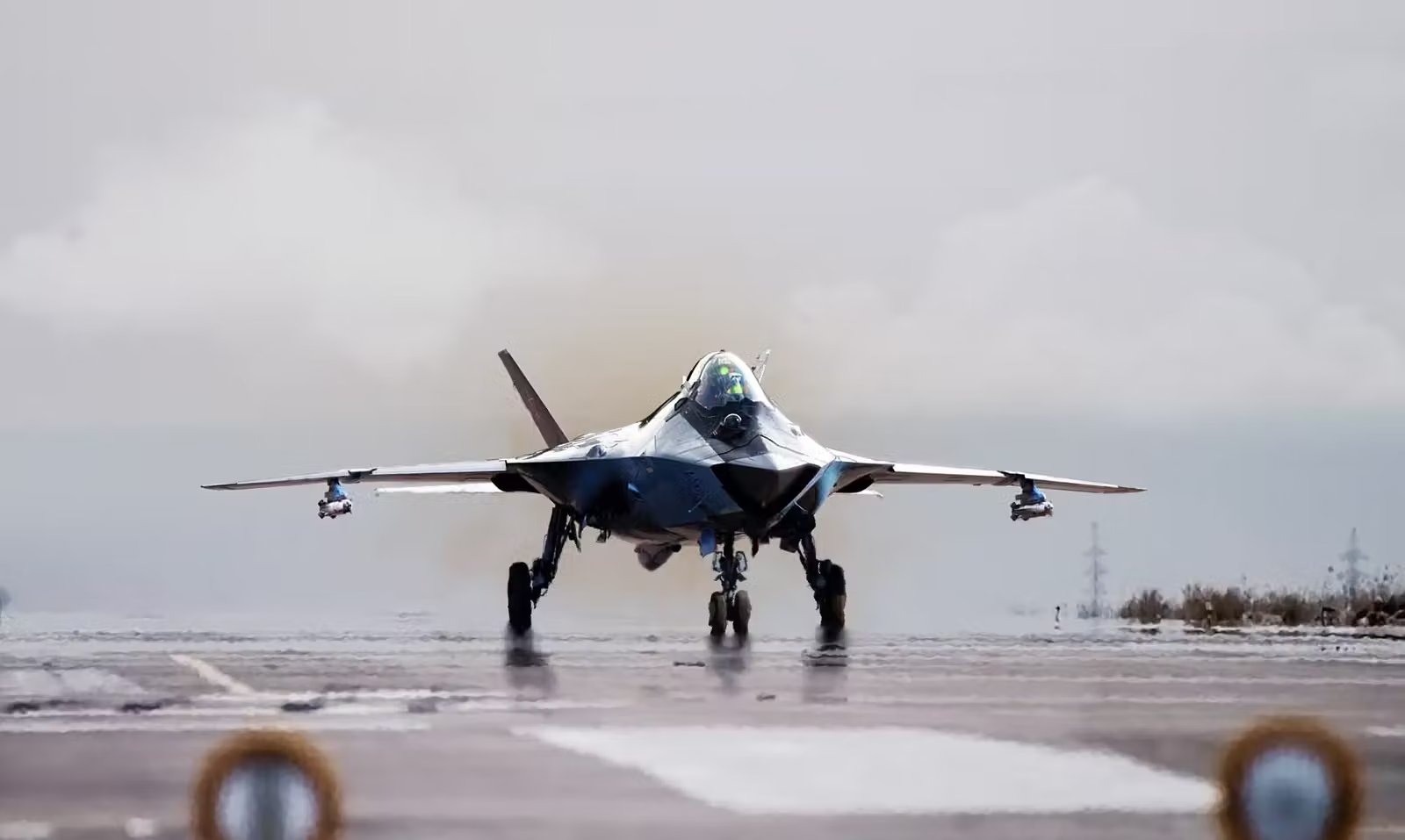
The most modern fighters currently, the Su-57, are equipped with second-stage AL-51F1 engines. General Designer and Director of the A. Lyulka Design Bureau, Evgeny Marchukov, explained that the aircraft confidently performs pirouettes in the sky thanks to the threefold structural strength margin of the power plant.
Director General of the P. I. Baranov Central Institute of Aviation Motors, Andrey Kozlov, stated that Russia is a leader in work on an engine for supersonic civil aviation.
Read more materials on the topic:
- From the "balalaika" to the fighter of the future: 90 years of MiG evolution in one video
- The presumed characteristics of the sixth-generation fighter have been revealed: speed up to Mach 4 and a new radar based on the station for the Su-57
- A new engine based on the PD-35 gas generator has reached a new stage
Never miss our newsAdd this site to your preferred sources to see us more oftenAdd on Google

















