Translated with AI from the Russian original.
A unique "Sun-Terahertz" device will appear on the Russian segment of the International Space Station (ISS) in 2026, which will help to reveal the causes of solar flares and learn to predict their occurrence. This was announced to TASS by the project's chief designer, senior researcher at the P. N. Lebedev Physical Institute (FIAN), Maxim Filippov.
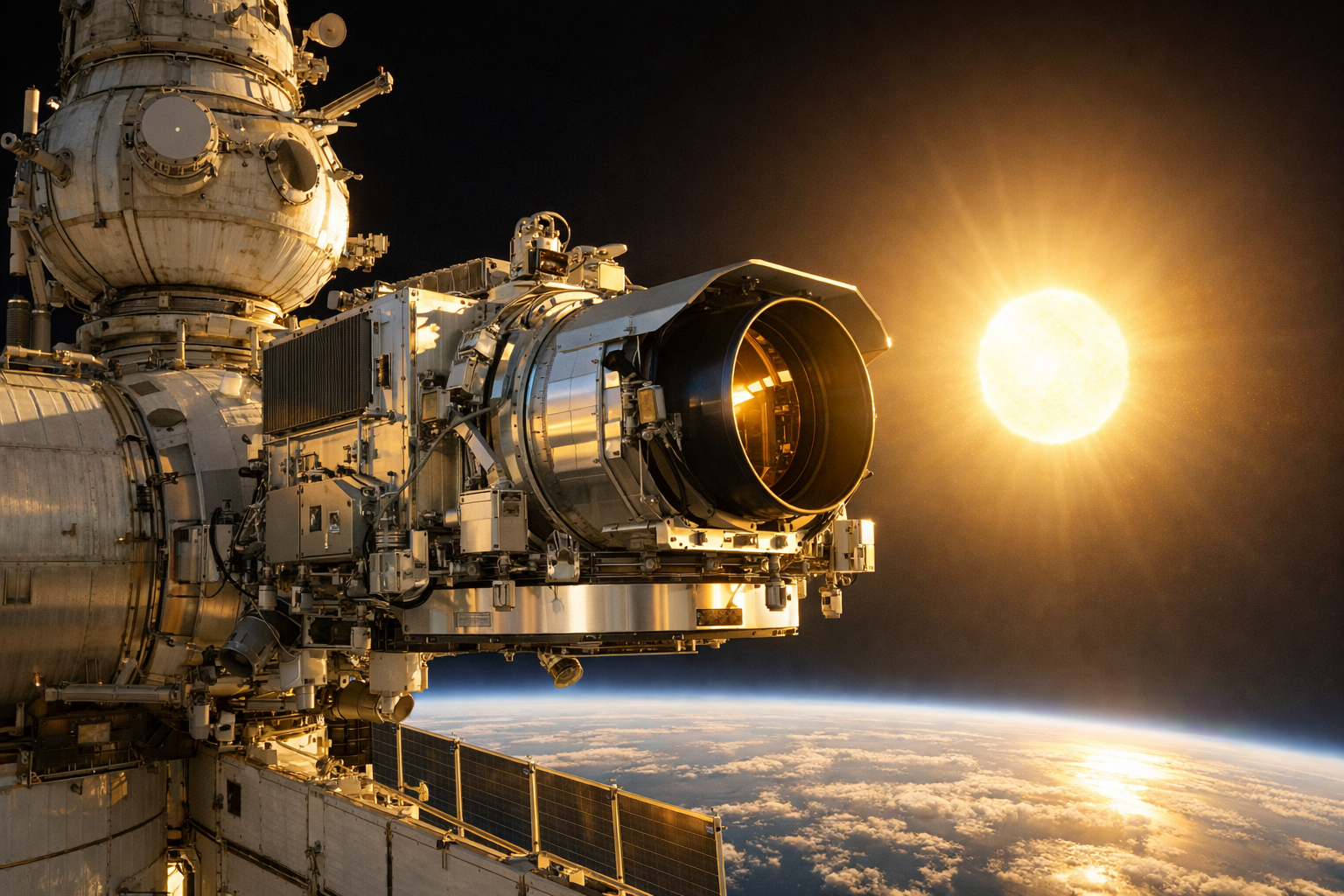
The 47-kilogram device consists of eight channels-detectors, each of which is tuned to its own frequency range - from 0.4 to 12 terahertz. The device will be installed on a biaxial rotary platform that automatically tracks the position of the Sun.
This system will allow to record terahertz radiation that occurs during solar flares, and to study the processes occurring in the active regions of the star.
The experiment is planned for the period from 2026 to 2028. The installation of the scientific complex is scheduled for the spring of 2026 as part of the first extravehicular activity of the Russian cosmonauts of the ISS-74 crew. The equipment will be placed on the outer surface of the Russian segment of the station.
Read more materials on the topic:
- What the Russian ART-XC telescope showed on the Spektr-RG space observatory
- FIAN-Developed Device for Predicting Solar Flares to Be Launched to the ISS
- Solar flares, magnetic storms, solar corona - what is studied by the world's only radioheliograph in Russia
Never miss our newsAdd this site to your preferred sources to see us more oftenAdd on Google

















