Scientists from the Institute of Biomedical Problems of the Russian Academy of Sciences (IBMP RAS) will send direct descendants of Drosophila flies, which previously visited the Bion-M No. 2 biosatellite, into space. The new experiment will take place on the International Space Station: the launch of the Soyuz MS-28 spacecraft is scheduled for November 27, and the return is scheduled for December 9. The insects will spend about two weeks in orbit.
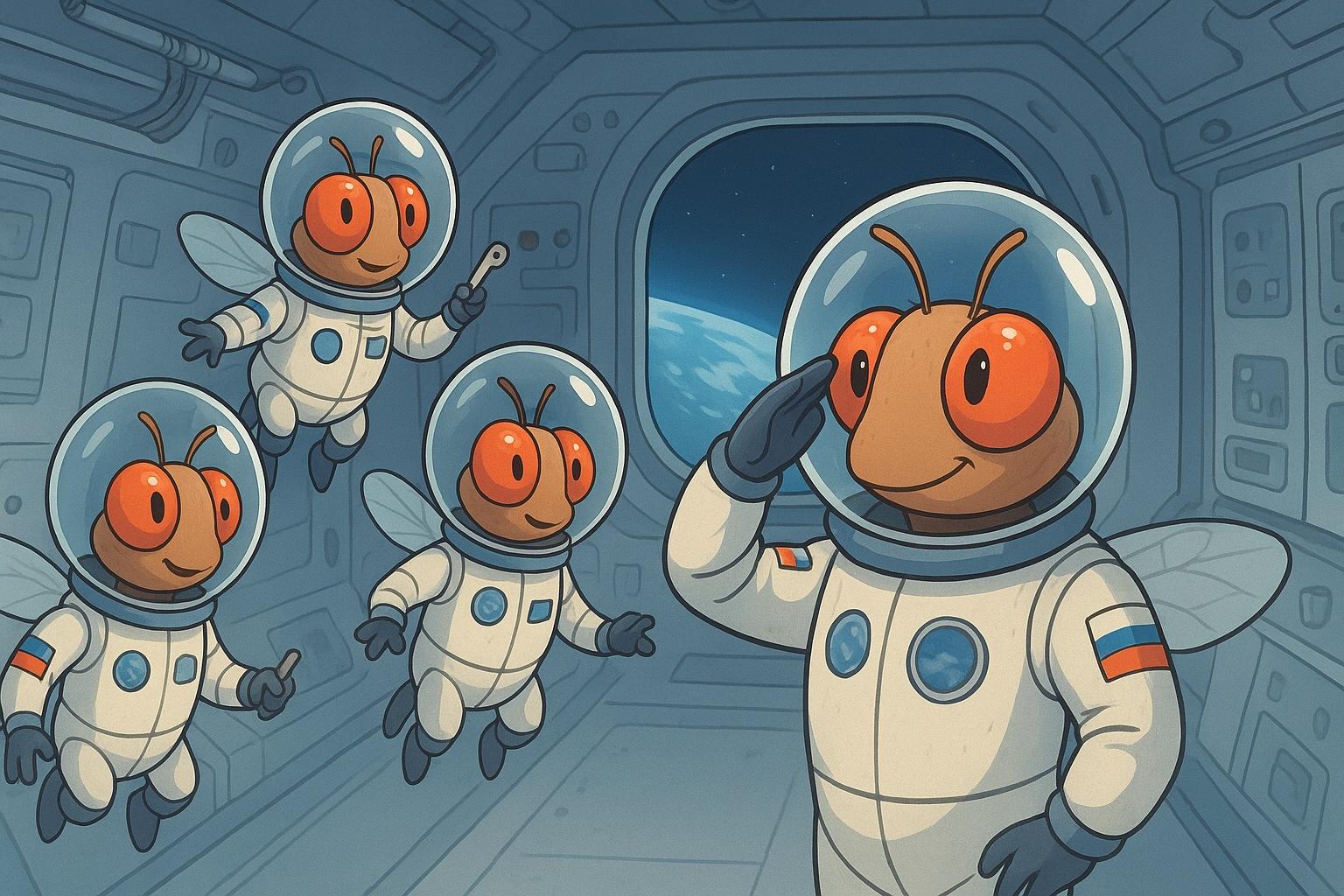
The project is called "Cytomechanarium." Its goal is to study how repeated space flights and microgravity conditions affect the reproductive system of living organisms. On board the ISS, Drosophila should produce new offspring, which will be studied after returning to Earth. The main experiments will take place in the laboratory, where specialists will compare the condition of individuals born in space with a control group.
The Bion-M No. 2 biosatellite, which started this line of research, was launched from Baikonur on August 20, 2025 and landed in the steppes of the Orenburg region on September 19. It carried 75 mice, about 1,500 Drosophila flies, cell cultures, plants and samples of grain crops. This project allowed us to assess the impact of increased levels of cosmic radiation on biological objects: the satellite's orbit was higher than that of the ISS, where the radiation background is about a third lower.
Read more materials on the topic:
- Mice in space: Bion-M No. 2 confirms the well-being of the crew and satellite
- Biosatellite Bion-M No. 2 with mice and drosophila completed a 30-day mission and returned to Earth
- Fell victim to science: ten mice that went into space on the Bion-M satellite died
Never miss our newsAdd this site to your preferred sources to see us more oftenAdd on Google