The Laboratory of Isotope Geochemistry and Geochronology of GEOKHI RAS, together with the Far Eastern Hydrological Institute and Tongji University (China), has discovered rich deposits of rare and strategically important metals on the Emperor Seamounts in the northern Pacific Ocean.
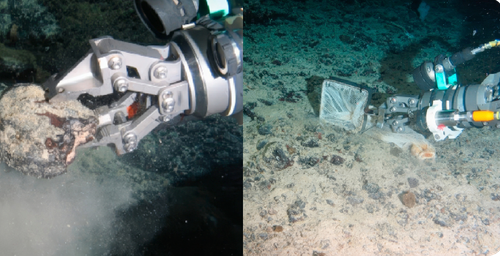
The expedition took place on the research vessel "Akademik M. A. Lavrentyev". A remotely operated underwater vehicle "Comanch-18" with a manipulator and video recording system was used for sampling, which recorded the exact GPS coordinates of the sampling sites. The material was collected from a depth of 1008 to 2088 meters - this allowed for the first time to raise samples with high positional accuracy, which was impossible when using traditional dredges.
Ferromanganese crusts and nodules forming on the surface of ancient seamounts contain iron, manganese, cobalt, nickel, lead, molybdenum, tungsten, gold, rare earth elements, and yttrium. Lead concentrations reached 5300 ppm, molybdenum - about 880 ppm, tungsten - 290 ppm. These indicators significantly exceed the average global values and make the finds unique for modern technologies such as electronics, batteries, and "green" energy.
Analysis showed that the crusts were formed over millions of years from seawater (hydrogenous type), but some formations bear signs of the influence of hydrothermal sources - active underwater volcanism that occurred approximately 3.5 million years ago. The size of ferromanganese crusts varies from a few millimeters to tens of centimeters, and the chemical composition can change even within a single sample.
Never miss our newsAdd this site to your preferred sources to see us more oftenAdd on Google