Translated with AI from the Russian original.
The Department for Combating Cybercrime of the Ministry of Internal Affairs of Russia has released information about common methods of fraud on freelance exchanges. One of the most frequent scenarios involves allegedly payment by the client for the order through the platform and sending a fake link to confirm the payment.
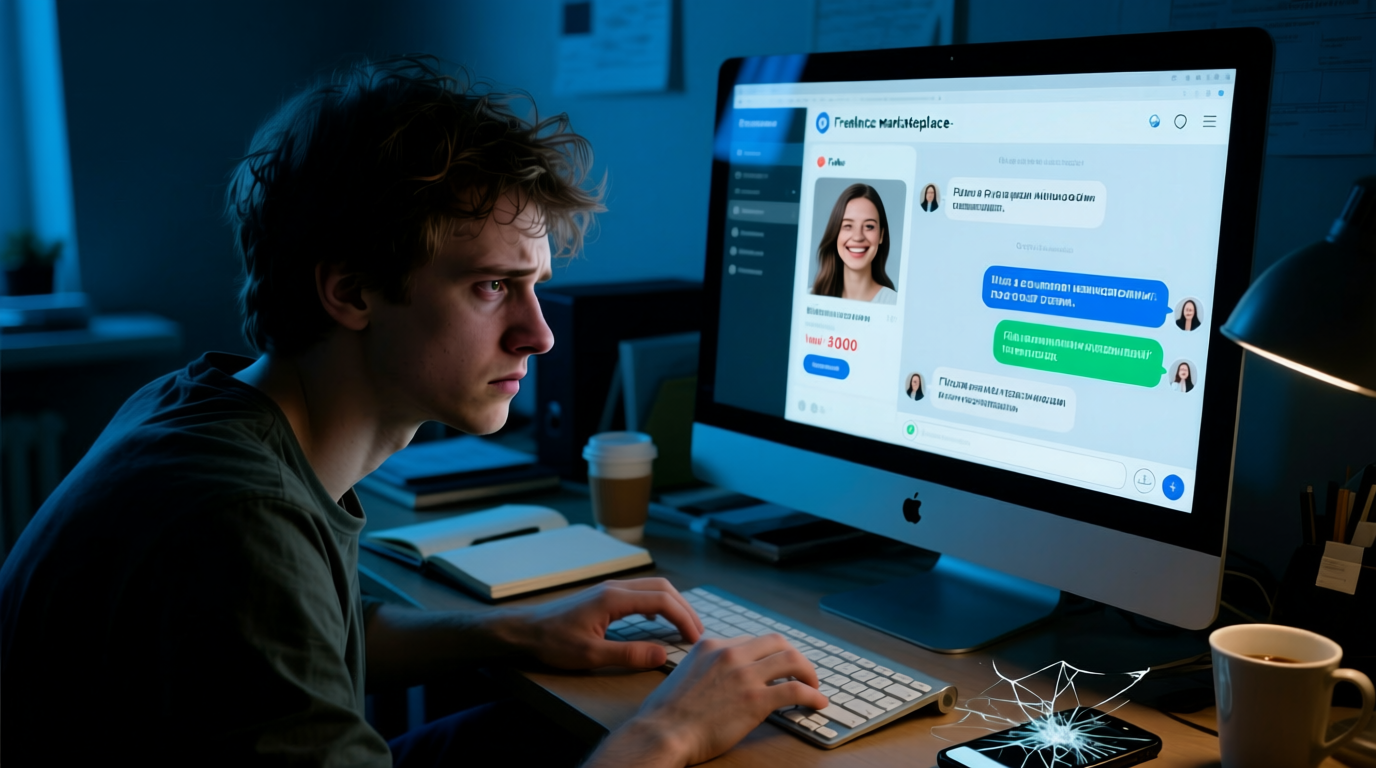
The most frequent scenario is when a scammer introduces himself as a client and asks to go to a messenger for convenience. There he reports that he paid for the order through the platform, and sends a link to confirm the payment.
At the same time, as clarified by the Ministry of Internal Affairs, the website may turn out to be fake, with a domain similar to the original, for example profi-ru.de instead of profi.ru, or imitate a bank page. Scammers can also insist on prepayment or assure that the money has already been transferred - this is a signal to be wary.
Law enforcement officers note that attackers can impersonate both clients and performers.
Much less often, but there are also reverse schemes: scammers impersonate freelancers or platform representatives. They offer to "pay for access" to projects, "activate a profile" or "license to work." After transferring money, the user loses both funds and access to the account.
To avoid fraud, the Ministry of Internal Affairs recommends not to follow links received outside the platform, and always check the address of the site, because even one extra word in the domain name may mean a fake. Security officials urge not to disclose card details, CVV or passwords. According to them, calculations should be carried out through the exchange itself, and in no other way.
Read more materials on the topic:
- Tactics of telephone scammers revealed
- Scammers are increasingly attacking elderly Russians
- Schoolgirl gave 12 million rubles to scammers
Never miss our newsAdd this site to your preferred sources to see us more oftenAdd on Google

















