The RUSNANO Group is launching its own mass production of energy storage devices for the needs of Russian Railways and is developing design solutions for their use in TEM2 series diesel locomotives.
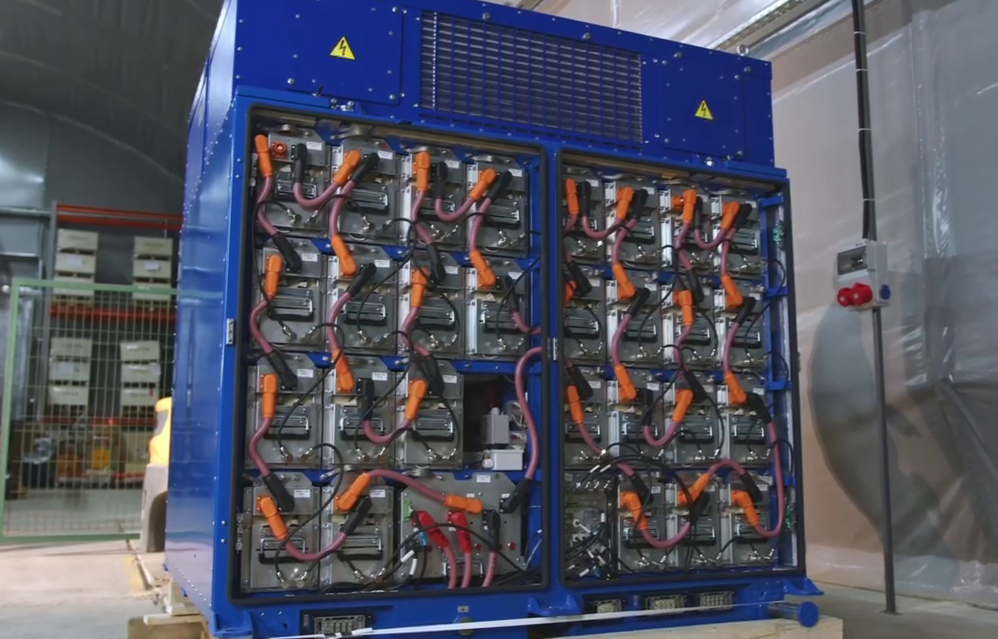
It should be noted that the tests of the EMKA2 electric locomotive on a traction lithium-ion battery, developed and manufactured by the RUSNANO Group as part of a tripartite agreement with Russian Railways and TMH JSC with the support of the Government of the Russian Federation, were successfully completed earlier.
On the latest energy storage device with a capacity of more than 200 kWh and weighing more than 3.5 tons, the diesel locomotive, without connecting to the contact network, is capable of carrying a train weighing up to 2,000 tons over a distance of up to 14 km.
The traction battery with an upgraded control and thermostatic system, as well as updated software, helps to significantly reduce operating costs, increase energy efficiency and provides a more stable connection to the locomotive. In addition, the storage device can be charged directly while the locomotive is moving and supports recuperation functions, which ensures the return of part of the energy spent back to the system or to the storage device.
Also, the use of energy storage devices in electric locomotives, in contrast to traditional diesel shunting locomotives, reduces the amount of harmful emissions into the atmosphere.
Earlierwww1.ru wrote about thecompletion of tests of the first Russian hybrid electric locomotive "EMKA2".
Read also materials:
Now on home

Start of deliveries scheduled for 2027
Over 51,000 new motorcycles were sold in Russia in 2025

The car will take at least a year to assemble

The application's audience has reached 20 million users

The model will be included in the list of cars for taxis, price - from 2.25 million rubles

All parking lots of the "Administrator of the Moscow Parking Space" are connected to the service

The cars will be supplied to the Moscow Transport Service Directorate
Deliveries to India may begin in 2028
The technology provides automated search for all types of defects in power units
The plane flew 500 km, accelerating to 425 km/h

The plant stated that the information about the termination of purchases for models 6 and 8 is not true
Scientists are using the "Ekran-M" installation