At South Ural State University (SUSU), a hybrid module has been developed and patented that allows a car to travel up to 10 km with a damaged engine. This was announced by Alexander Rulevsky, Head of the Department of Automobiles and Automotive Service at SUSU.
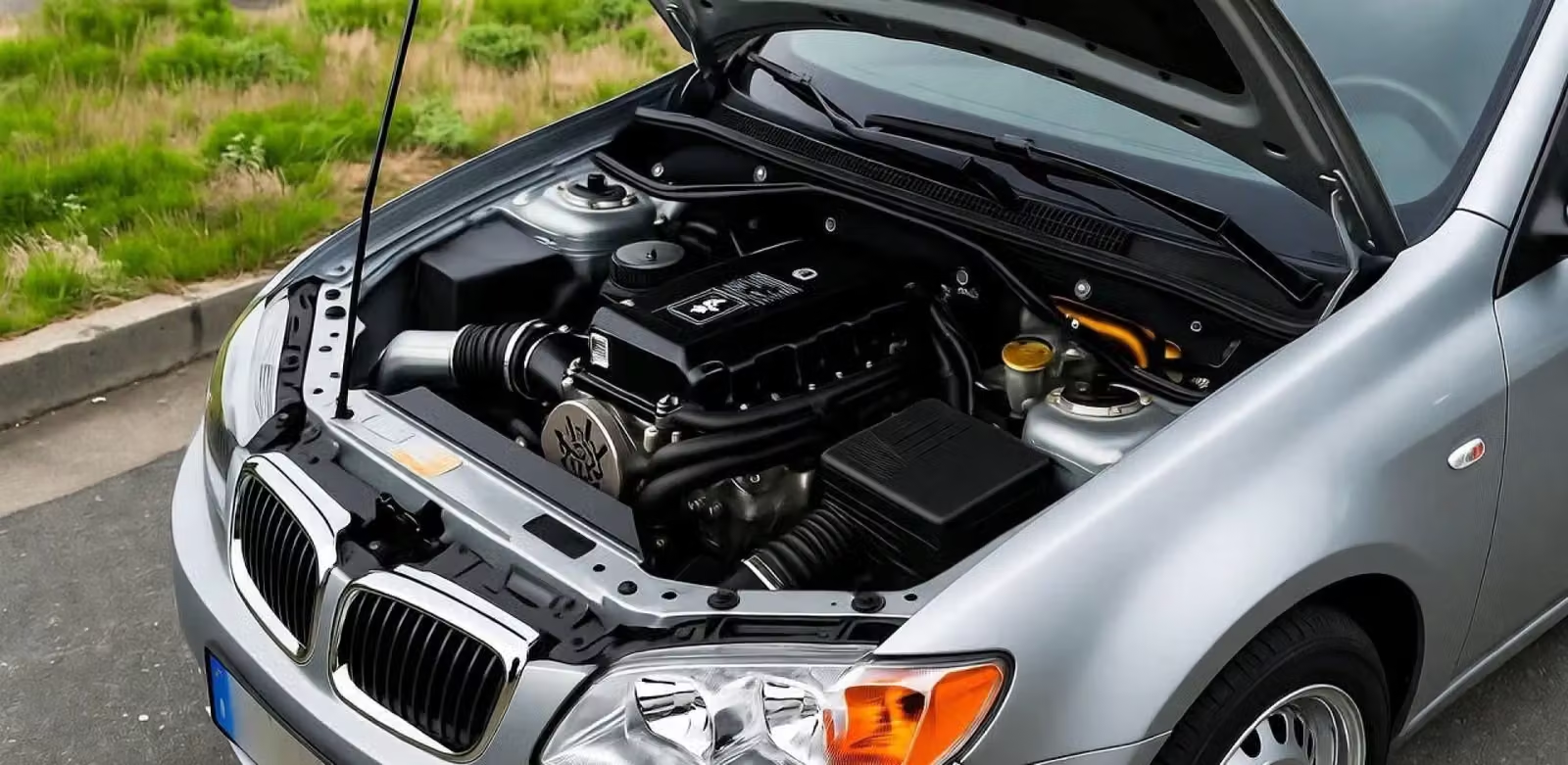
The system is a hybrid drive. The device includes an electric motor connected to the transfer case via a hydraulic clutch.
The backup drive we patented has a number of significant advantages. The main thing is simplicity, that is, our hybrid module can be installed on a car directly during its operation, without the need to change the factory design of the car.
The backup drive is universal and suitable for various car models, allowing the electric motor to operate independently of the main engine. It is activated only if the main engine fails.
We specifically use an "archaic" hydraulic clutch, and not all kinds of friction clutches with electronic control. We believe that the use of a hydraulic clutch ensures stable operation of the drive even in extreme conditions. In addition, our system gives an ordinary car a number of new qualities, for example, it gives it the ability to move silently for a short time and, moreover, with minimal heat radiation.
The hydraulic clutch provides a smooth transition between operating modes and smooths out dynamic loads. This prevents possible damage to the transmission.
Earlier www1.ru reported that Rostec developed a fully Russian power module for charging electric vehicles.
Read also materials on the topic:
- A drone port for a car has been created in Russia
- Replacing Android Auto: Russian company Navio has developed PlayAuto for integration with standard media systems of cars
- A new car windshield wiper system for AvtoVAZ was invented in Kaluga
Never miss our newsAdd this site to your preferred sources to see us more oftenAdd on Google