Translated with AI from the Russian original.
Soviet aviation was on a huge rise in the late 80s. About a dozen design bureaus were actively working on aircraft models, many of which were ahead of their time. It seemed that a cloudless future awaited domestic aviation.
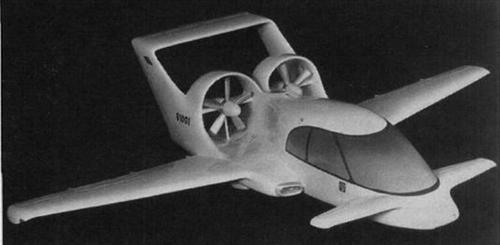
However, the USSR eventually collapsed, after which all aircraft engineers without exception were deprived of funding, and already partially completed projects hung in the air. The 90s became a time of survival for them, when even one promising aircraft liner was an event. At the same time, new aircraft were designed against all odds, and you will learn about some of the work of the Tupolev Bureau in this material.
Light aircraft Tu-44 "Irbis"
From the beginning of the 1990s, the Design Bureau was engaged in design work on the light aircraft "Irbis". Its designer, A. D. Revo, brought an almost finished project to Tupolev. The Tu-44 was an all-metal aircraft with a T-tail, low wing and retractable three-pillar landing gear.
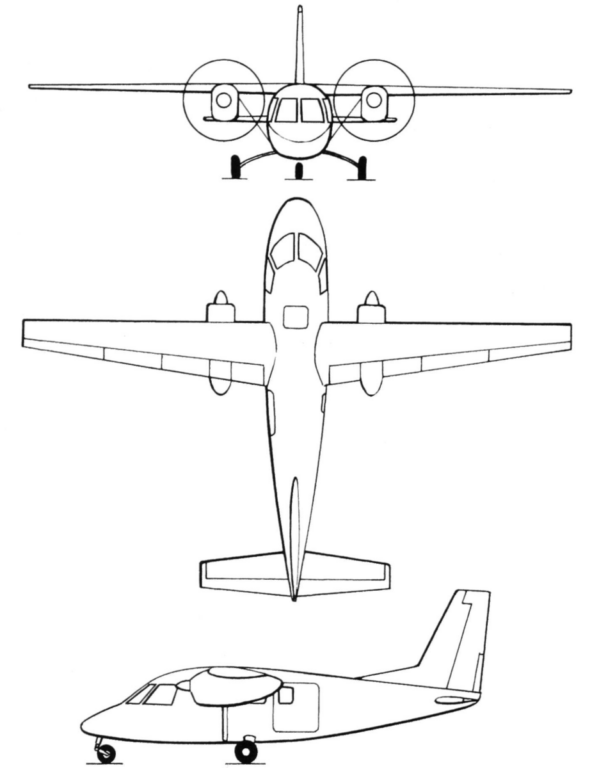
Engineers offered a choice of three engines - Pratt & Whitney with a capacity of 500-550 hp, a six-cylinder Lycoming IO-720A engine with air cooling with a capacity of 400 hp or a six-piston Teledyne Continental TSIOL-550 with liquid cooling at 350 hp. With Revo's departure from the Design Bureau, development was discontinued.
Light multi-purpose aircraft Tu-41 "Orka"
During this period, Revo was simultaneously working on the light multi-purpose aircraft Tu-41 Orlan (Tu-NN). The engine (Pratt & Whitney Canada PT6A with a capacity of 1800 hp, driving a six-bladed propeller, or PT6T TwinPac, driving a four-bladed counter-rotating propeller) was located behind the cockpit, and a long propeller drive shaft was located between the two seats.
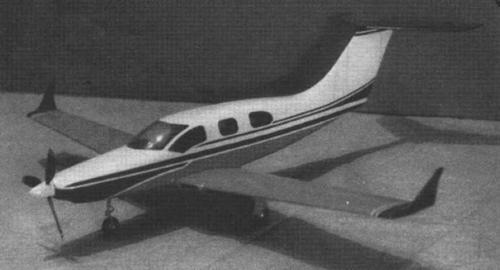
The Tu-41 could also be used as a transitional trainer for pilots of jet attack aircraft or fighters, as a reconnaissance or patrol aircraft, or to intercept low-flying aircraft. Again, with Revo's departure, the Tu-41 project stalled.
Tu-64 "Varyag" (project)
The project of another aircraft, the Varyag, was presented at the Tupolev Design Bureau by its designer A. Kh. Karimov in the mid-1990s as the Tu-64. Karimov previously worked at the Myasishchev Design Bureau and became deputy scientific director of the Tupolev ANTK. Several configurations were proposed, including a mixed configuration of the fuselage and wing in the tail section. The Tu-64B "Bashkiria" version, which was eventually selected, had a traditional layout.
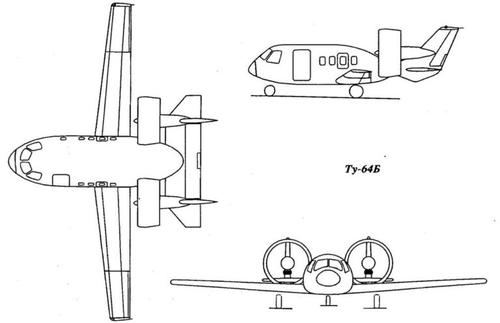
Its distinctive features were two engines on double wingtips and a voluminous fuselage. The engines were to be two-stroke TDA-450 axial designs. However, the Tu-64B did not pass the technical proposal stage, and all work was discontinued after Karimov left the Design Bureau.
Earlierwww1.ru reported that ODK has found a way to reduce the weight of the PD-8 aircraft engine for SJ-100 and Be-200 liners.
Read also materials:
New MS-21-310: what kind of aircraft, characteristics, prospects and role in Russian aviation
Never miss our newsAdd this site to your preferred sources to see us more oftenAdd on Google

















