A multi-rotor drone has been developed in Novosibirsk for the rapid deployment of a secure communication line. During the flight, the device unwinds the optical cable and lays an aerial physical line of up to 20 km.
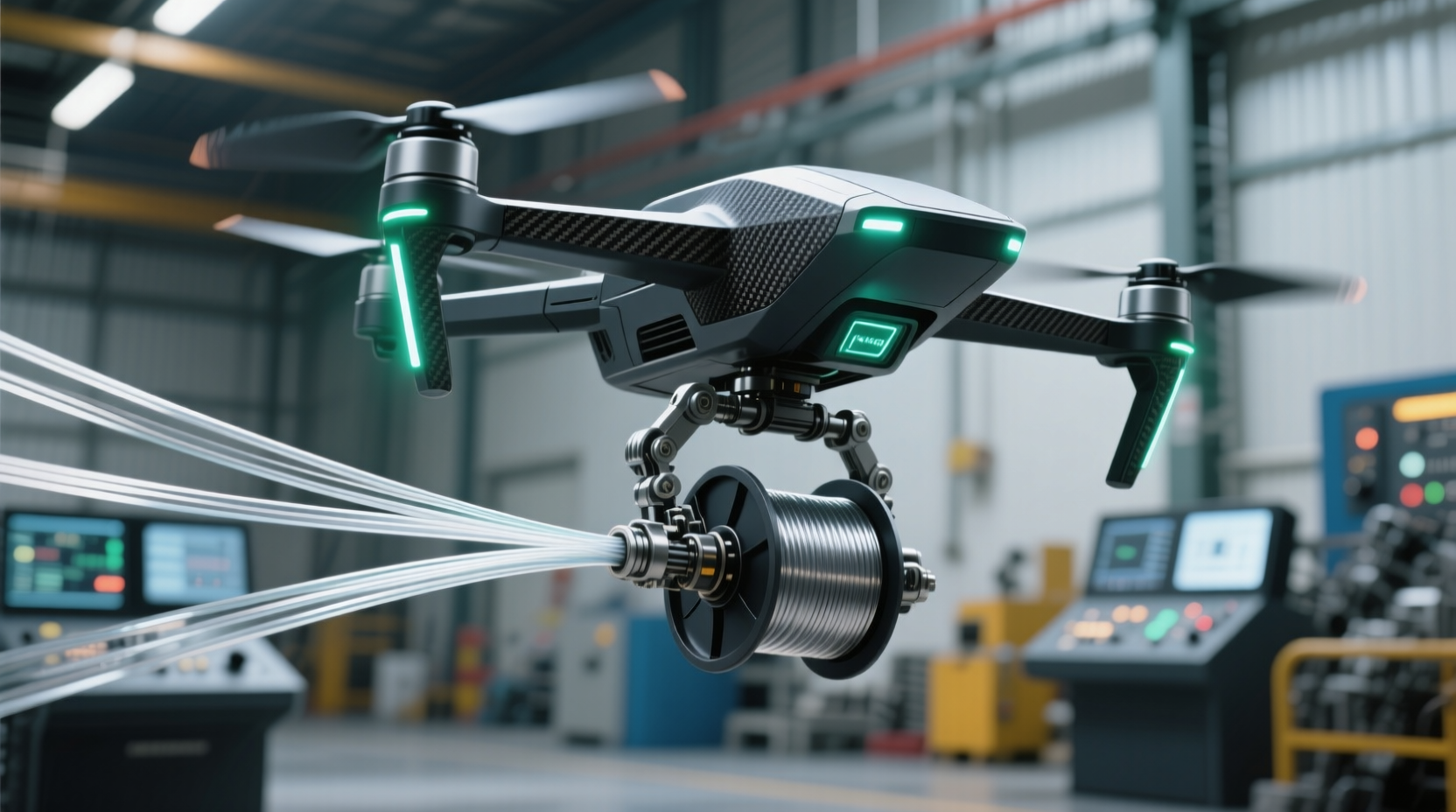
The drone and line laying are controlled via an optical channel from a ground station, without the use of radio communication - this reduces the risk of interception and interference. After landing, the operator connects a communication node that provides Ethernet ports, Wi-Fi, IP-telephony, and interfaces for radios and headsets.
According to the project engineer Ivan Mikhlin, he is not aware of any analogues to this complex. The system is designed to organize reliable communication in areas where conventional communication is unavailable for technical or natural reasons, including for evacuation or emergency assistance.
The drone's components are accessible and easily replaceable. Mass production is planned for approximately 2026. The main advantages are stealth and channel protection, which makes the system useful in special operations, during accidents, and in conditions of strong electromagnetic interference.
The Novosibirsk development was presented at the forum "Technoprom-2025", which takes place from August 27 to 30 in Novosibirsk.
Read more on the topic:
The secrets of how drones work on fiber optics have been revealed
Russian fiber-optic kamikaze drones turned into a mini-"Solntsepek" in a clever way
The military named the main technical disadvantage of fiber-optic kamikaze drones
Now on home

Start of deliveries scheduled for 2027

Over 51,000 new motorcycles were sold in Russia in 2025

The car will take at least a year to assemble

The application's audience has reached 20 million users

The model will be included in the list of cars for taxis, price - from 2.25 million rubles

All parking lots of the "Administrator of the Moscow Parking Space" are connected to the service

The cars will be supplied to the Moscow Transport Service Directorate

Deliveries to India may begin in 2028

The technology provides automated search for all types of defects in power units

The plane flew 500 km, accelerating to 425 km/h

The plant stated that the information about the termination of purchases for models 6 and 8 is not true

Scientists are using the "Ekran-M" installation