Researchers from Innopolis University have developed an algorithm that reduces traffic congestion using quantum computing. The technology analyzes traffic, redistributes vehicle flows, and suggests new routes in less than a second. The results are published in the journal Nature Scientific Reports.
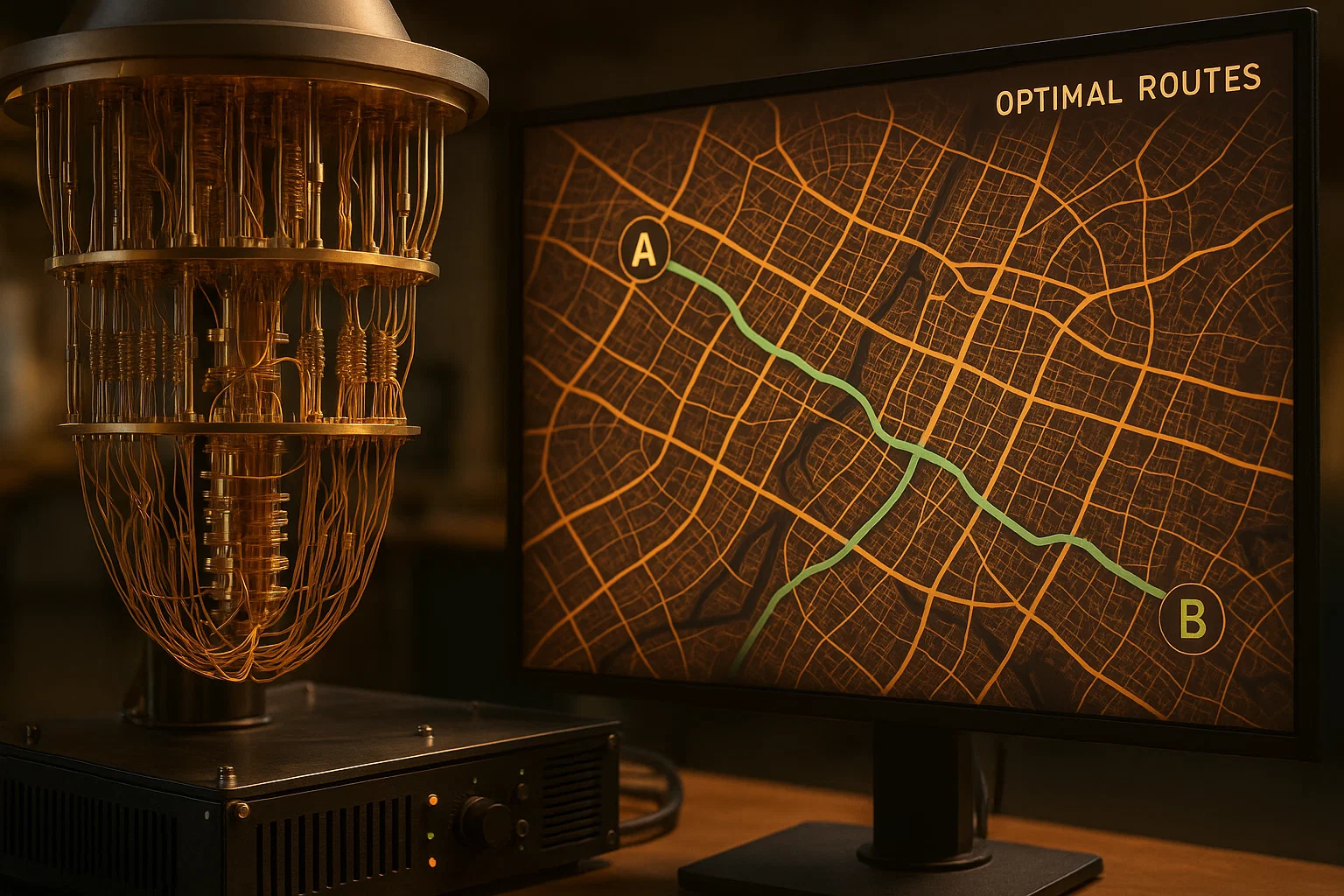
The scientists tested the algorithm on a virtual model of the Almaty road network. They used a D-Wave quantum processor and data on the movement of 100-500 cars. The system divided the city map into segments, identified the most congested areas, and converted the problem into a format suitable for quantum computing.
The method reduced traffic jams by 25% for 100 cars and by 62% for 500. The calculation time was 0.15-0.225 seconds - 13-20 times faster than classical methods.
Quantum computing offers a fundamentally new approach, allowing us to process a lot of data simultaneously and find optimal solutions much faster than classical methods.
Previous experiments, such as those by Volkswagen and D-Wave, used hybrid approaches but faced limitations when scaling. The Innopolis team solved the problem by breaking the global task into smaller subtasks. In the future, the system can be improved by adding data on traffic lights, weather, and driver behavior.
Read more on this topic:
Our answer to Steam: Rostelecom introduces a new platform with games for PC and consoles
New system from RTU MIREA will save satellites from breakdowns in orbit