At Belgorod State University (BelSU), an innovative coating has been created for endobiliary stents used in the treatment of complications of gallstone disease. The new composition based on methylcellulose and chlorhexidine bigluconate eliminates the risk of allergic reactions and bacterial complications characteristic of iodine-containing analogues.
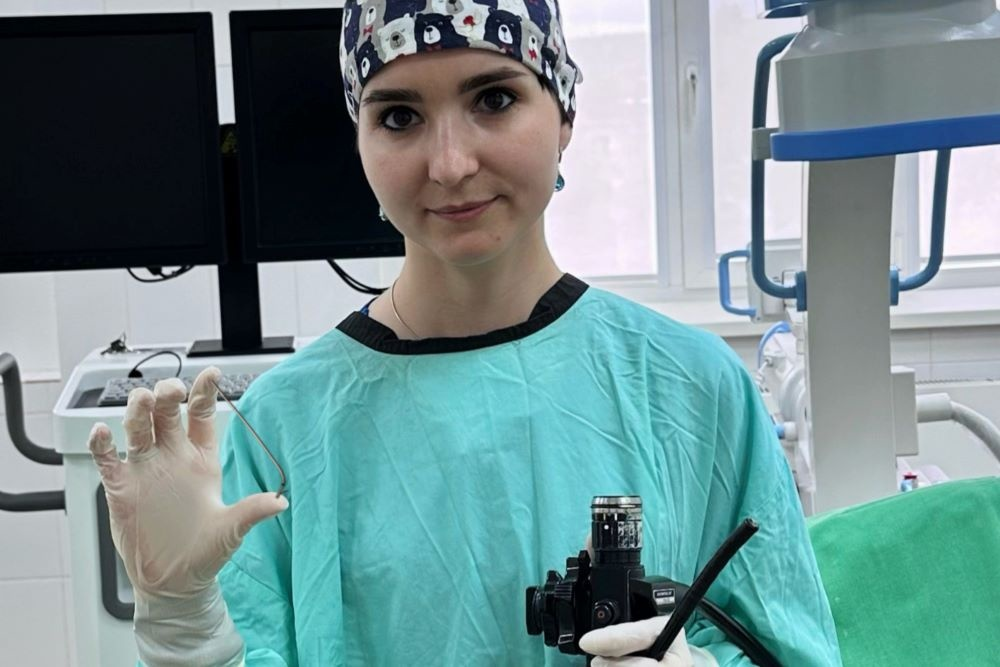
Stenting of the bile ducts is a standard procedure for mechanical jaundice and cholangitis. However, most modern stents contain iodine, which can cause allergies, and is also contraindicated in patients with thyroid diseases. In addition, over time, a protein film forms on the surface of the stents, contributing to the reproduction of bacteria and inflammation.
The development of Belgorod scientists solves these problems. Methylcellulose provides biocompatibility, and chlorhexidine bigluconate suppresses the growth of bacteria. As Professor Andrey Yarosh, the project manager, explained:
The method of applying a hypoallergenic antiseptic coating proposed by us is simple and can be mastered at medical industry enterprises. And drainage of the common bile duct in patients with purulent cholangitis using a stent, on which such a coating has been pre-applied, is possible in any hospital equipped with endoscopic equipment and having qualified personnel.
Clinical trials at the Belgorod Regional Hospital confirmed the effectiveness of the technology. The coating reduces bacterial colonization and prevents the deposition of calcium salts, extending the service life of the stent.
Read more on the topic:
Disappearing alloy: Russian scientists accelerated the dissolution of medical implants by two times
Vessels in the lumen: an innovative method for examining the human body has been developed
Never miss our newsAdd this site to your preferred sources to see us more oftenAdd on Google