Translated with AI from the Russian original.
A unique mesh coating designed to protect infrastructure from drone attacks has been developed and patented at Penza State University (PSU). This was reported by the university's press service.
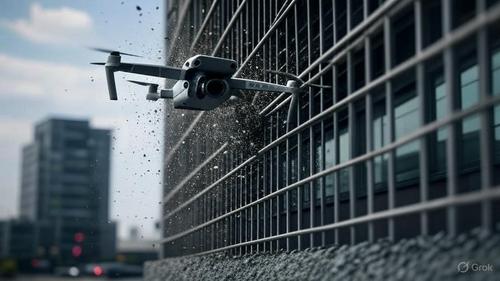
The know-how will stop UAVs and prevent them from reaching their goal of damaging important facilities.
Existing methods of protection against UAVs have their limitations. Metal meshes are not suitable for protecting power lines due to the risk of electrical short circuits.
The new development involves the use of synthetic materials to create a protective coating consisting of several layers of mesh fabric. The uniqueness of this solution lies in the fact that, due to the different strengths of the coating sections, a drone, when colliding with the mesh, will change its direction of flight. This will provide protection against both aircraft-type drones and ammunition dropped from them.
The developed protective mesh is more affordable than existing analogues and can be manufactured in any size. It is easy to transport and quickly deployed over objects. This makes it ideal for protecting high-voltage power lines and other energy facilities, as well as civilian vehicles and buildings.
Earlier, www1.ru reported that approved new measures to protect transport infrastructure from UAVs.
Read materials on the topic:
Why are modern drone protection systems ceasing to work?
The most effective means against kamikaze drones was invented in Russia
A way to protect oil refineries from drone attacks has been found
Never miss our newsAdd this site to your preferred sources to see us more oftenAdd on Google

















