Translated with AI from the Russian original.
ITMO University has developed an innovative setup that combines two advanced analysis methods: atomic force microscopy and Raman spectroscopy. The device, created in collaboration with the company "Active Photonics", is housed in a portable mini-laboratory where experiments with cell cultures are already being conducted. This technology allows for highly accurate study of the properties of materials and cells, opening up new perspectives for biomedicine, including the development of tissues and organs.
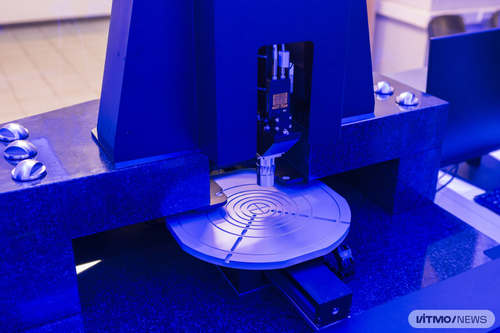
Atomic force microscopy creates a three-dimensional map of the material's surface using a nanometer needle, while Raman spectroscopy analyzes its chemical composition using laser radiation scattering. Previously, these methods required separate instruments, which increased the cost of time and resources. The new ITMO setup combines them in one device, providing simultaneous analysis of the shape and composition of the substance. The built-in software automatically processes the data, minimizing errors and increasing the reproducibility of results.
The mini-laboratory is equipped with a robot manipulator that replaces the laboratory assistant, placing samples on a movable platform for scanning. This increases the accuracy of experiments, allowing studies to be repeated many times. The setup is already being used to study the mechanical properties of cell membranes, their chemical composition, and interaction with biomaterials.
With the device, it is possible to measure the mechanical properties of the cell membrane (stiffness, elasticity, and adhesion), conduct its chemical analysis, control the quality of cell cultures, and study the interactions of cells with biomaterials. All this helps to study the properties of materials and the features of their modeling, gives an idea of how these materials interact with biological systems. This information is useful in the development of materials for biological applications: for example, in the creation of biocompatible coatings on implants, drug delivery systems, and the cultivation of tissues and organs.
The laboratory also studies cryoprotectors, develops platforms for monitoring microorganisms, and studies the effect of nanostructures on cell growth. One of the promising areas is the programming of cardiomyocyte behavior to create an artificial heart.
Read more on the topic:
New type of reactor for producing synthesis gas created by scientists of Perm Polytechnic
Method for rapid and inexpensive analysis of heavy metals in vegetable oils created by researchers at St. Petersburg State University
Highly accurate method for early diagnosis of Alzheimer's disease developed by scientists at PNRPU
Never miss our newsAdd this site to your preferred sources to see us more oftenAdd on Google

















