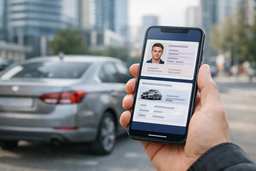
Smart Engines has developed an innovative solution for remote user identification that works directly in the browser without uploading biometric data. The system analyzes a photo from a document (e.g., passport) and a client's selfie, providing a percentage of match. Unlike traditional biometric methods, the technology does not store face templates and does not use external databases, which reduces the risk of information leakage.
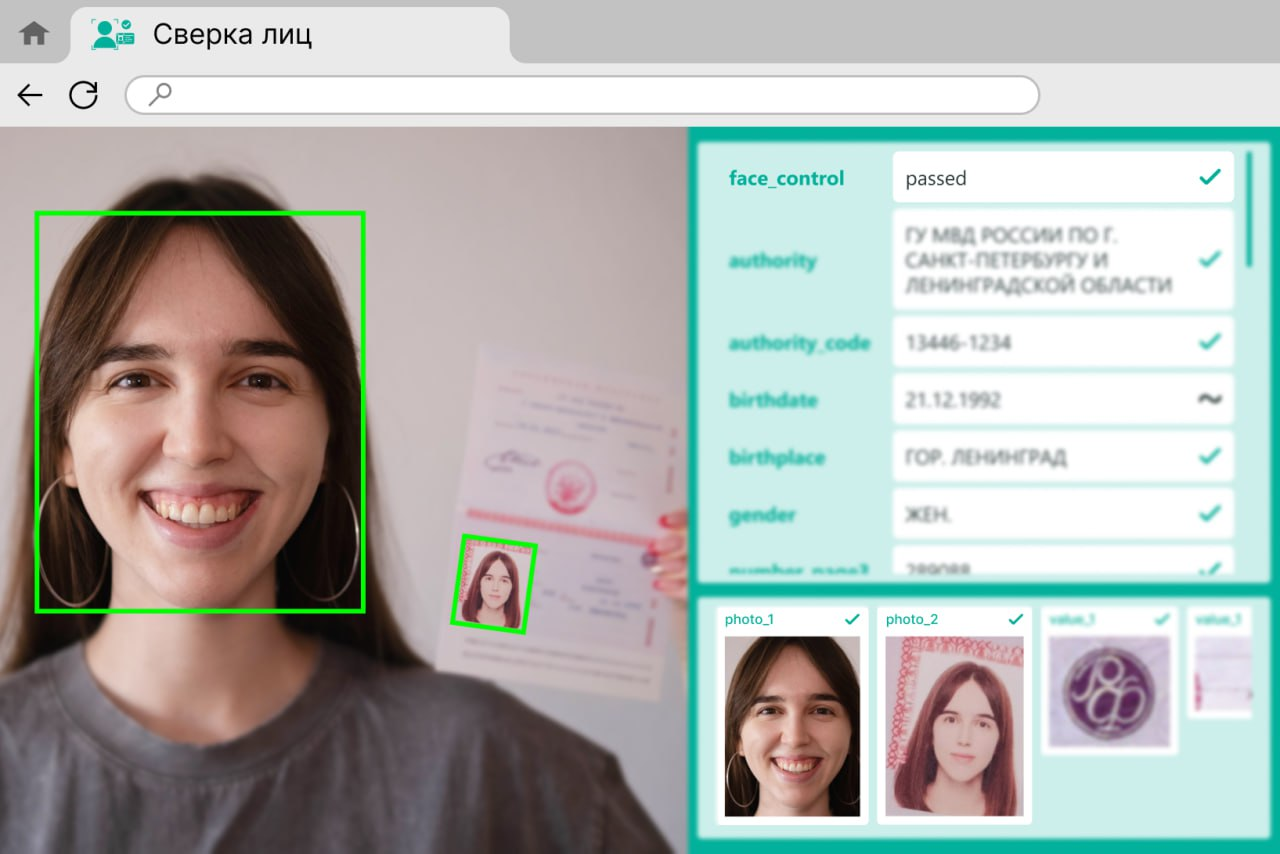
The algorithm is based on the principles of Explainable AI (XAI) – it doesn't just give a "yes/no" answer, but shows the degree of confidence in the match. This makes the process more transparent and reduces the number of false rejections. An additional module checks the "liveness" of the image, protecting against fake documents and deepfake attacks. All calculations occur locally, without transferring data to the cloud, which meets strict information security requirements.
While other companies are betting on service models that are controversial from a privacy perspective, Smart Engines is consistently expanding the capabilities of its secure web solution. We have successfully transferred barcode, phone number, bank card, and Russian passport recognition to the browser. The convenience and reliability of this technology have been confirmed by leading Russian banks, which have been using our web solutions for more than two years. Now we have implemented liveness detection and face verification. The next step is full-text recognition and recognition of structured documents on the web.
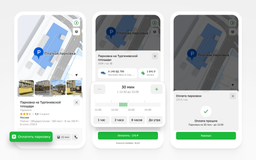
The solution is already being tested in the banking sector for remote account opening, as well as in sharing services and other areas where quick identification is required. The technology is supported by all popular browsers, including Chrome, Firefox, and Safari, thanks to the use of WebAssembly (WASM), which provides high performance. The company's immediate plans include the implementation of structured document recognition (e.g., contracts) directly in the browser, which could simplify processes in the legal sector and public services.
Читайте ещё материалы по теме:
Искусственный интеллект Smart Engines проверит надежность контрагентов для грузоперевозок
Fplus вступила в BIOS-клуб: компания представила единое решение BIOS и BMC для российских серверов