The Association of Tourist Aggregators (ATAG) has proposed introducing regulatory restrictions on the return of foreign housing booking services, such as Booking and Airbnb, to the Russian market. This proposal was made by ATAG Director Alexander Bragin.

Global players have unlimited financial capabilities, a huge network effect, and decades of product development. If they return, we will again see monopolization of the market and unlimited access to personal data by foreign entities, with the location of users and their movements. In this regard, we propose to normatively limit the possibility for global companies to return to our market.
Bragin noted that some subsidiaries of Western companies are not formally closed and are in a "dormant" state. This allows them to quickly resume their activities in Russia. Booking still has this opportunity. The expert stressed the need for prompt preparation of legislative amendments regarding travel aggregators in conjunction with the State Duma and federal authorities.
He also recalled that before leaving the Russian market, Booking.com and Airbnb effectively dominated, occupying up to 75-80% of the housing booking market.
Earlierwww1.ru reported that the Booking hotel booking applicationappeared in RuStore - without Russian hotels.
Read materials on the topic:
RuStore Opens Its Doors: Platform Opens Registration for Game Developers from Other Countries
Russian Analog of Google Play: How RuStore Works and What It Is Useful For
Now on home

Start of deliveries scheduled for 2027

Over 51,000 new motorcycles were sold in Russia in 2025

The car will take at least a year to assemble

The application's audience has reached 20 million users

The model will be included in the list of cars for taxis, price - from 2.25 million rubles
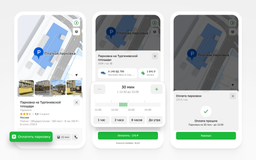
All parking lots of the "Administrator of the Moscow Parking Space" are connected to the service

The cars will be supplied to the Moscow Transport Service Directorate
Deliveries to India may begin in 2028

The technology provides automated search for all types of defects in power units
The plane flew 500 km, accelerating to 425 km/h

The plant stated that the information about the termination of purchases for models 6 and 8 is not true

Scientists are using the "Ekran-M" installation