Russian researchers have taken an important step towards creating more reliable perovskite solar batteries that can operate for a long time. The efficiency of such batteries already exceeds 26%, but their widespread use is limited by durability issues. Scientists from the Federal Research Center for Chemical Physics and Chemical Materials of the Russian Academy of Sciences have found a way to improve the stability of these technologies.
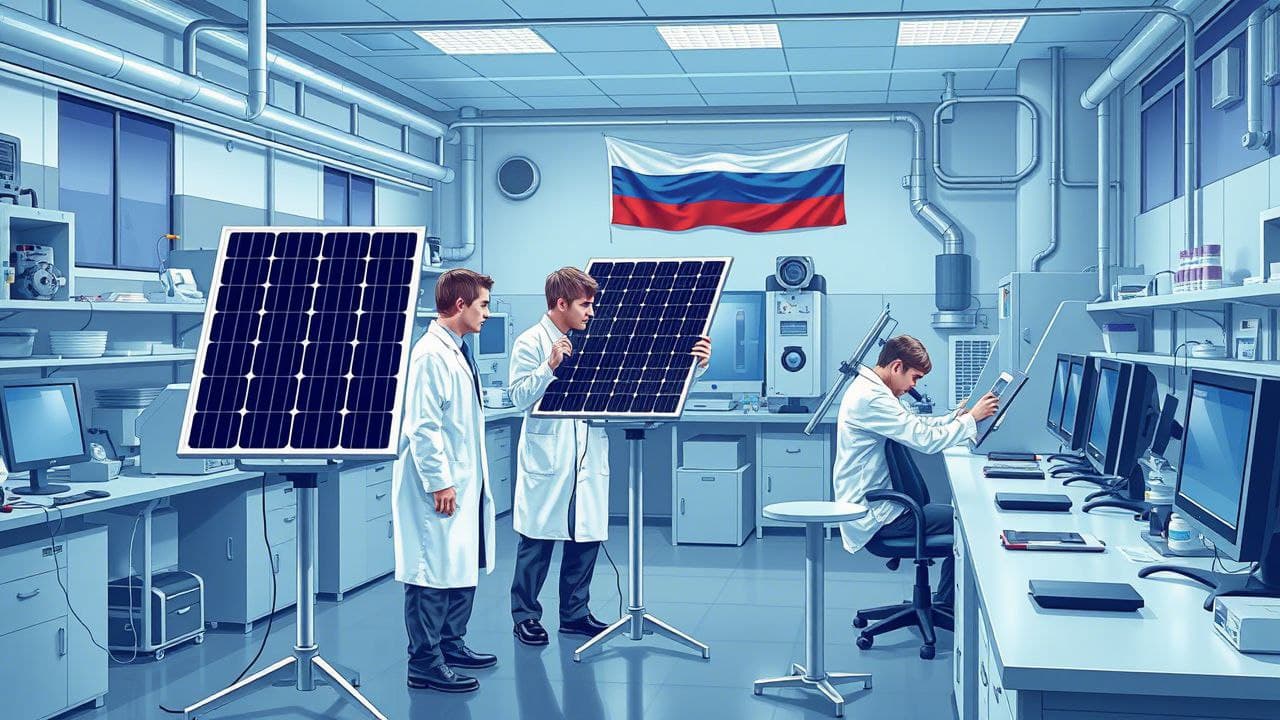
A key factor affecting the lifespan of perovskite solar cells is the interaction of the active perovskite layer with zinc oxide (ZnO), which is used as an electron transport medium. Although ZnO has high transparency and good electronic properties, its direct contact with perovskite can cause the latter to degrade.
In the course of the study, scientists examined how different methods of depositing zinc oxide films affect the stability of two types of perovskite: the classic MAPbI3 and the new methylammonium-free Cs0,12FA0,88PbI3. This made it possible not only to compare the methods, but also to understand how the materials interact at the interface of their contact.
Experts identified three key groups of chemical compounds that play an important role in this interaction: acetate, hydroxyl, and amine. Batteries created using zinc oxide and amine passivation showed excellent results: after 2500 hours of light exposure, they retained about 68% of their original efficiency. At the same time, structures with traditional acetate ZnO quickly lost their properties.
Scientists have proven that by controlling the surface chemistry of zinc oxide, its characteristics can be significantly improved. This approach may also be useful for other oxide layers used in perovskite solar panels. The research opens up new opportunities for increasing both the efficiency and durability of solar cells.
Read more on the topic:
Solar batteries with elements on a sapphire substrate will be developed in Stavropol
Perovskite roll-to-roll solar panels will be created at NUST MISIS
The first full-format perovskite battery was created in Moscow with low cost and high performance











