The War Motors Museum presented the most massive tractor of the Red Army, the STZ-5 tracked vehicle, restored to running condition in Evgeny Shamansky's workshop. It was originally called STZ-NATI 2TV. Work on the machine started in 1933 at the Stalingrad Tractor Plant, as well as by those seconded to them from the Moscow Research Tractor Institute.
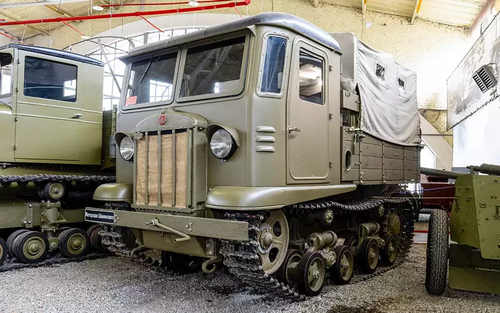
The machine was originally conceived for dual purposes, that is, for both military and civilian use. Moreover, the basis for it was the SHTZ-NATI tractor, which had a cab pushed onto the engine to free up space for the body.
The hood was located between the seats of the crew commander and the driver-mechanic. Behind the cab is a cargo platform with folding sides and a fuel tank, benches for the gun crew and a removable tarpaulin.
Serial production of the STZ-5 for the national economy began in 1937, and in 1939 it was adopted into service. By 1942, more than 10 thousand vehicles had been made. In the initial period of the war, the BM-13-16 Katyusha rocket launcher was installed on the STZ-5 chassis.
Read materials on the topic:
Patriot on automatic: UAZ reveals the date of introduction of automatic transmission on an SUV
Insiders explained why UAZ raised prices for cars
Prices have changed in the Russian used car market: UAZ Patriots are getting cheaper
Never miss our newsAdd this site to your preferred sources to see us more oftenAdd on Google

















