As a result of a successful orbit correction maneuver, the International Space Station rose by 2.1 kilometers, setting a new working altitude of 419 kilometers above the Earth's surface. The correction was performed by the "Progress MS-30" cargo ship.
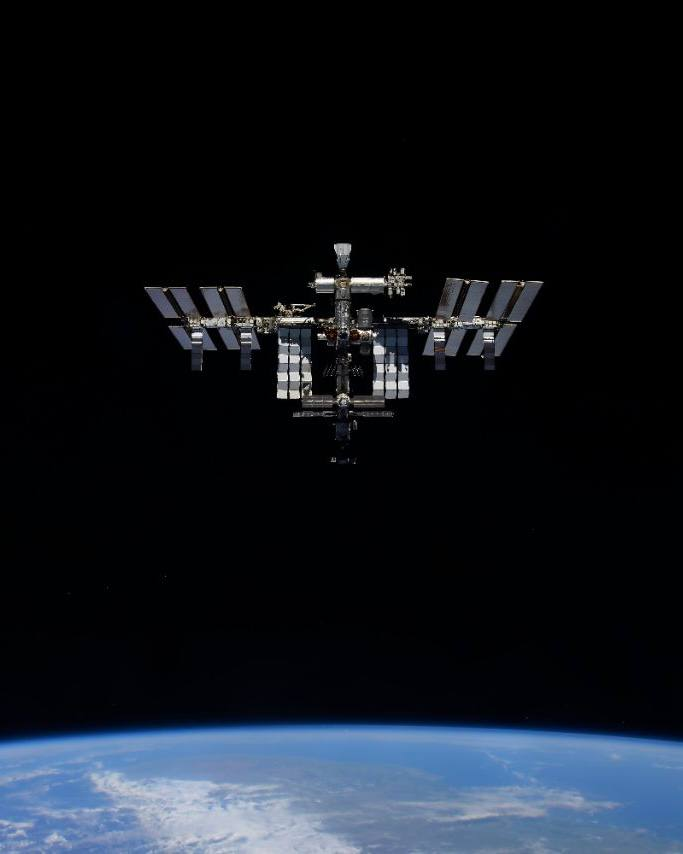
The station raising operation began at 03:08 Moscow time. The engines of "Progress MS-30" worked for 639.7 seconds, providing the necessary impulse of 1.22 meters per second. This made it possible to compensate for the natural decrease in altitude caused by the resistance of the rarefied upper atmosphere.
The altitude of about 420 kilometers was chosen for a reason. This is the optimal point for the station to operate - it is high enough to hardly feel air resistance, but low enough for convenient docking with arriving spacecraft.
Regular orbit corrections are an important part of daily work on the ISS. The station's altitude is affected not only by atmospheric resistance, but also by the gravitational forces of the Sun, Moon, and other celestial bodies. That is why the crew has to periodically "raise" the station so that it remains at the desired altitude.
Read more on this topic:
Russia handed over the keys to the ISS to the Americans
"Progress MS-30" passed vacuum tests at Baikonur
The "Progress MS-30" space truck is being brought to Baikonur
Never miss our newsAdd this site to your preferred sources to see us more oftenAdd on Google

















