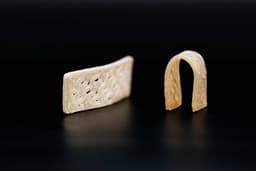
An innovative biopolymer material has been created in Novosibirsk that can withstand low temperatures and improve the strength of road surfaces in Arctic conditions. This was announced by Sergei Golovin, head of the advanced engineering school at Novosibirsk State University.

Due to temperature fluctuations, the soil layer is often destroyed, which can pose a danger to infrastructure facilities built on the ground. To solve this problem, biopolymers were created at Novosibirsk State University. These substances are able to adapt to temperature changes and freeze-thaw cycles. With each such cycle, the structure of the material becomes more durable.
Laboratory tests have shown that the resulting material can withstand temperatures down to -20 °C.
The proposals for strengthening roads that we have made have already been tested and have already shown their effectiveness. This direction has shown its effectiveness.
By 2026, it is planned to use these developments to strengthen about 100 kilometers of winter roads and ice crossings. The created components comply with strict environmental regulations and standards for Arctic regions.
Earlier, Russian scientists developed innovative batteries capable of operating at temperatures below minus 50 °C. Prototypes of new batteries are already being tested. They can be used in the most difficult conditions, for example, in the Arctic or space, as well as in communication and navigation systems, in transport and on satellites.
Read materials on the topic:
A technology for improving the quality of road surfaces has been created in Perm
Generates energy for lighting: an innovative road surface has been developed in Novgorod