The Russian BMP-3M infantry fighting vehicle surpasses the American M2A2 Bradley in all respects. A comparative analysis was provided by the Telegram channel "Engineering of War."
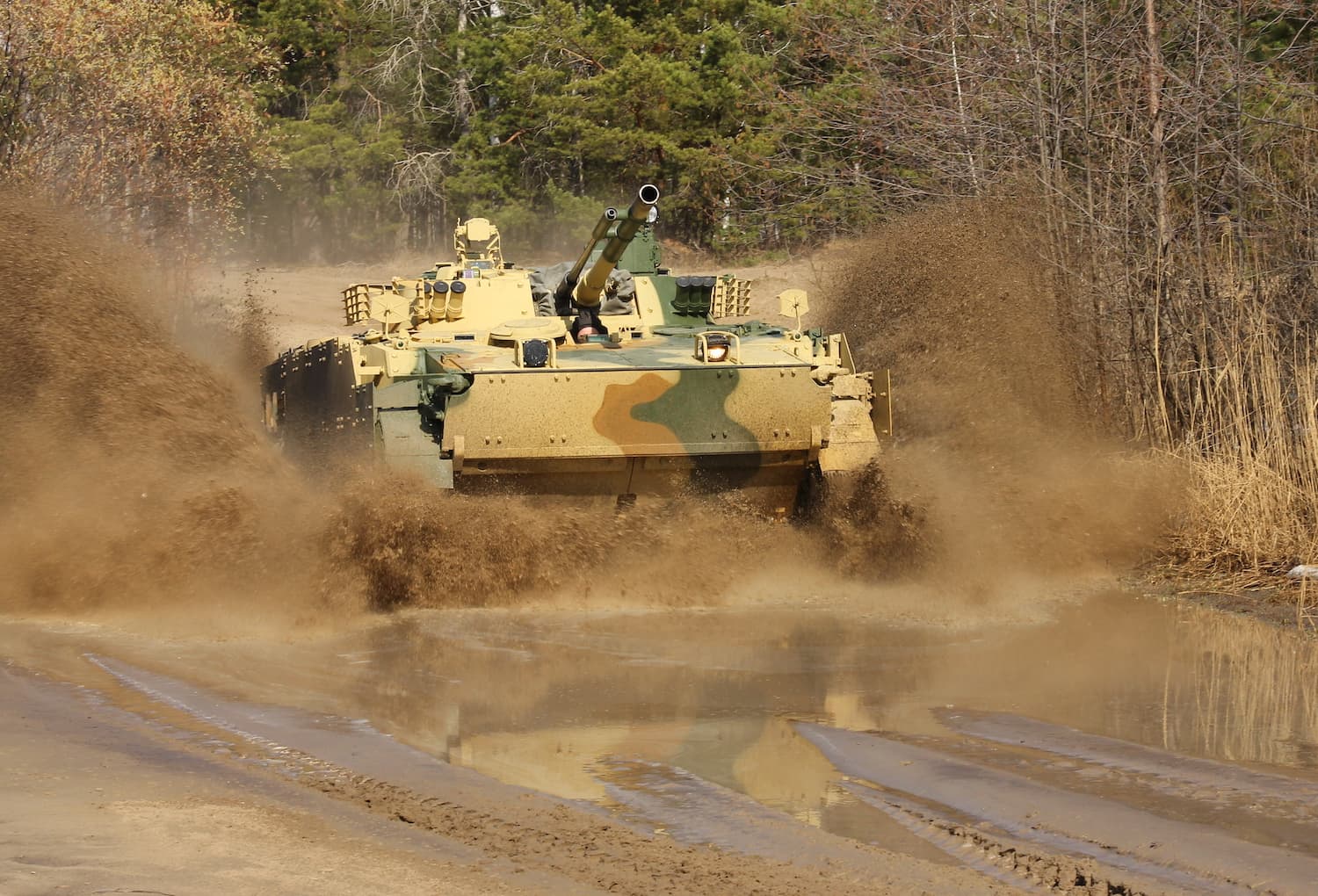
The authors noted that the armor of the Bradley and BMP-3M is practically the same multilayered with steel screens. At the same time, the Russian vehicle has an advantage in height at 2.3 m, which is lower than the American one at 2.9 m.
The Russian BMP has an "Arena" active protection system against enemy anti-tank guided missiles (ATGMs), as well as a "Shtora-1" electronic-optical protection system. Bradley does not have such modern means of protection. In addition, the BMP-3M has a slightly higher engine power and speed.
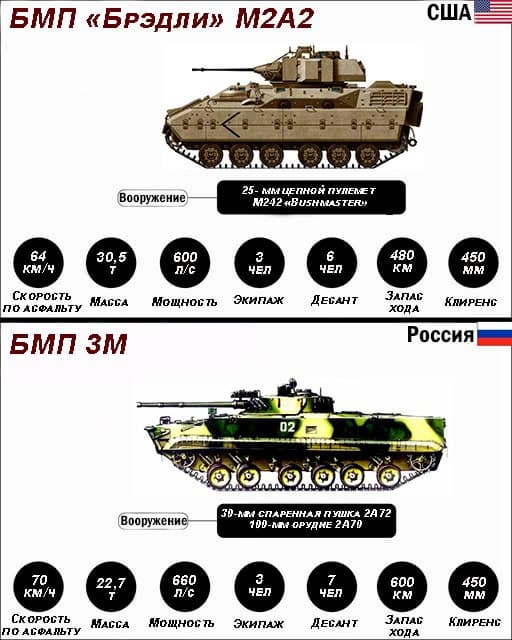
In terms of armament, the Russian BMP also surpasses the American one. Bradley does not carry a full-fledged gun, but only two types of machine guns - 25-mm and 7.62-mm. The BMP-3M has a 100-mm 2A70 automatic gun and a 30-mm rifled automatic gun.
In addition, the Russian vehicle has three 7.62-mm Kalashnikov machine guns and a Kornet ATGM launcher. The BMP-3M is capable of hitting 9M117 ATGMs at a distance of 5.5 km, compared to 3.8 km for the American model.
Earlier www1.ru reported that the modernized BMP-2M also surpassed the American Bradley in firing range by two times.
Read more materials:
Now on home

Start of deliveries scheduled for 2027

Over 51,000 new motorcycles were sold in Russia in 2025

The car will take at least a year to assemble

The application's audience has reached 20 million users

The model will be included in the list of cars for taxis, price - from 2.25 million rubles

All parking lots of the "Administrator of the Moscow Parking Space" are connected to the service

The cars will be supplied to the Moscow Transport Service Directorate
Deliveries to India may begin in 2028

The technology provides automated search for all types of defects in power units

The plane flew 500 km, accelerating to 425 km/h

The plant stated that the information about the termination of purchases for models 6 and 8 is not true
Scientists are using the "Ekran-M" installation