Scientists at the Institute of Semiconductor Physics of the Siberian Branch of the Russian Academy of Sciences have developed photocathodes for the future Russian telescope "Spektr-UV".
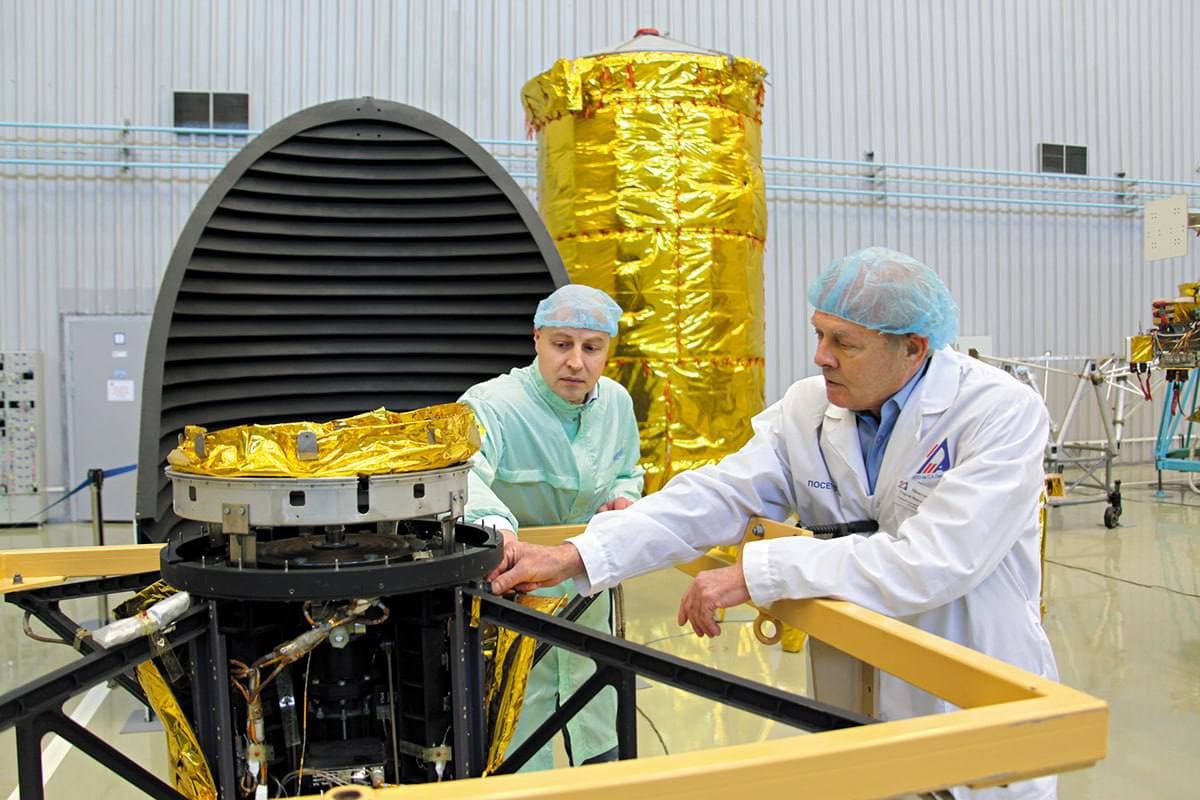
These devices, based on the principle of the external photoelectric effect, will be used to obtain electron beams with the required characteristics, which is important for electron microscopes, night vision systems, and other applications.
The photocathodes will be installed on the telescope's space detectors, which are scheduled to be launched after 2028. The development of photocathodes is based on an image intensifier using cesium-iodide materials. The first prototypes of devices capable of providing images in the ultraviolet range have already been created.
"Spektr-UV" is an international project aimed at studying the Universe in the ultraviolet range, which is inaccessible for observations from Earth. After 2022, the project is being fully implemented by Russia.
Read more on the topic:
Not time to retire: the Spektr-RG Observatory will operate longer than the warranty period
"Spektr-RG": what the Russian astrophysical observatory can do