At Omsk State Technical University, a way has been devised to make the spent stages of Soyuz-2 type launch vehicles more environmentally friendly. One of the main problems is the unspent residue of liquid fuel - primarily hydrogen peroxide, which is used to operate the gas generator of the rocket engine of the rocket's side booster. The fuel can not only harm the environment if it gets onto the earth's surface, but also cause fires at the crash sites of rocket debris.
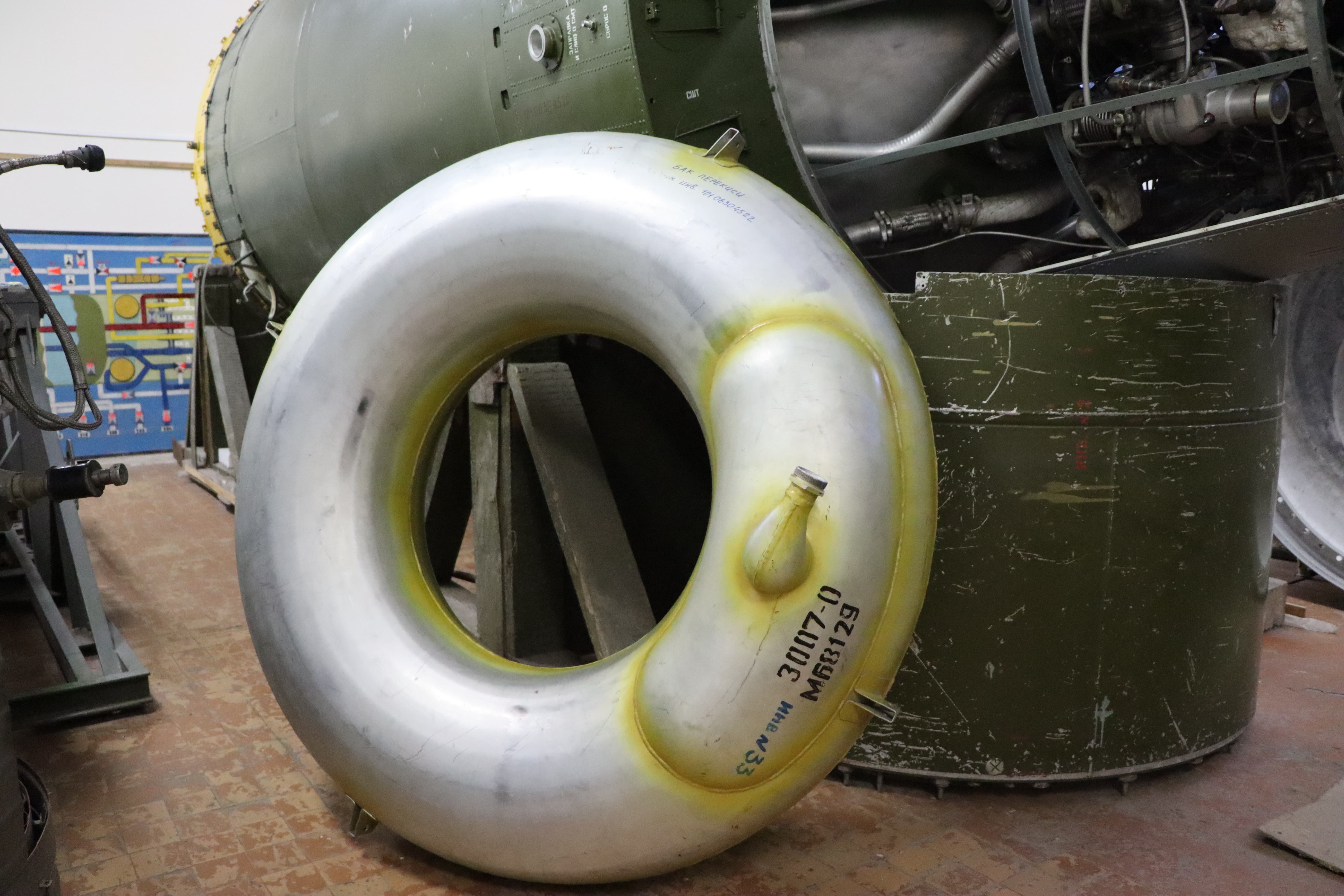
It is known that in 70% of cases, fires occur when the side boosters of Soyuz-2 type launch vehicles fall due to spillage of unspent fuel residue. After the spent side booster of the rocket falls and the toroidal tank is depressurized, liquid hydrogen peroxide residue spills out and interacts with the structural elements of the rocket's side booster, which leads to an exothermic decomposition reaction of the liquid hydrogen peroxide residue.
Trushlyakov, along with colleagues Vladislav Urbansky and Ural Abdrakhimov, with the support of the Russian Science Foundation, developed a method for "passivating" liquid hydrogen peroxide residue by displacing it through an additional valve and a special drain line using residual pressurization pressure. The effectiveness of this method has already been successfully verified through mathematical modeling in the Ansys Fluent software product.
The process is initiated after the rocket separates from the central block and begins to rotate on the passive section of the trajectory. When the side booster rotates at an angular velocity of 3 radians per second, liquid hydrogen peroxide residue stably accumulates at the tank's intake device. Estimates have shown that about 90% of the hydrogen peroxide can be effectively removed by residual pressure within 45 seconds. Another 10% of the liquid residue evaporates and freezes as the pressure decreases.
The method developed by Omsk scientists can be used to improve the environmental safety of not only modern, but also developing advanced launch vehicles.
Read related materials:
Russia launches second Kondor-FKA satellite into Earth orbit
Speed - 12 km per second: RKK Energia talks about the space enemies of the ISS
Total liquidation: Roscosmos will sell off old space technology