At the Nizhny Tagil Iron and Steel Works, the development of a project for the production of rails from bainitic steel has been launched. This was announced by Sergey Puzyrev, Deputy Head of the Research Center of EVRAZ NTMK JSC.
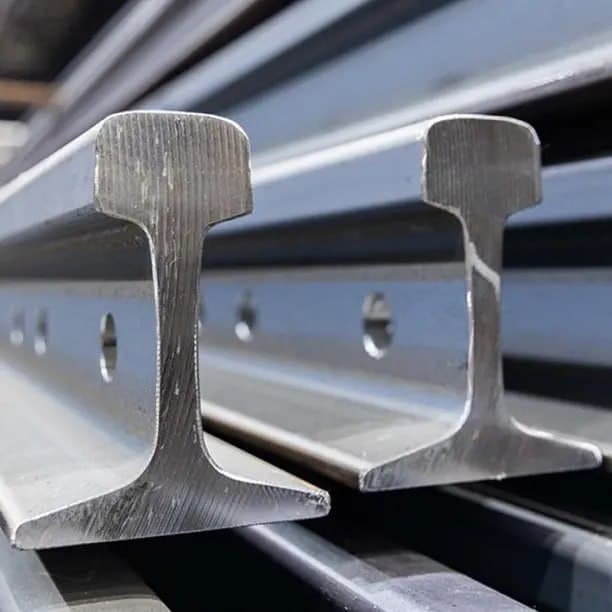
Studies have shown increased wear resistance and less susceptibility of rails to contact-fatigue defects. The comparison was made with analogs of the pearlitic class.
In the future, rails made of bainitic steel may become a unique product intended for particularly harsh operating conditions: in curved sections of the track with a radius of 650 m or less, in sections of the track with prolonged ascents and descents at temperatures below 20 degrees Celsius.
Bainitic materials for creating rails were developed jointly with the Ural Institute of Metals. Specialists have determined the optimal technological parameters of production to increase strength, ductility and impact toughness.
A pilot batch of new rails will be produced in 2025. They will begin testing them at the Experimental Ring in Shcherbinka.
Earlier, www1.ru reported that the UK-25/25 track-laying crane got into the Book of Records.
Read related materials:
The first section of the modernized track appeared on the Trans-Siberian Railway
«Ural Locomotives» completed testing of the bogie for the 2TE35A diesel locomotive
Now on home

The service contains data on 45,000 fraudulent sites

The state has accelerated the introduction of unmanned solutions, integrating them into the real sector of the economy

Modernized engines may equip the Lada Azimut crossover

The price is 132 billion 265.8 million rubles

The manufacturer plans to strengthen its lineup of light commercial vehicles

The production of carbon fiber was organized in the shortest possible time

Electric vans will speed up the repair of urban transport infrastructure

Countries are working to synchronize regulations in the field of AI

The service's average daily audience is 55 million people

Stable Isomaterial Based on Metakaolin Has a Density Below 300 kg/m³

Re-identification quality improved twofold with new DynaMix method

Russians will be able to find out about debts online