Rosatom scientists have created a unique test stand for developing technology for producing low-carbon hydrogen from natural gas. JSC "Rosatom Nauka" reported that the stand's tests have been completed, and it is fully ready for research. Autonomous tests have been completed, the stand's readiness has been confirmed, and the implementation of the experimental work program has begun.
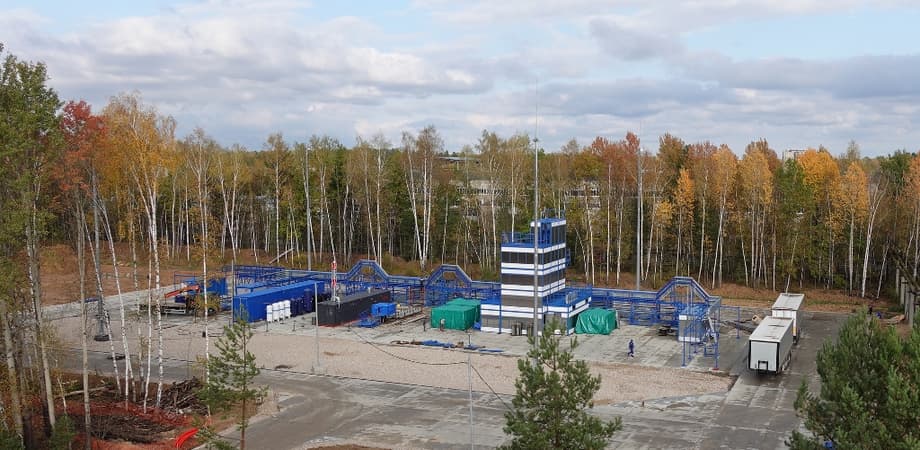
At the site of the Protvino branch of NII NPO "LUCH" (part of the Scientific Division of the Rosatom State Corporation), the creation of a modular test stand was completed to develop the technology for the production of low-carbon hydrogen and hydrogen-containing mixtures using the heat of a high-temperature gas-cooled reactor (HTGR). Specialists from TsKBM (part of the Machine-Building Division of Rosatom State Corporation) and employees of Peter the Great St. Petersburg Polytechnic University (SPbPU, part of the Consortium of опорных вузов «Росатома») participated in the development and creation of the stand. The work is carried out by order of the Electric Power Division of Rosatom within the framework of an investment project to create domestic technologies for large-scale production and consumption of hydrogen and hydrogen-containing products.
The stand has a hydrogen production capacity of 150 Nm³/h with a purity of at least 99.99%. It includes separate block modules for developing all technological stages: preparation of compressed natural gas, sulfur removal, steam and steam-oxygen reforming, medium-temperature and low-temperature conversion of carbon monoxide, amine purification and separation of hydrogen from a hydrogen-containing mixture. When creating the stand, Russian specialists developed unique equipment that allows conducting studies of non-stationary processes, testing catalysts and sorbents, as well as studying the processes of heat exchange, gas dynamics and combustion.
Rosatom specialists have formed and begun implementing an experimental work program on the created stand, designed for 2024–2025. The results of these studies will be used to validate calculation models, create "digital twins" and design industrial apparatuses for the chemical-technological part of a nuclear power technology station and large-tonnage installations for the production of synthesis gas, hydrogen, methanol and ammonia.
The creation of such a unique stand allows not only to develop technical solutions for the chemical-technological part of a nuclear power technology station with an HTGR reactor, but also to organize a scientific and testing center for testing synthesis gas processing technologies, carbon dioxide separation, purification and use of hydrogen. The presence of such a stand significantly expands Rosatom's capabilities in mastering the corresponding technologies, provides developers from all over the country with the opportunity to conduct tests and develop processes and catalysts on a mutually beneficial basis, which is an important step towards achieving Russia's technological independence in the field of hydrogen technologies and the production of gas chemical products using low-carbon nuclear heat, as emphasized by the scientific director for the chemical-technological part of the NPTS, scientific consultant to the general director of JSC "Concern Rosenergoatom", corresponding member of the Russian Academy of Sciences Anton Maksimov.
The technological scheme for the production of low-carbon ammonia, developed by specialists of the Protvino branch of JSC "NII NPO "LUCH", as the most promising hydrogen-containing product on the world market, is optimized for use in the chemical-technological part of the high-potential heat produced by a high-temperature gas-cooled reactor (with a single thermal capacity of 200 MW) as part of a nuclear power technology station or an external energy source. A distinctive feature of the technology is the use of modern equipment, as well as reduced energy costs for the separation of carbon dioxide and hydrogen.
Read materials on the topic:
Now on home

Start of deliveries scheduled for 2027

Over 51,000 new motorcycles were sold in Russia in 2025

The car will take at least a year to assemble

The application's audience has reached 20 million users

The model will be included in the list of cars for taxis, price - from 2.25 million rubles

All parking lots of the "Administrator of the Moscow Parking Space" are connected to the service

The cars will be supplied to the Moscow Transport Service Directorate

Deliveries to India may begin in 2028

The technology provides automated search for all types of defects in power units

The plane flew 500 km, accelerating to 425 km/h

The plant stated that the information about the termination of purchases for models 6 and 8 is not true

Scientists are using the "Ekran-M" installation