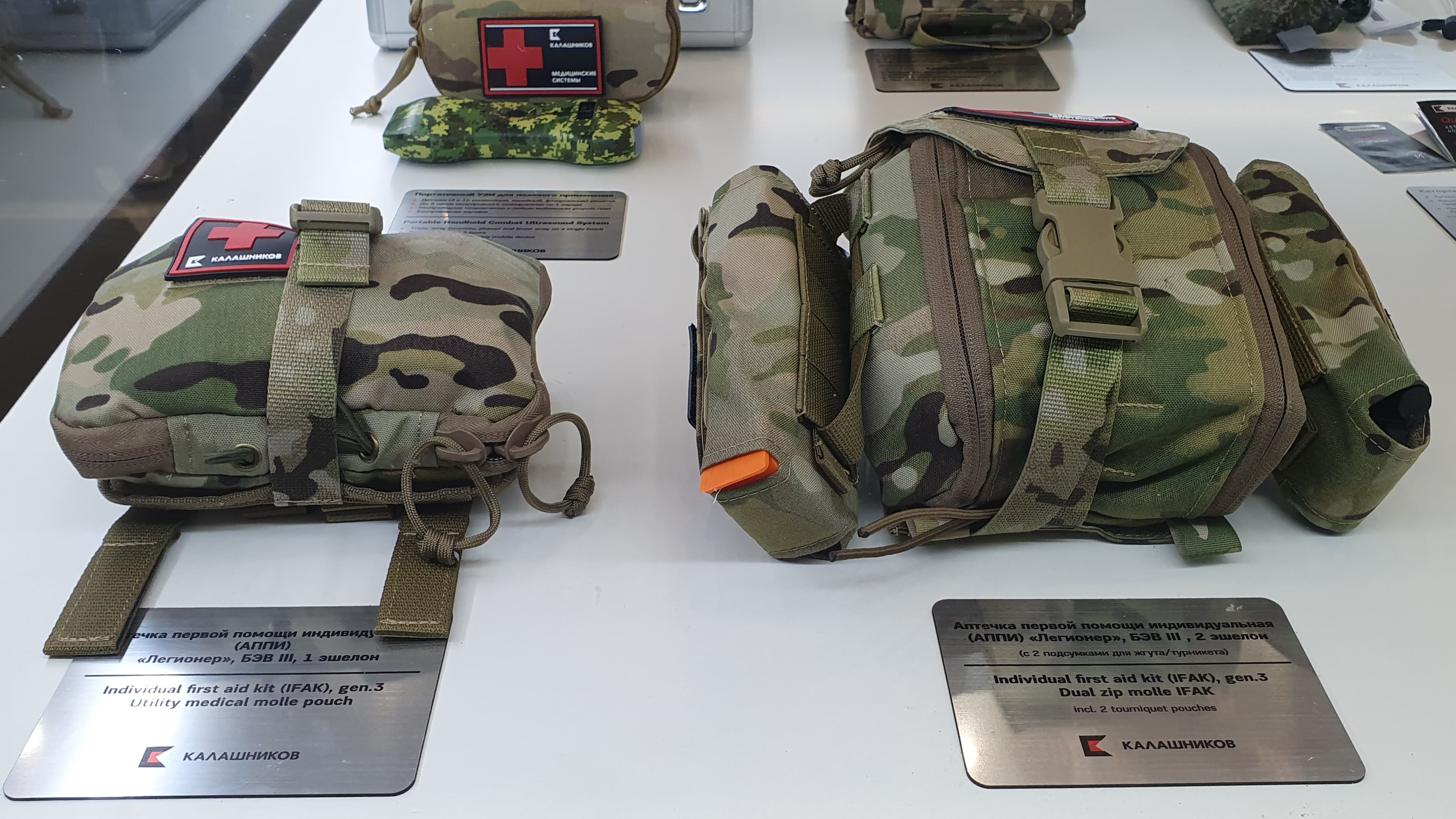
At the recent Warrior Expo 2024 military and tactical equipment exhibition in Moscow, the Kalashnikov concern presented its latest Legionnaire individual first aid kit (APPI). It was created together with military personnel, taking into account their combat experience, so itcontains everything a fighter needs for self-help and mutual assistance in the "red" and "yellow" zones. Now the first aid kit is undergoing combat tests, and it was shown to the general public for the first time, and not only to military personnel, military medics and volunteers.
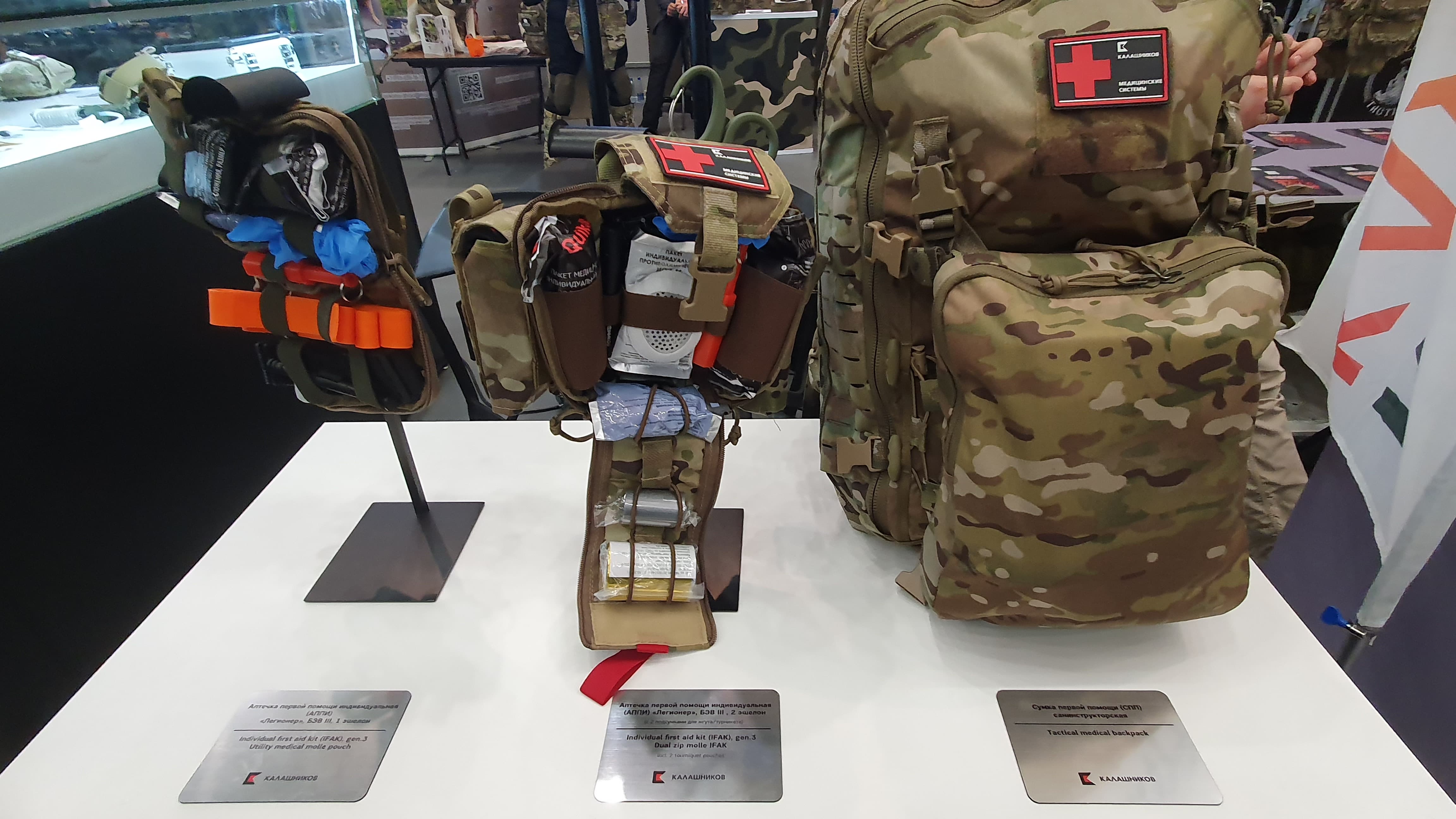
According to the concern, part of the contents of the two-tier first aid kit was developed exclusively by Kalashnikov specialists, andhas no analogues in terms of its characteristics.
For example, this is a hemostatic bandage, a sublingual analgesic and an anti-burn agent based on track membranes for providing self-help and mutual assistance on the battlefield before being admitted to the hospital.
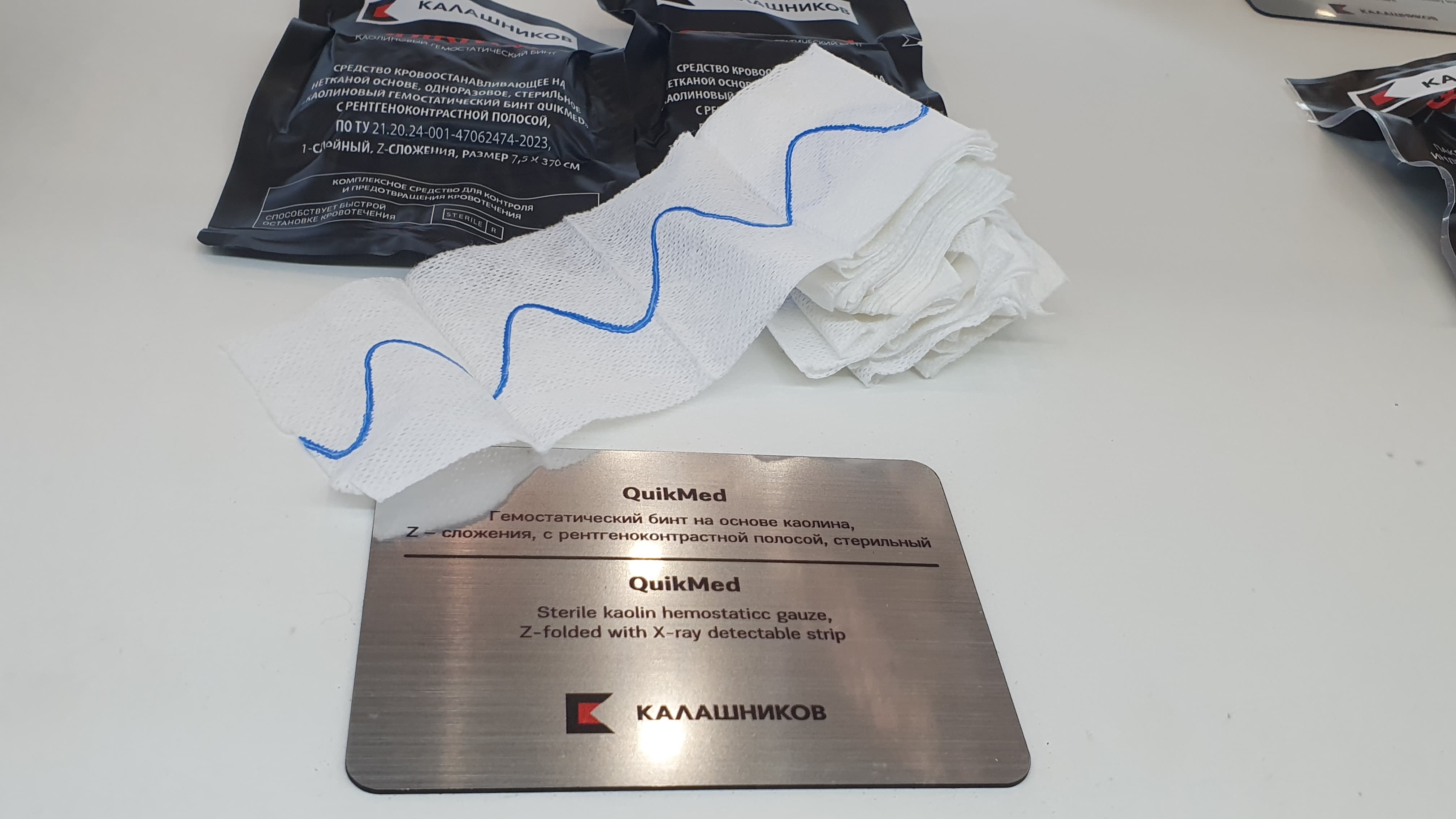
Kalashnikov's hemostatic bandage showed 88% efficiency in stopping massive arterial bleeding. This is the best result among all Russian analogues.
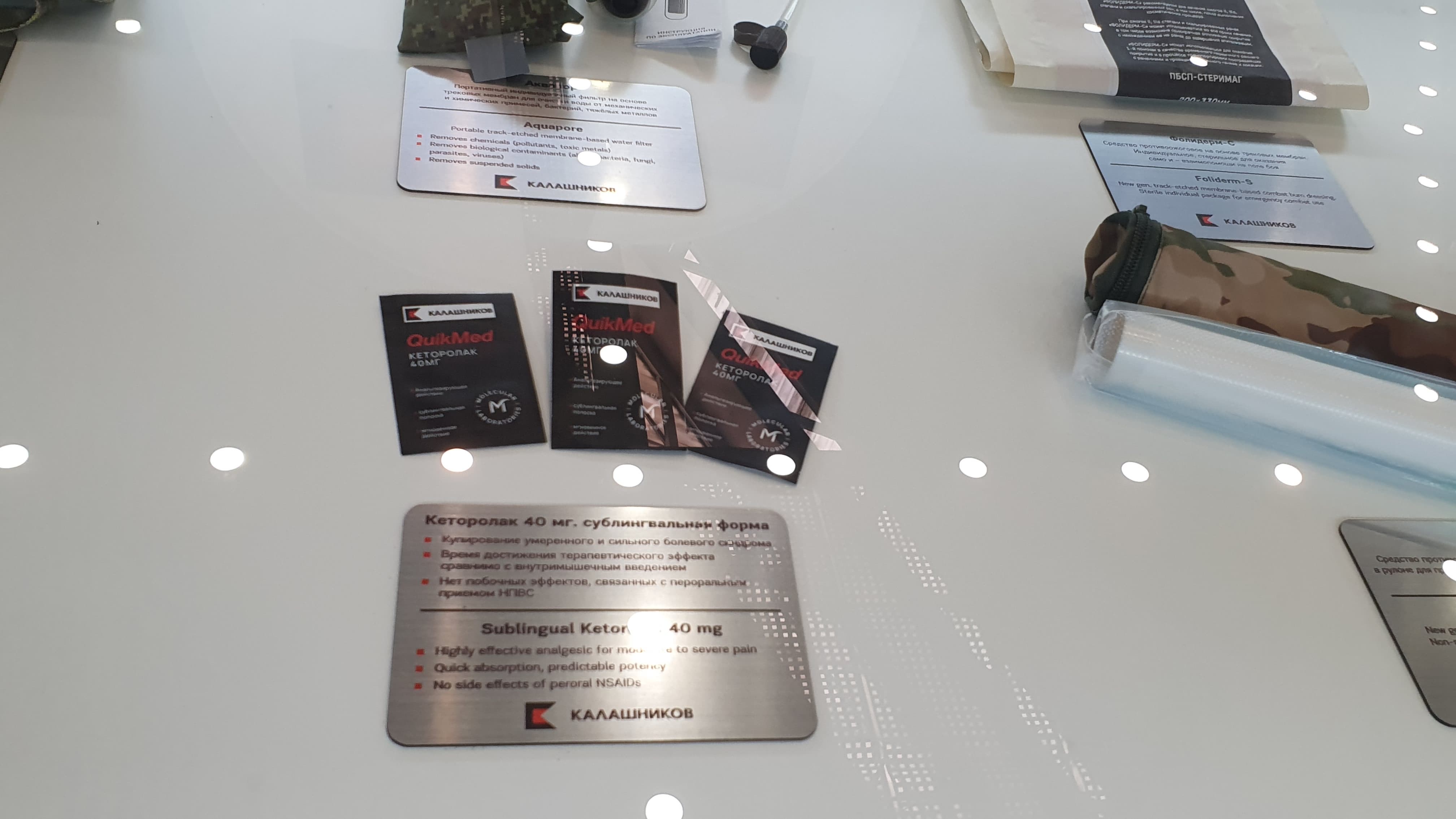
The painkiller in the first aid kit - ketorolac - relieves moderate to severe pain during injury. At the same time, the speed of achieving the effect from placing the tablet under the tongue is comparable to the intramuscular administration of similar drugs in the form of an injection.
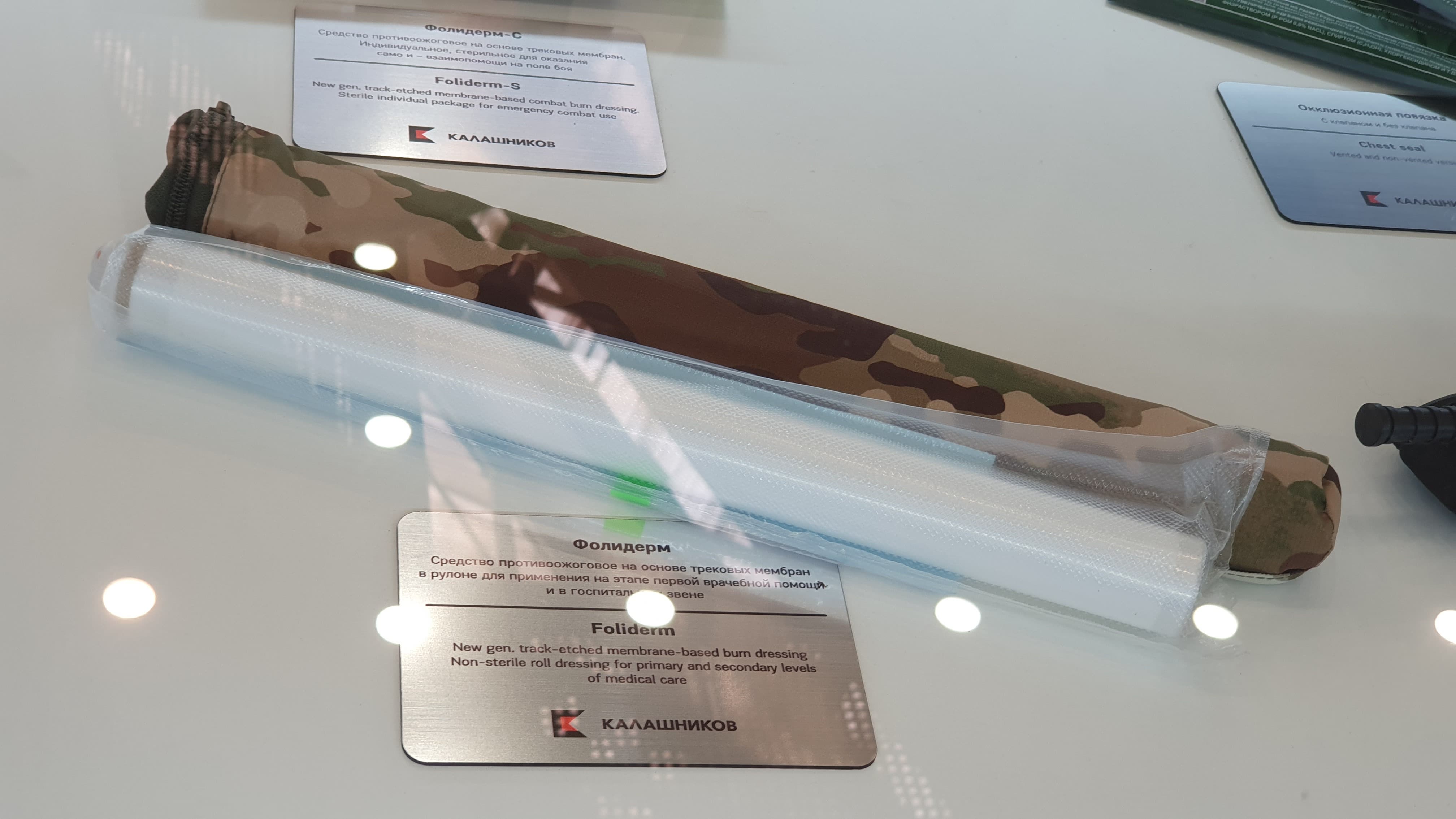
Foliderm is another unique development of Kalashnikov, an anti-burn agent based on track membranes for providing self-help and mutual assistance before being admitted to the hospital. A new generation is on the way, which will replace the current hydrogel wipes with lidocaine in the Legionnaire first aid kit in 2025. Foliderm-S is a waterproof and gas-tight wound covering measuring 32 by 30 cm, which is useful for treating burns and as a primary dressing for wounds.
Other medical innovations of the concern for providing first aid at the front were also presented. For example, the silicone tourniquet "Nash", resistant to temperature changes from -50 to +50 degrees Celsius.
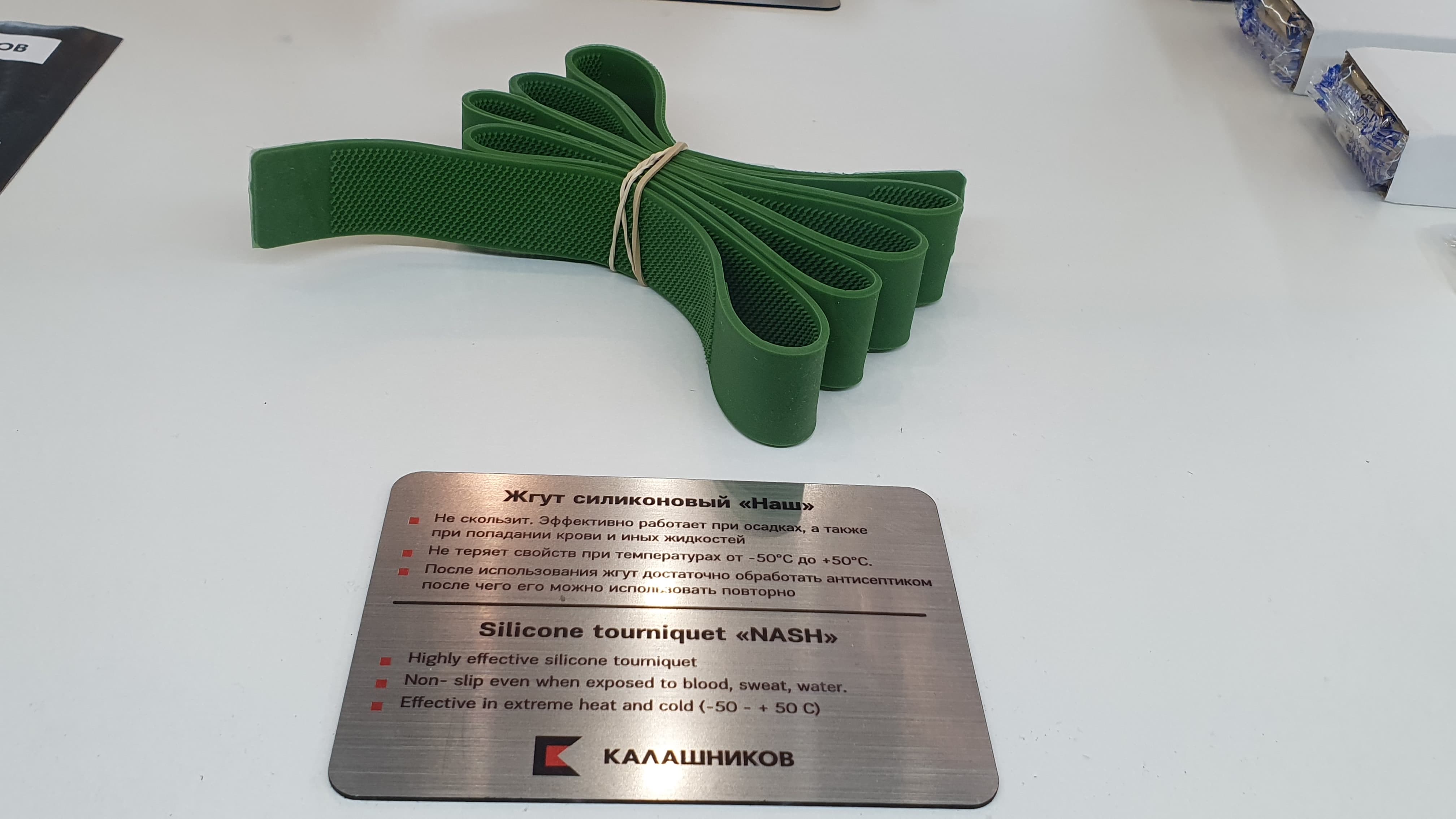
"Nash" can remain operational even if blood and other liquids get on it.
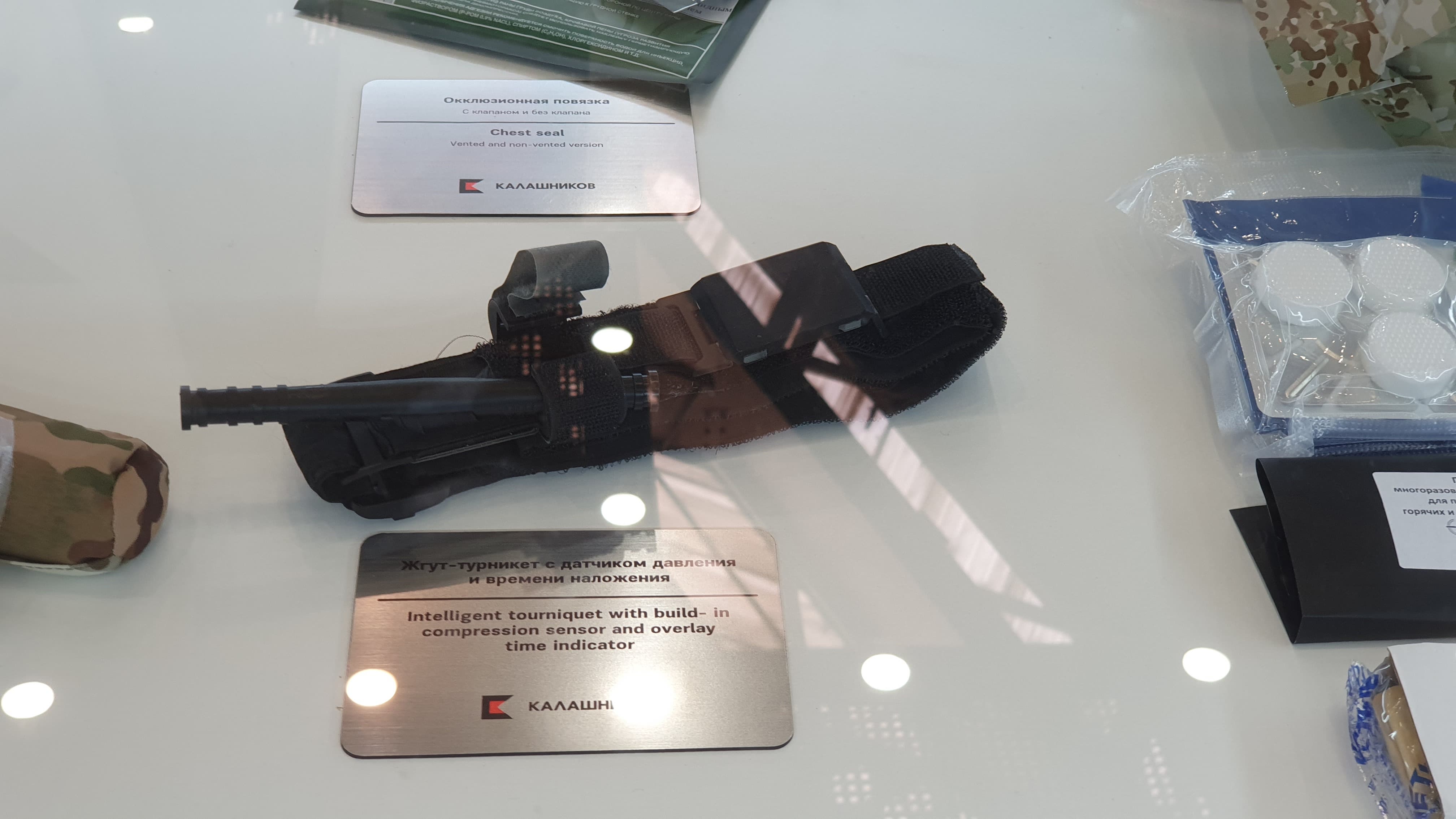
The tourniquet of the Kalashnikov concern contains a time sensor for application and a pressure sensor. It signals if something is wrong with the limb to which it is applied.
Among the interesting developments is a universal portable ultrasound device for field use. This device has three sensors in one: convex, linear and phased array.
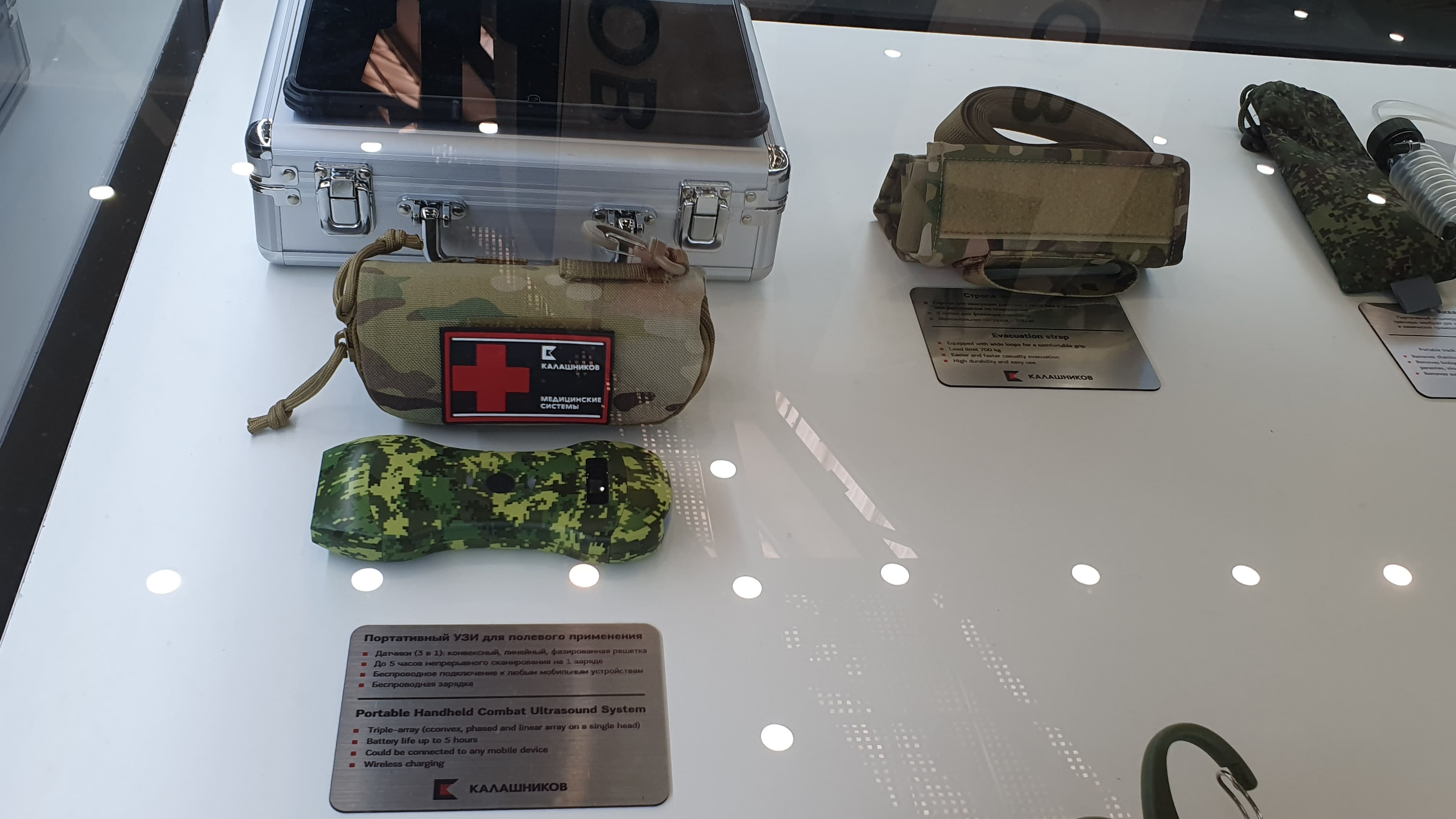
It has a wireless connection to any mobile devices and wireless charging, and is able to work autonomously for up to 5 hours on a single charge.
Read materials on the topic:
New Russian combat exoskeleton "Hamari Medoed 2.0" - what is known about it
Russian anti-fragmentation vests for service dogs were presented at Warrior Expo 2024











