Today, at the Baikonur Cosmodrome, in the assembly and testing facility of Site 254, a final inspection of the "Soyuz MS-26" manned spacecraft for the 72nd long-term expedition to the International Space Station (ISS) took place.
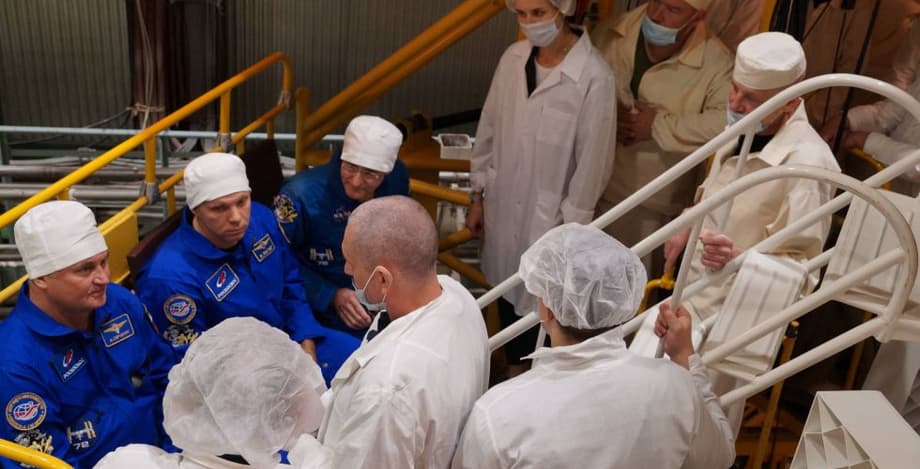
The prime and backup crews received an introductory briefing, took their places in the spacecraft, familiarized themselves with the placement of equipment and cargo, and checked the operability of onboard systems in test mode.
After the inspection, the cosmonauts visited the Baikonur Cosmodrome museum and left their autographs there. Roscosmos specialists began disconnecting ground testing equipment and preparing the space head section for shipment to assembly with the "Soyuz-2.1a" launch vehicle in the assembly and testing facility of Site 31.
The launch of "Soyuz MS-26" is scheduled for September 11. The prime crew includes Roscosmos cosmonauts Alexey Ovchinin and Ivan Wagner, as well as NASA astronaut Donald Pettit. The backup crew includes Roscosmos cosmonauts Sergei Ryzhikov and Alexey Zubritsky, as well as NASA astronaut Jonathan Kim.
Read more on the topic:
Rolled out, inspected, loaded: "Soyuz MS-26" is preparing for flight at Baikonur
"Soyuz MS-26" is already at the refueling station in Baikonur
The ISS has increased its orbit and is ready to receive "Soyuz MS-26"
Now on home

Start of deliveries scheduled for 2027

Over 51,000 new motorcycles were sold in Russia in 2025

The car will take at least a year to assemble

The application's audience has reached 20 million users

The model will be included in the list of cars for taxis, price - from 2.25 million rubles

All parking lots of the "Administrator of the Moscow Parking Space" are connected to the service

The cars will be supplied to the Moscow Transport Service Directorate

Deliveries to India may begin in 2028

The technology provides automated search for all types of defects in power units

The plane flew 500 km, accelerating to 425 km/h

The plant stated that the information about the termination of purchases for models 6 and 8 is not true

Scientists are using the "Ekran-M" installation