Translated with AI from the Russian original.
The Interstate Aviation Committee (IAC) has released an interim report on the investigation into the causes of the recentSSJ-100 crash in the Kolomna district of the Moscow region.
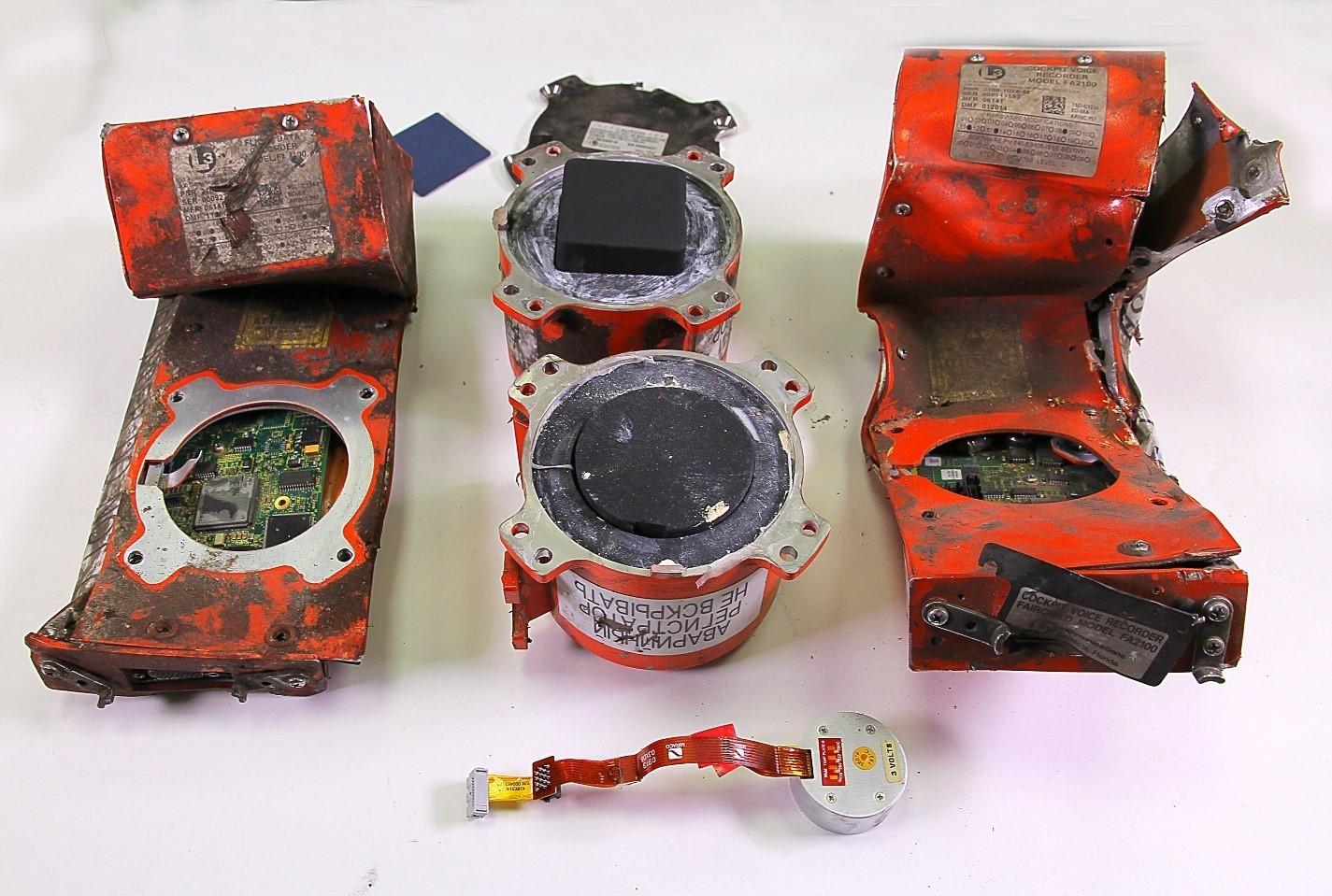
According to the report, preliminary data indicates that the cause of the crash was the angle of attack sensors.
The autothrottle was engaged before takeoff. The autopilot was engaged after takeoff at a true altitude of 550 feet. On the fifth minute of flight, from an almost horizontal flight at an altitude of QNH 5160 feet (pitch angles were 5-6 degrees on climb, recorded angles of attack - 10-11 degrees), the aircraft transitioned to a descent with a pitch angle of up to 4 degrees on dive. At the moment of transition to descent, the indicated airspeed was 200 knots and increasing, there was a synchronous retraction of flaps and slats to the fully retracted position.
During the descent, the autopilot and autothrottle disengaged, the crew switched to manual control with the side stick (BRU) and engines. The descent continued to an altitude of 4500 feet, followed by a climb to 4750 feet.
On the sixth minute of flight, at a speed of 320 knots (the OVERSPEED alarm was active), the aircraft transitioned to a descent with an increasing pitch angle on dive. The crew's full deflection of the BRU in pitch up failed to stop the descent.
The IAC emphasizes that the information presented in the interim report is preliminary and may be clarified and supplemented based on the results of research and the study of additional materials received. After the completion of the work, a final report on the results of the accident investigation will be prepared.
It is already known that after the crash, it was decided to improve the procedure for installing angle of attack sensors. A new instruction will be issued for it.
Read materials on the topic:
Modernization: Glazing for Russian MS-21 and SJ-100 aircraft will be produced even faster
A new Russian climate chamber has been developed for aviation testing
Never miss our newsAdd this site to your preferred sources to see us more oftenAdd on Google

















