The Budker Institute of Nuclear Physics SB RAS (BINP SB RAS) has created an experimental setup for studying the destruction of materials under the action of fast, repetitive thermal loads. This was reported in the press service of the university.

The studies will show the behavior of materials for creating the first wall of a thermonuclear tokamak reactor, under the influence of enormous temperatures (over 1000 degrees).
When creating a thermonuclear reactor, there is a problem in selecting materials for the first wall of the chamber, which holds the hot plasma. Plasma particle flows with a temperature of about 100 million degrees lead to thermal loads on the chamber lining. The new development will solve these issues in the shortest possible time.
The uniqueness of the installation lies in the fact that it can quickly reproduce the full cycle of loads that the wall will be subjected to during the entire expected service life of the reactor. It will allow accumulating up to 10 million heating pulses in about two working weeks. On other installations, this takes about a year.
An electron gun is integrated into the installation. It generates an intensive frequency-pulse beam. Then it hits the test target of the magnetic field. Cyclic heating of the test target occurs under the pressure of the beam.
Scientists managed to assemble and test the stand. The installation turned out to be more compact, powerful, and cheaper than its counterparts.
Earlier, www1.ru reported that specialists from MEPhI found an alloy to extend the service life of a future thermonuclear reactor.
Read materials on the topic:
Now on home

Start of deliveries scheduled for 2027

Over 51,000 new motorcycles were sold in Russia in 2025

The car will take at least a year to assemble

The application's audience has reached 20 million users

The model will be included in the list of cars for taxis, price - from 2.25 million rubles

All parking lots of the "Administrator of the Moscow Parking Space" are connected to the service

The cars will be supplied to the Moscow Transport Service Directorate

Deliveries to India may begin in 2028

The technology provides automated search for all types of defects in power units

The plane flew 500 km, accelerating to 425 km/h

The plant stated that the information about the termination of purchases for models 6 and 8 is not true
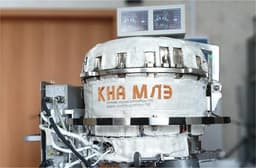
Scientists are using the "Ekran-M" installation