Russian military personnel have begun using the reconnaissance and strike drone "Inokhodets-RU". It is capable of operating within a radius of up to 250 km from the combat control point at an altitude of up to 7500 m, or at greater distances when using repeaters. Loitering time can reach 24 hours.
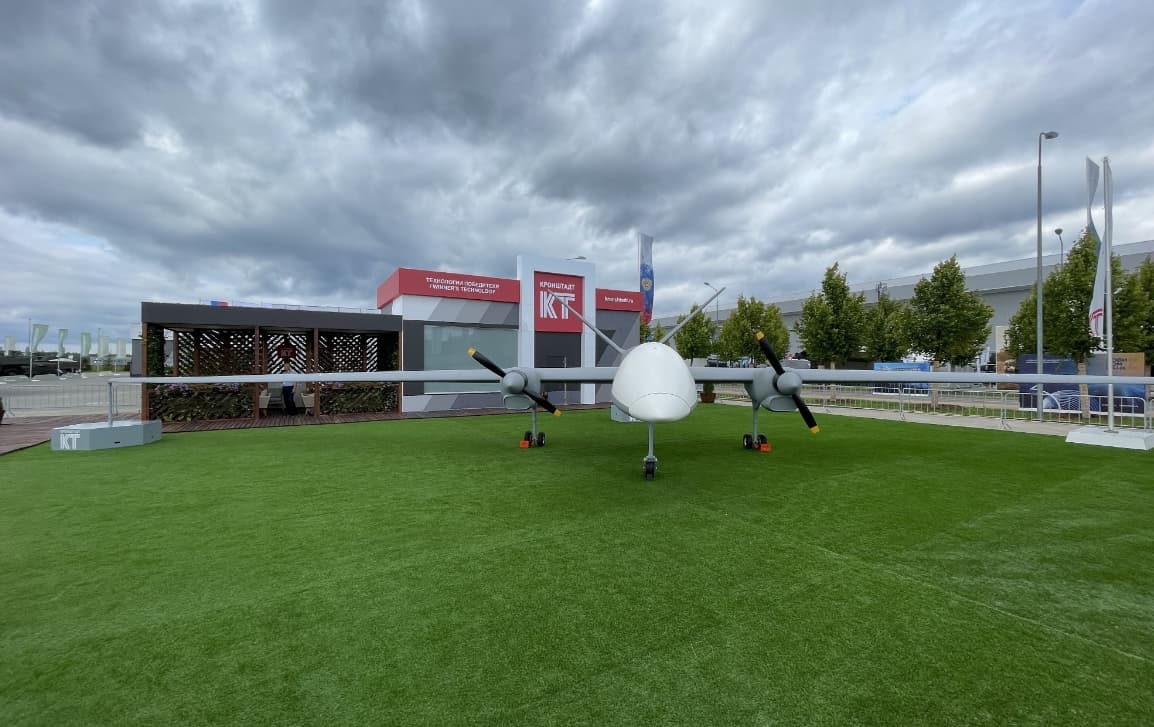
The developer is the company "Kronshtadt". The development of the "Inokhodets" UAV was carried out by order of the Ministry of Defense of the Russian Federation as part of the "Orion" project, which provided for the creation of military ("Inokhodets"), civilian ("Orion") and export ("Orion-E") versions.
The main technical feature of the "Inokhodets-RU" weapons control system is the integration of multipurpose tactical missiles Kh-UAV, noted the authors of the Telegram channel @RussianArms. The ammunition was developed by the Tula Instrument Design Bureau based on the multipurpose 9M133FM-3 from the "Kornet-D" ATGM and anti-tank guided missiles 9M133M-2.
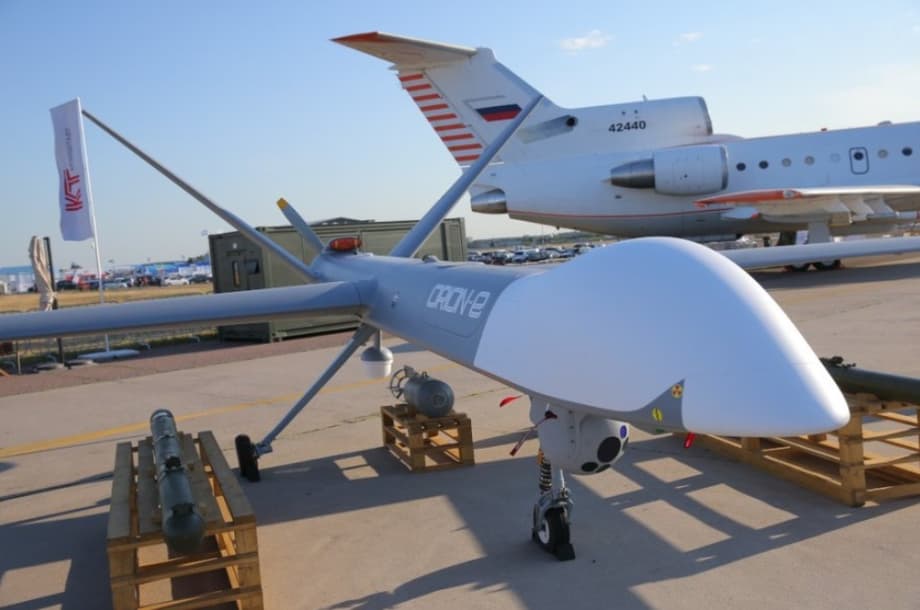
The missile guidance system is classic - semi-automatic laser-beam with an effective range of up to 10 km in favorable weather conditions.
The emitter of the laser-beam control channel is integrated into the turret optoelectronic module, located on a gyro-stabilized platform under the nose of the fuselage.
Technical characteristics of the "Inokhodets-RU" UAV:
- Wingspan - 16 m
- Length - 8 m
- Take-off weight - 1 000 kg
- Payload - up to 250 kg
- Cruising speed - up to 200 km/h
- Practical ceiling - 7 500 m
- Flight duration - up to 24 hours
- Weapon placement - 3 external hardpoints (2 under the wings, 1 under the fuselage)
Earlier www1.ru reported that the Russian military on the front line created a four-wheel drive self-propelled vehicle on a wheeled base, with which they transport the wounded. The device was named platform K-34.
Read materials on the topic:
Now on home

Start of deliveries scheduled for 2027
Over 51,000 new motorcycles were sold in Russia in 2025

The car will take at least a year to assemble

The application's audience has reached 20 million users
The model will be included in the list of cars for taxis, price - from 2.25 million rubles
All parking lots of the "Administrator of the Moscow Parking Space" are connected to the service

The cars will be supplied to the Moscow Transport Service Directorate
Deliveries to India may begin in 2028
The technology provides automated search for all types of defects in power units
The plane flew 500 km, accelerating to 425 km/h

The plant stated that the information about the termination of purchases for models 6 and 8 is not true
Scientists are using the "Ekran-M" installation