At the end of January, the ranks ofRussian anti-drone guns were replenished: the UAV detection and suppression system"Burner". The latest weaponry in the Russian Guard's arsenal is shrouded in secrecy - who its developers are and what its main technical characteristics are - is still unknown. However, some of its operating principles can be understood based on knowledge of other similar electronic warfare systems.
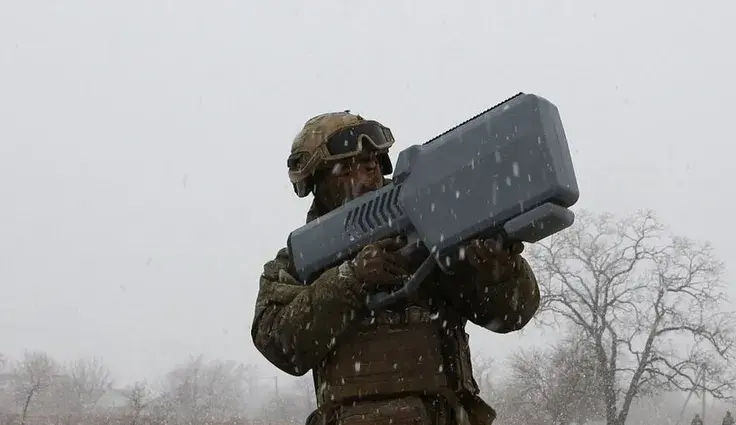
As military expert Alexey Leonkov told Lenta.ru, the "Burner" is a radio-technical intelligence station that identifies a radio-technical device, i.e., a drone. After intercepting a UAV, the "Burner" can behave differently, depending on which operating principle is used for the intelligence station.
The first principle is to suppress the communication signal with the operator, after which the drone flies on its own for some time and falls somewhere. The second is spoofing, or signal interception. This way, an enemy drone can be hijacked and landed at a specified point.
Spoofing on the line of combat contact is a rare occurrence because it only works on very large, industrially produced drones, and the products that fly are primitive, so electronic warfare systems simply suppress them, and the ground-based suppression source is always more powerful than the source in the air, so the effectiveness is quite good.
Finally, the third is the destruction of the enemy UAV, as"a broadband suppression with a more powerful signal occurs by frequency sweeping". The drone's electrical circuits burn out, it is"burned out" from the inside and falls to the ground.
Read materials on the topic:
It became known how some anti-drone guns can harm the health of Russian military personnel
Russian military received the anti-drone "Thunderstorm.04.K"
Now on home

Start of deliveries scheduled for 2027

Over 51,000 new motorcycles were sold in Russia in 2025

The car will take at least a year to assemble

The application's audience has reached 20 million users

The model will be included in the list of cars for taxis, price - from 2.25 million rubles

All parking lots of the "Administrator of the Moscow Parking Space" are connected to the service

The cars will be supplied to the Moscow Transport Service Directorate
Deliveries to India may begin in 2028
The technology provides automated search for all types of defects in power units
The plane flew 500 km, accelerating to 425 km/h

The plant stated that the information about the termination of purchases for models 6 and 8 is not true
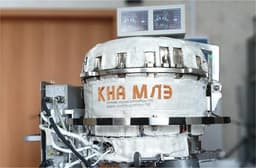
Scientists are using the "Ekran-M" installation