In the 1960s, the Soviet Union was looking for a reliable way to transport heavy intercontinental ballistic missiles to remote areas. Aircraft, such as the An-22 "Antei," could deliver cargo to remote airfields, but the final leg of the journey required a helicopter capable of landing in the wilderness of the taiga or tundra.
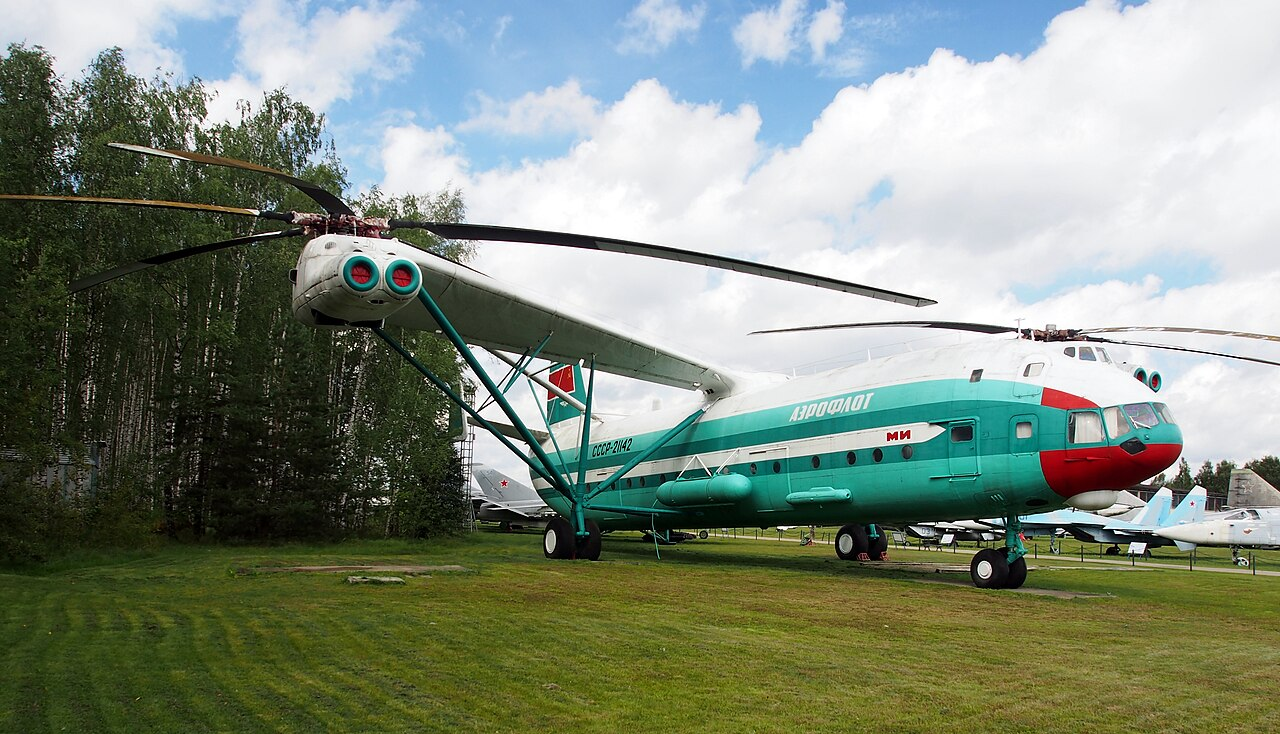
It was then that Mikhail Mil's design bureau received an ambitious task: to create a helicopter capable of lifting at least 25 tons. For comparison, modern heavy helicopters, such as the American Sikorsky CH-53K, lift about 16 tons, and the Russian Mi-26, the largest of the serial production models, up to 25 tons. But in the 1960s, such a lifting capacity was only a dream. Mikhail Mil, the legendary designer whose Mi-6 and Mi-8 helicopters had already become famous, was tasked with developing a new heavy helicopter, which was named V-12.
Transverse Scheme
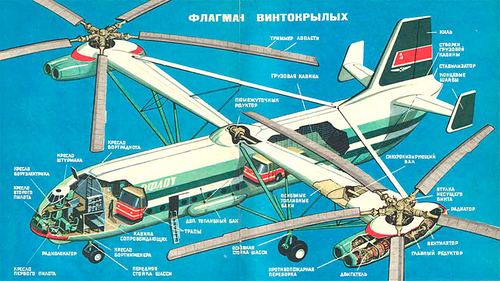
One of the key innovations of the V-12 was its unique design. Unlike traditional helicopters with a single main rotor and tail rotor, the V-12 used a "transverse scheme." Two huge rotors with a diameter of 35 meters were located on reverse-tapered wings, rotating in opposite directions. This made it possible to balance the torque and abandon the tail rotor, which usually compensates for rotation. The wings, like those of a giant dragonfly, created additional lift, increasing the payload by 5 tons.
But this idea was not just a bold experiment - it required solving many engineering problems. For example, to prevent the rotors from colliding, engineers developed a complex synchronization system with a transmission shaft. The engines, four powerful D-25VF engines with 6,500 horsepower each, were located at the ends of the wings, which created a risk of vibrations. However, Mil's team found a solution: the reverse-tapered wings minimized the "shading" of the air flow, and a carefully calculated rotor rotation scheme ("brass") ensured stability. Test pilot Vasily Koloshenko said:
I felt like I was sailing on a huge ship.
This design allowed the V-12 to lift a record 44,204.5 kg in 1969 - an achievement that remains unsurpassed to this day. For comparison, it's like lifting two school buses or a small plane into the air. But behind this triumph lay years of testing, mistakes, and incredible engineering courage.
Anatomy of a Giant
To understand the scale of the V-12, it is enough to look at its technical characteristics:
- Crew: 6 people
- Passenger capacity: 196 people
- Length: 37.00 m
- Main rotor diameter: 35.00 m
- Height: 12.5 m
- Empty weight: 69,100 kg
- Normal take-off weight: 97,000 kg
- Maximum take-off weight: 105,000 kg
- Powerplant: 4 × D-25VF
- Engine power: 4 × 4847 kW
- Maximum speed: 260 km/h
- Cruising speed: 240 km/h
- Practical range: 500 km
- Ferry range: 1000 km
- Service ceiling: 3500 m
- Static ceiling: 3600 m
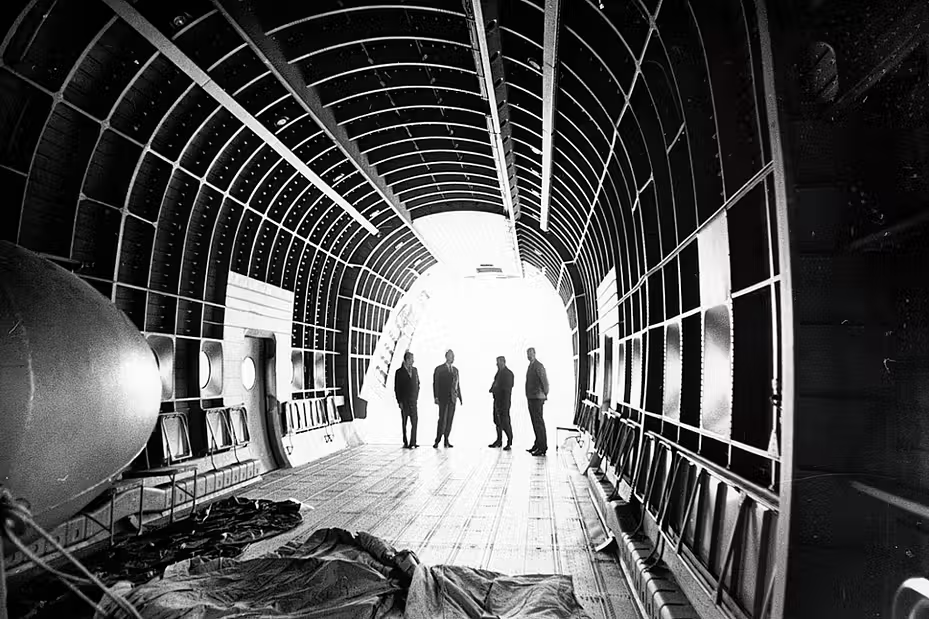
The cargo cabin of the V-12 was so spacious that it could accommodate a tank or several trucks. Four gas turbine engines provided power comparable to a small locomotive, and two rotors created lift capable of lifting a load exceeding the weight of the helicopter itself.
Triumph and Challenges
The first flight in June 1967 ended in failure: the helicopter began to sway and landed with damage to the landing gear. The problem lay in the complex control system, which turned out to be not rigid enough for such a huge helicopter. Mikhail Mil, despite his illness, supervised the modifications, and already in July 1968, the V-12 successfully took to the air. This flight became the beginning of a series of more than a hundred test flights, which proved the reliability of the machine.
In 1971, the V-12 caused a sensation at the Paris Air Show in Le Bourget. To get to France, the helicopter flew over the Baltic and North Seas, overcoming difficult weather conditions.
One can only take off one's hat before the engineering achievement that the V-12 helicopter represents.
But behind the external triumph lay difficulties. The development took almost a decade - from 1959 to 1968. During this time, technologies and strategic priorities changed. Spy satellites, which appeared in the 1960s, made the secret transportation of missiles less relevant, as they could be detected from orbit. In addition, new compact solid-propellant missiles became easier to transport by trucks or rail. The V-12, created for a unique task, turned out to be too expensive for other purposes, such as civilian transportation or military operations.
Legacy of the V-12
By 1974, the V-12 project was closed. But the experience gained during the creation of the V-12 formed the basis of the Mi-26 - the largest serial production helicopter in the world, which is still used for cargo transportation, rescue operations, and firefighting. The Mi-26, although inferior to the V-12 in terms of lifting capacity, turned out to be more versatile and economical.
The V-12 also showed how important it is to balance ambition and practicality. The transverse scheme, despite its complexity, proved its effectiveness. For example, modern drones and hybrid aircraft often use multi-rotor schemes, borrowing principles first implemented in the V-12.
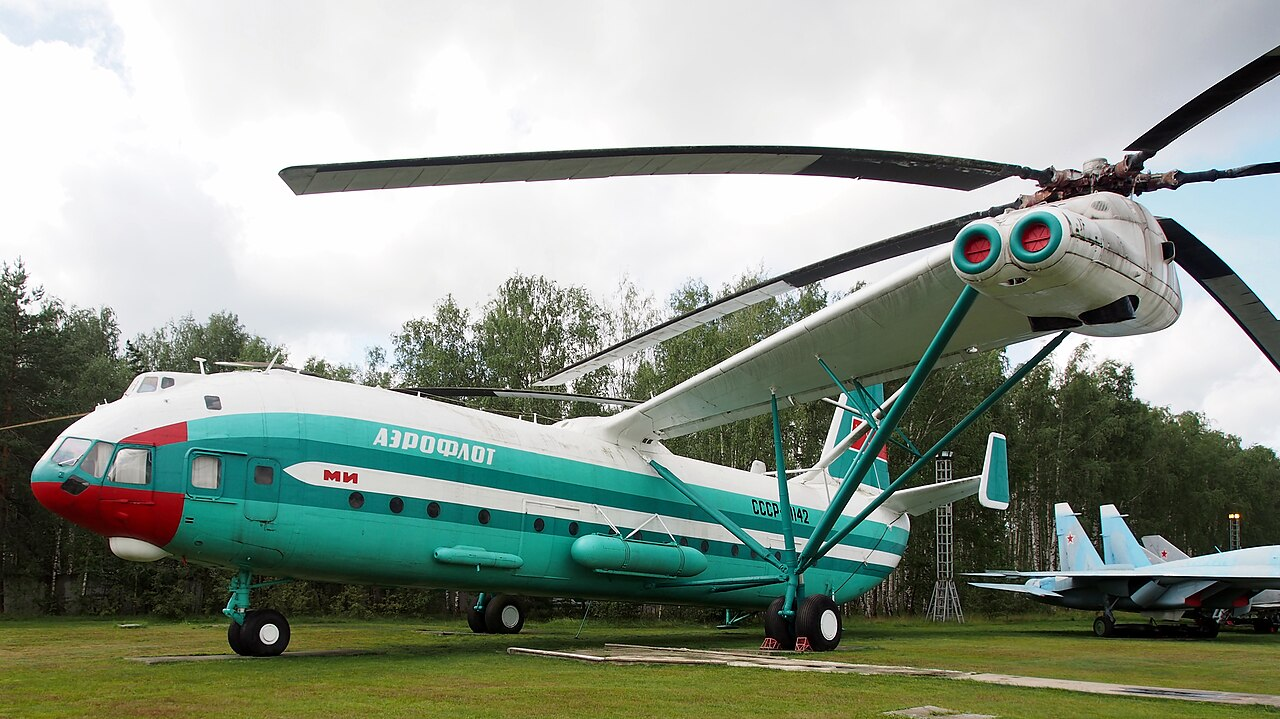
Today, two built copies of the V-12 are stored in museums - in Monino and on the territory of the Moscow Helicopter Plant.
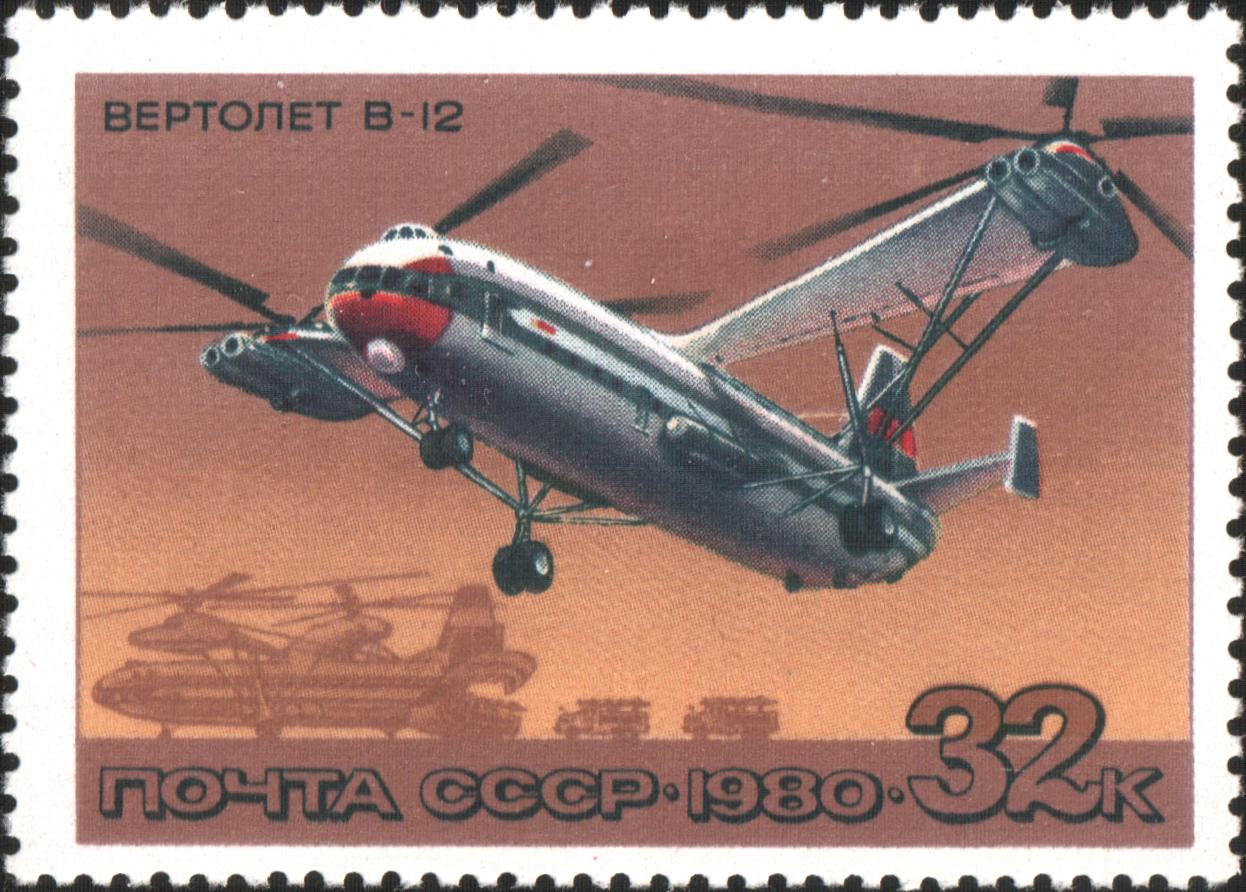
This helicopter, capable of lifting a load equal to the weight of a small plane, became a legend, despite its short career. It showed that even the most ambitious projects leave a mark, inspiring new generations of engineers and scientists.
Read more related materials:
From "Nitka" to the deck of "Admiral Kuznetsov": the history of the MiG-29K
Never miss our newsAdd this site to your preferred sources to see us more oftenAdd on Google

















