On June 23, 1988, test pilot Toktar Aubakirov first flew the MiG-29K carrier-based fighter. This flight became a milestone in aviation history, proving that a light fighter can become a formidable force at sea.
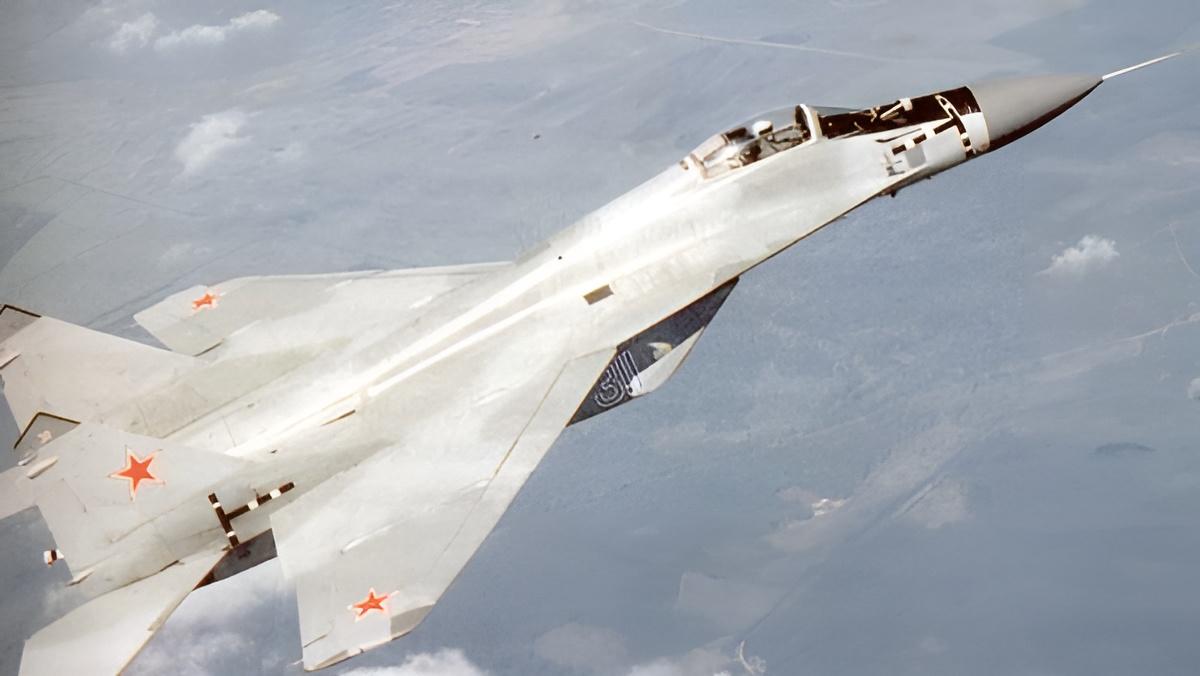
From land to sea: the birth of a shipborne fighter
To understand how the MiG-29K appeared, you need to start with its "older brother" - the MiG-29. Developed at the Mikoyan-Gurevich Design Bureau, it became the first mass-produced Soviet fourth-generation fighter.
The aircraft used an integral layout, where the wings and fuselage merge into a single whole, creating up to 40% of lift due to the body. This allowed the MiG-29 to soar into the sky almost vertically. Two powerful RD-33 engines provided exceptional maneuverability. The weapons control system included advanced technologies: radar, optical-location system, and helmet-mounted target designation system.
The MiG-29 was so successful that it was exported to many countries, and a variety of modifications were created on its basis. But in the 1970s, a new task arose: to adapt this aircraft for operation from aircraft carriers. This is how the history of the MiG-29K began.
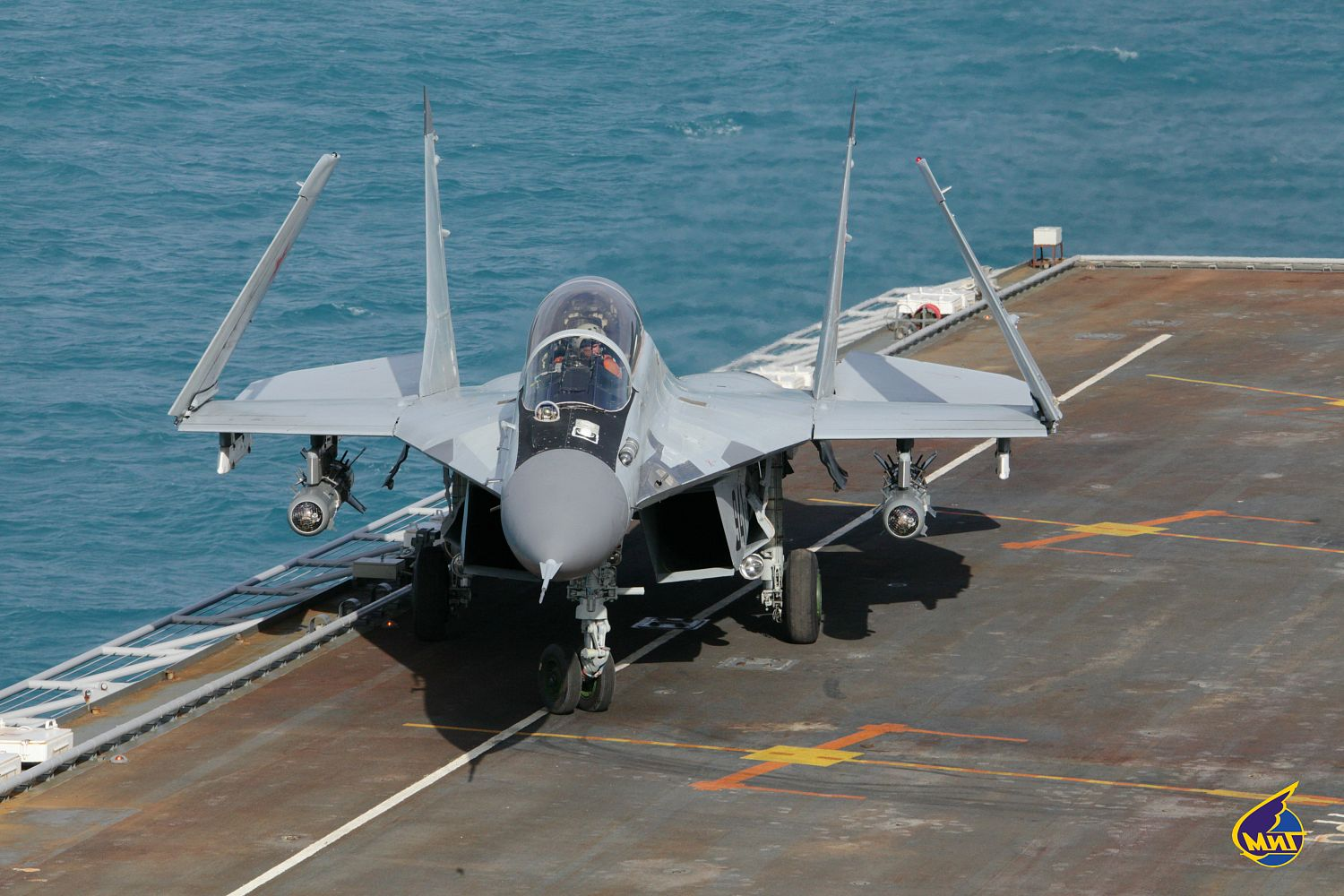
The sea is complicated
Creating a shipborne fighter is not an easy task. The take-off deck is short, and landing requires special accuracy: the aircraft must catch the cable of the arresting gear with a hook. In addition, the marine environment is merciless: salt corrodes metal, and the ship's rolling complicates control.
In 1978, the Mikoyan Design Bureau began designing a carrier-based version of the MiG-29. The first sketch provided for a reinforced chassis, a landing hook, and anti-corrosion protection. But the real breakthrough came in 1984, when the modernized MiG-29M was taken as a basis. The new MiG-29K, or "product 9-31", was 80-85% unified with it, but received unique features for operating from the deck of an aircraft carrier.
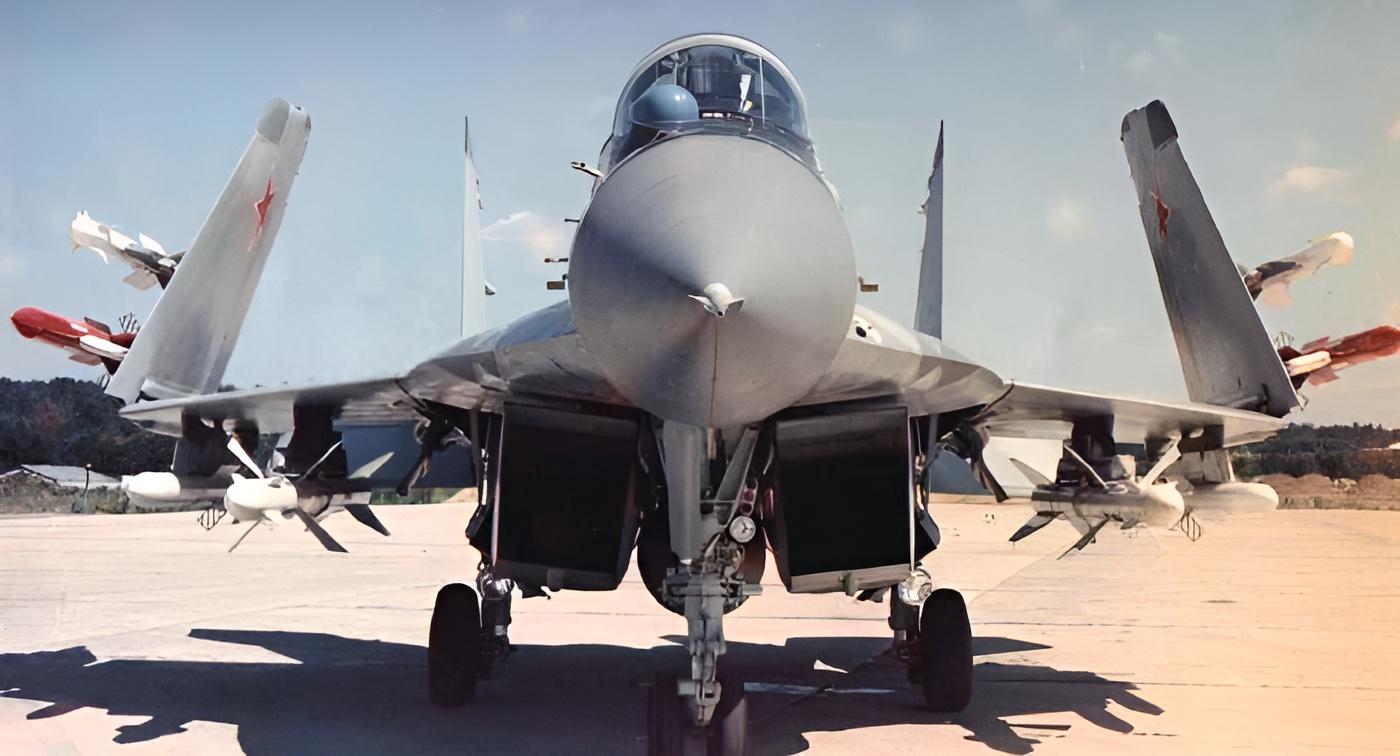
Design: steel, composites and folding wings
The design was rethought for the harsh operating conditions from the aircraft carrier "Admiral Kuznetsov". The fuselage was reinforced to withstand landing loads, and the chassis was lengthened and equipped with powerful shock absorbers. Special coatings and sealants were used to protect against corrosion, and the proportion of composite materials increased, which reduced weight and increased durability.
On an aircraft carrier, every centimeter of space counts, so the MiG-29K's wing consoles are folded by hydraulic drives, reducing the wingspan from 11.99 m to 7.8 m. This allows more aircraft to be placed in the hangar or on the deck.
The MiG-29K's fuel system has also changed. The fighter's internal fuel supply increased to 5670 liters, with three external fuel tanks the flight range was 3200 km, and with an air refueling system the range increased to 5700 km.
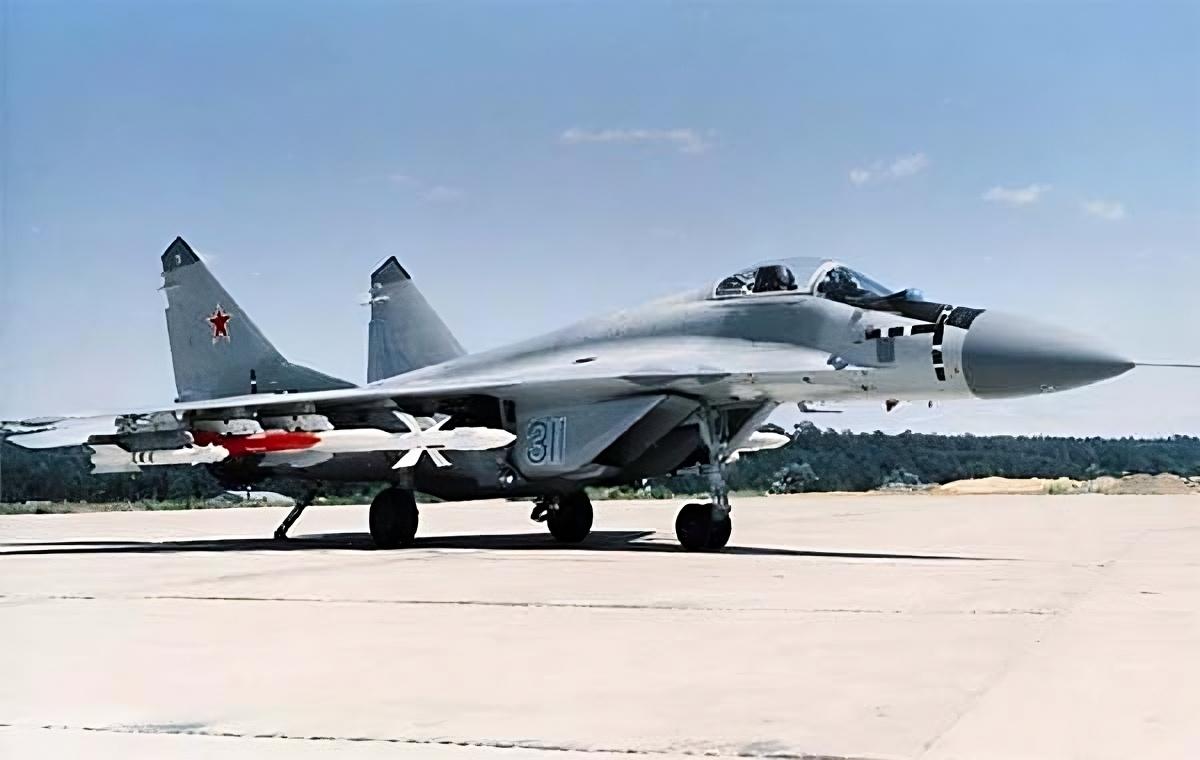
Engines:
The heart of the MiG-29K is two RD-33K turbojet engines. Their thrust in afterburner reaches 8800 kgf, and in emergency mode - 9400 kgf. This mode made it possible to take off an aircraft weighing 17,700 kg from the first starting position (run length 105 meters) and weighing 22,400 kg - from the second starting position (run length 195 meters). In addition, the emergency mode allowed the MiG-29K pilot to perform a go-around even after touching the deck during the run (if the aircraft did not catch the arresting gear cable).
Armament and electronics:
The MiG-29K is a multifunctional "4++" generation fighter capable of conducting air combat, attacking ground and sea targets. Its Zhuk-ME radar tracks up to 10 targets and guides missiles to 4 simultaneously. The optical-location station and helmet-mounted sight allow attacking covertly without turning on the radar.
Armament includes air-to-air missiles (R-27, R-73, RVV-AE), anti-ship missiles (Kh-31A), anti-radar missiles (Kh-31P) and guided bombs (KAB-500Kr). The maximum combat load is 4500 kg, placed on nine suspension points. The built-in 30-mm GSh-301 cannon complements the arsenal.
The "Uzel" navigation system is another innovation. It provides precise control of the aircraft over the sea and landing on a rolling deck, interacting with ship beacons.
"Nitka": a ground school for naval eagles
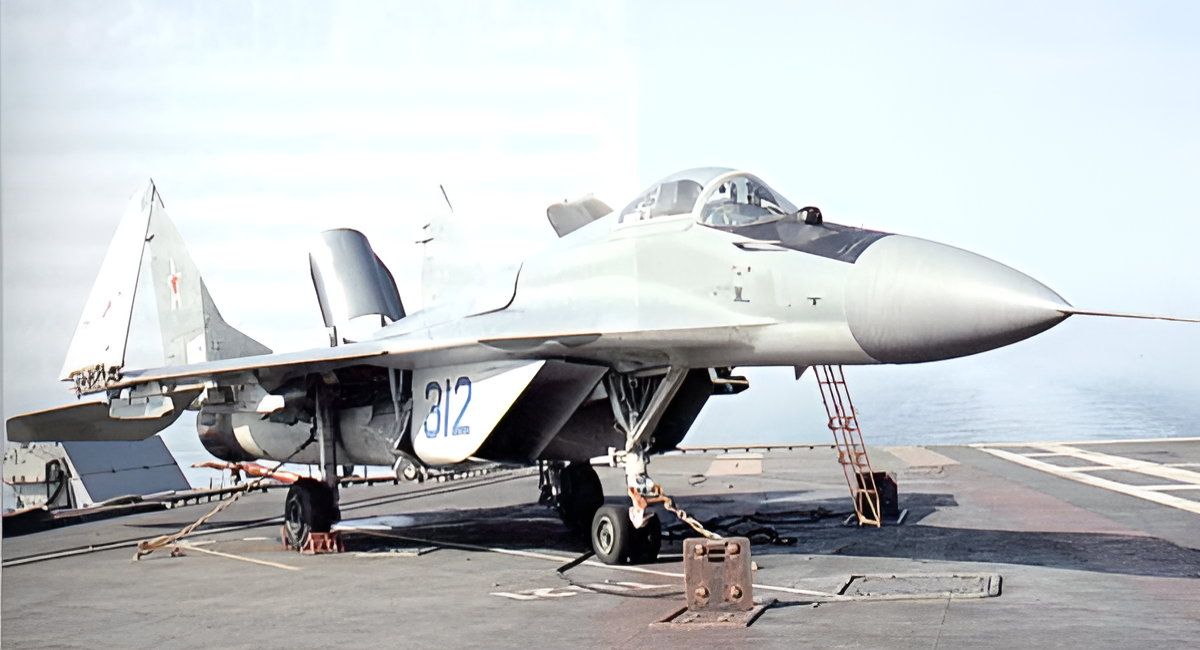
Before the MiG-29K took off from the deck of the "Admiral Kuznetsov", it went to school at the "Nitka" ground complex in Crimea. This unique simulator, built in 1982, simulated the deck of a ship with a springboard and arresting gear. Take-offs, landings and even night operations were practiced here.
On August 21, 1982, pilot A.G. Fastovets performed the first take-off from a springboard on a modified MiG-29. Tests showed that a springboard take-off is simpler and safer than a catapult take-off used on Western aircraft carriers. The aircraft accelerates to 180-200 km/h, experiencing less stress, which facilitates the pilot's work.
Usually you take off like this: there is a strip ahead. Cleared. Everything is fine. There is no one. And here in front of you at a distance of 100 m there is a wall, and you need to climb this wall. The wall seems to be like that, in fact it is a springboard. It was really worrying to run up such a hill. When you imagine what should be, then it's easier...
First flight and landing on a ship
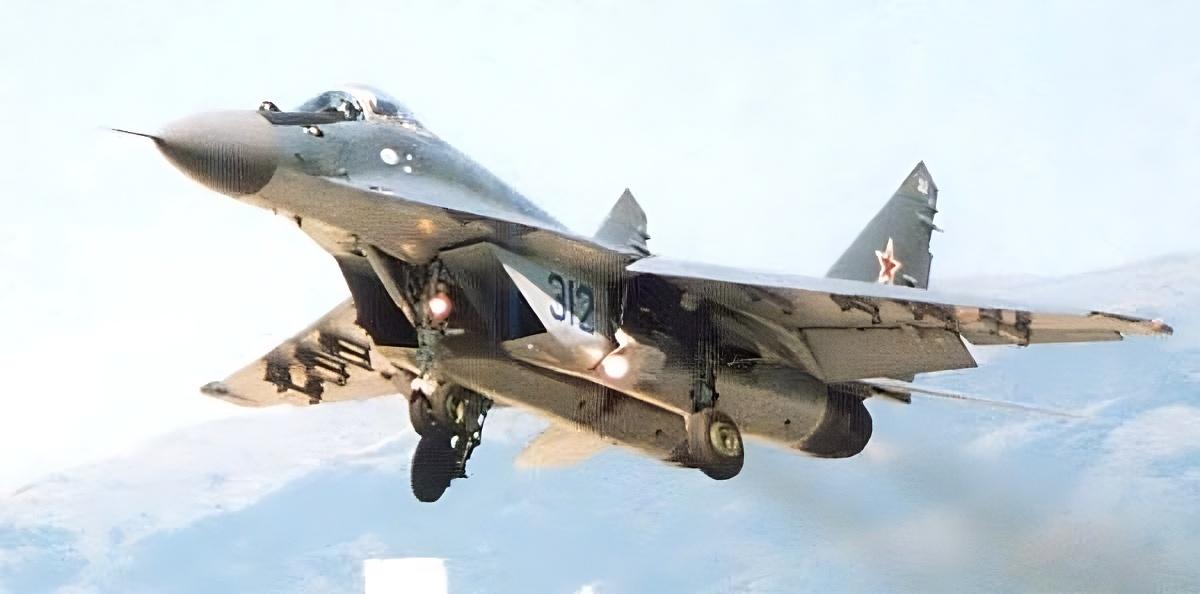
On June 23, 1988, Toktar Aubakirov flew the first MiG-29K (tail number 311). And on November 1, 1989, he made a historic landing on the deck of the TAVKR "Tbilisi" (later renamed "Admiral Kuznetsov"). On the same day, Aubakirov made the first take-off from the ship on the MiG-29K.
Tests continued until 1991, but the economic crisis and the collapse of the USSR interrupted state tests. Despite this, the MiG-29K proved its reliability, making more than 420 flights, including 74 landings on the deck.
MiG-29K today: from India to Russia
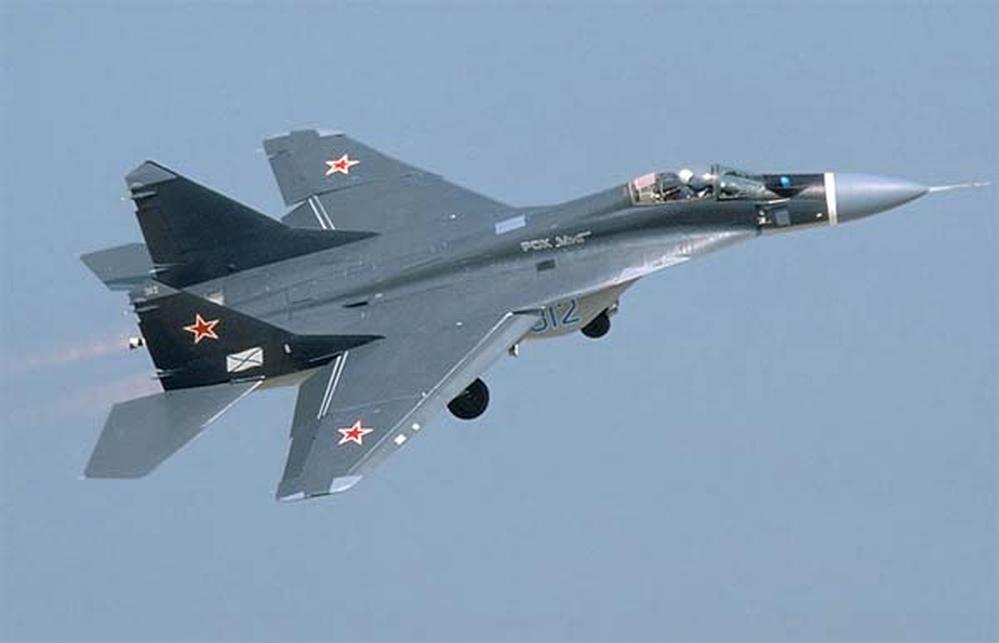
The history of the MiG-29K could have ended in the 1990s, but in 1996 the project was revived thanks to cooperation with India. The Indian Navy was looking for fighters for the aircraft carrier "Vikramaditya" (re-equipped TAVKR "Admiral Gorshkov"). In 2004, a contract was signed for the supply of 45 MiG-29K aircraft and two-seat MiG-29KUBs.
The new machines received advanced RD-33MK engines, modern electronics and an expanded arsenal. In 2010, the first MiG-29Ks entered service with India, becoming the basis of their carrier-based aviation.
In 2012, the Russian Ministry of Defense ordered 20 MiG-29Ks and 4 MiG-29KUBs for the "Admiral Kuznetsov". The MiG-29K is more compact and cheaper to operate than the Su-33, which allows more machines to be placed on the aircraft carrier. Its multifunctionality makes it universal: from protecting the fleet to striking ground targets.
Carrier-based aviation remains key for maritime powers. Aircraft carriers are "floating airfields" that provide power projection for thousands of kilometers. The MiG-29K has shown that a light fighter can be as effective as heavy machines at a lower cost.
Read more materials on the topic:
Aircraft carrier "Admiral Kuznetsov" is leaving the repair: what is known about it
MiG-35 is returning: Russia unexpectedly revived the fighter written off
India will equip the MiG-29 and Su-30MKI with Russian new generation R-77 missiles
Never miss our newsAdd this site to your preferred sources to see us more oftenAdd on Google








![Growth Point: After 5G Launch, Mobile Internet in Russia Accelerated by 20%","subtitle":"TelecomDaily recorded an upload speed increase of 19.7%, and download speed of almost 14%","announce":""}[]}],](https://media.ixbt.site/fit-in/320x/ixbt-data/1727896/ai-image-nvgq0a0v5cjnyxwoc8xpelva.webp)