Translated with AI from the Russian original.
The Indian Ministry of Defense signed a contract with Heavy Vehicles Factory for more than $180 million to purchase 47 MTU-72 tank bridge layers based on the Soviet T-72 tank. This was reported by Army Recognition.
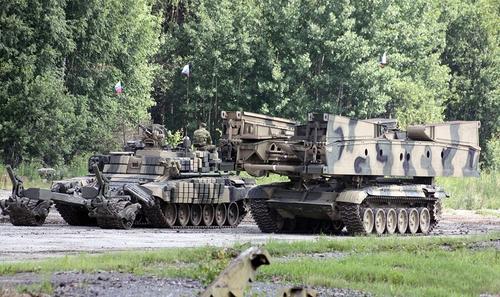
The purchase of MTU-72 is aimed at increasing the operational efficiency of mechanized forces for deploying bridges during offensive and defensive operations.
Bridge layers support the movement of armored units across rivers and trenches.
MTU-72 have two configurations:
- with a 20-meter bridge for the passage of equipment weighing up to 60 tons
- with a 22-meter bridge for the passage of equipment weighing up to 70 tons
In 1978, India purchased 500 T-72 tanks from the USSR, including modifications T-72M and T-72M1. Heavy Vehicles Factory received a license to manufacture T-72. Over 15 years, the company produced 1,100 tanks under the name Ajeya. Production ceased in 1998.
About MTU-72
The tank bridge layer was developed by the design bureau in Omsk. MTU-72 was produced from 1974 to 1989 at Uralvagonzavod.
MTU-72 specifications:
- Hull length - 11,640 mm
- Hull width - 3,640 mm
- Armor - rolled, cast steel
- Engine power - 840 hp
- Highway speed - 60 km/h
Read also on the topic:
"Answer to the Imperialists": K-19 - the first Soviet nuclear missile carrier
Le Figaro: Russian military intercepted a French Navy Atlantique 2 aircraft over the Baltic Sea
Techbreak portal named the most powerful air-to-air missiles
Trump is ours: testing of a promising transport UAV has begun in Russia
Military Review: Will the Su-75 "stealth" fighter be mass-produced or is it a dead end?
Never miss our newsAdd this site to your preferred sources to see us more oftenAdd on Google

















