Translated with AI from the Russian original.
In 2022, the Russian Ministry of Defense decided to replace the hydroacoustic coating of Russian nuclear-powered submarines. The new composition reduces the visibility of nuclear submarines and effectively suppresses both the noises emitted by the submarine itself and external sonar signals. This improves the stealth of Russian nuclear submarines.
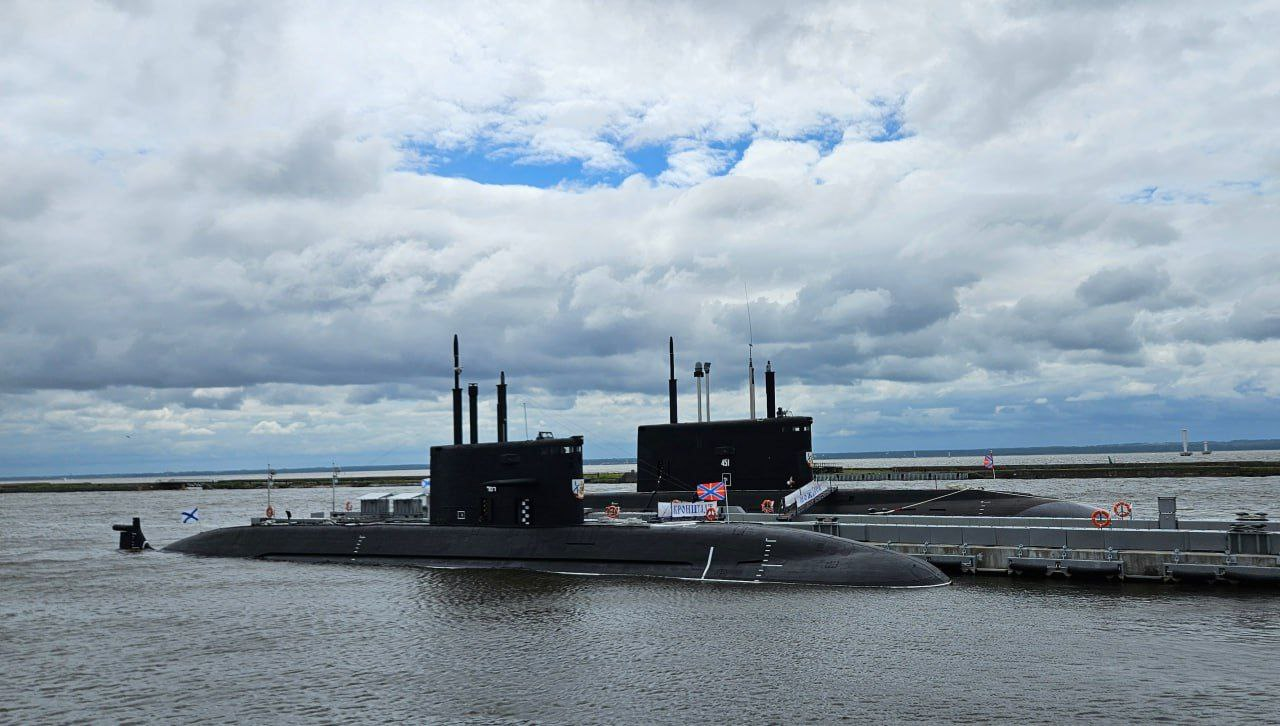
The coating is formed from special individual plates weighing up to 80 kg, which consist of several pressed layers of various rubbers with special channels. The plates are attached to the outside of the submarine's light hull with glue of a classified composition, and then covered with paint. One nuclear submarine requires 10,000 of these plates.
In the program "Military Acceptance" on the Zvezda TV channel, it was revealed how the hydroacoustic coating is tested. The procedure for checking the adhesion strength of the horn coating to the outer skin was shown at the facilities of the Sevmash shipyard.
Specialists at the enterprise take a drill with a glass-shaped drill bit, moisten it in soapy water, and screw it into the rubber coating. An iron corkscrew is screwed into this improvised plug. A special device will pull it out, showing the force with which it is possible to extract the corkscrew and damage the coating - this is more than 4.5 kN.
The resulting hole is filled with sealant. According to the shipbuilders, the sealant hardens quickly, and the resulting plug will not affect the acoustic properties of the submarine in any way. Every tenth sheet of hydroacoustic coating is tested for tear-off using a corkscrew. That is, a thousand sheets are tested before the nuclear submarine goes for state tests.
Read materials on the topic:
Russian nuclear submarine missile carrier "Tula" showed reactor compartments from the inside for the first time
Saturn welding robot for submarine construction is being tested in Russia
Never miss our newsAdd this site to your preferred sources to see us more oftenAdd on Google

















