
Schoolgirl gives 12 million rubles to fraudsters posing as government officials
The criminals convinced her that her personal account on "Gosuslugi" had been hacked
The criminals convinced her that her personal account on "Gosuslugi" had been hacked
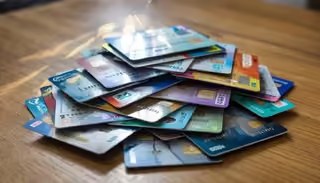
The measure stipulates no more than 5 cards in one bank and no more than 20 in total
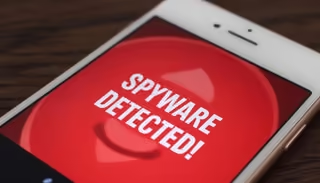
Russian Interior Ministry: Malware disguised as WhatsApp, Google Photos, TikTok and YouTube
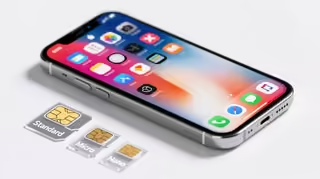
The cyber threat is called a SIM-swap attack
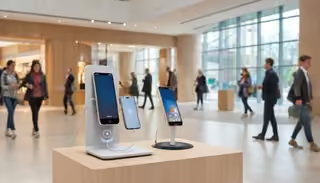
Malware can be installed via USB charging
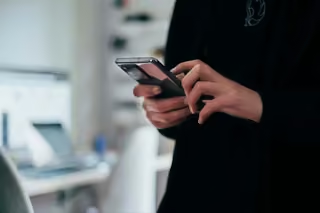
Slowing down of devices may signal espionage

One of the proposals is to introduce guaranteed payments to victims of personal data leaks
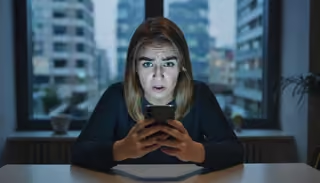
Scammers use psychological manipulation to deceive victims

Risk zone: portable speakers, charging stations, Wi-Fi lamps and heated mugs
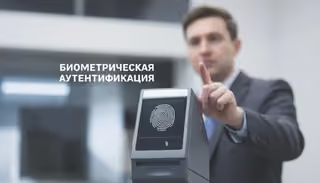
Experts are confident that the future lies in behavioral biometrics, not cameras
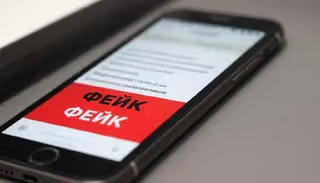
Ministry of Digital Development refuted reports of an Internet shutdown in Russia

The bank has come up with a new identification method using a vein pattern
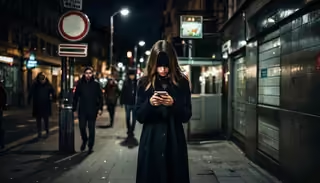
Girl asked for a phone for an urgent call, but instead received an SMS code
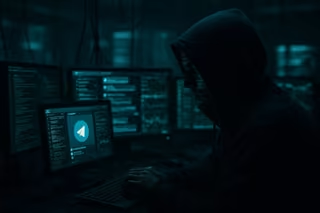
In the first nine months of 2025, at least 25 leaks were purchased on exclusive terms
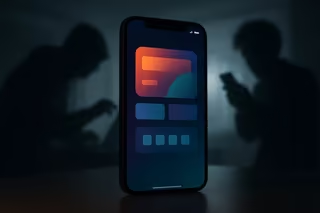
Under the guise of banks and the social fund, fraudsters demand to "activate a wallet"