Hundreds of thousands of pages of oriental archives can "come to life" thanks to a Russian AI application. The development by scientists from the Institute of Oriental Studies of the Russian Academy of Sciences allows reading texts that previously took years to process. The system handles complex Arabic calligraphy and damaged documents, recognizing, proofreading, and translating them in a single stream. Experts call this a breakthrough in digital oriental studies.
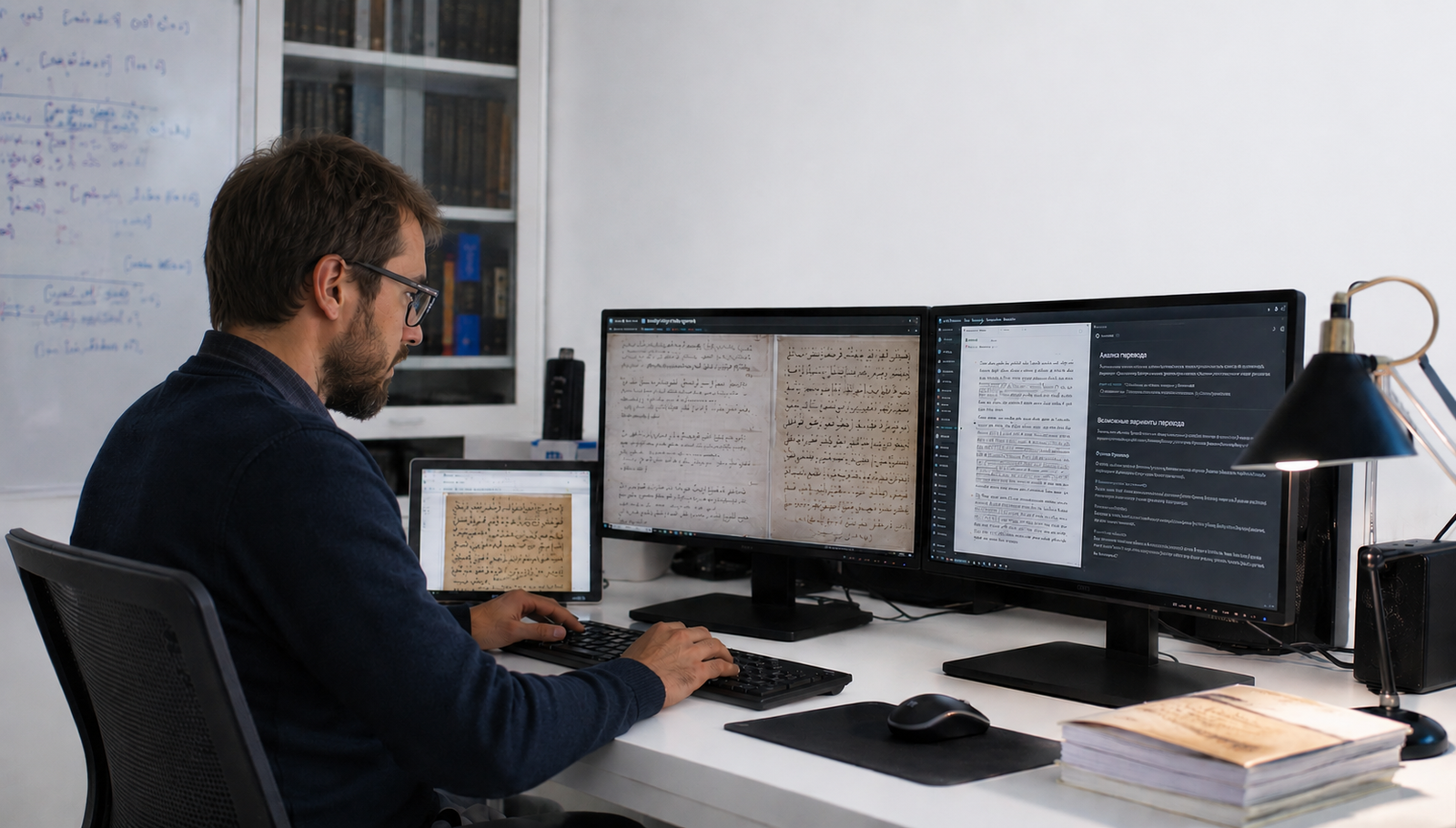
The world of translation will never be the same
Large language models are no longer just a translation tool. They are creating a new work environment where the machine handles routine tasks, and humans define the meaning.
Unlike old CAT systems, which simply stored phrases, modern generative models understand context at a conceptual level. This allows for automated fact-checking, freeing the translator for creative work, analyzing metaphors, and cultural nuances.
Translation using generative AI can grasp the meaning of each word, not just in the context of a sentence, but of the entire text. This is its advantage. Large language models also possess rich expressive means. By taking on the main work of constructing the translation, they free the translator for creative work at the conceptual and cultural level.
We are moving from machine-assisted translation to cognitive partnership with it. The profession of translator and translation training are facing changes. "Translation," once a rare and expensive resource, is becoming superabundant and cheap, so in this new symbiosis, some of the painful operations for translators will disappear from practice, giving way to new skills that will only by inertia be called "translation."
The main misconception is to think that AI replaces the translator. In fact, it creates a new work environment, enhancing precisely those functions where humans are traditionally weakest. However, AI itself still lacks an understanding of pragmatics, intentionality (the author's intent), and lived experience. The machine does not understand ethics and existential subtext.
This is where humans come in. The greatest gain comes from combining the computational power of the algorithm with human creativity, reflection, and the ability to understand metaphors and cultural context.
The result of this symbiosis is a text whose quality is unattainable by either a human alone or a machine without human involvement.
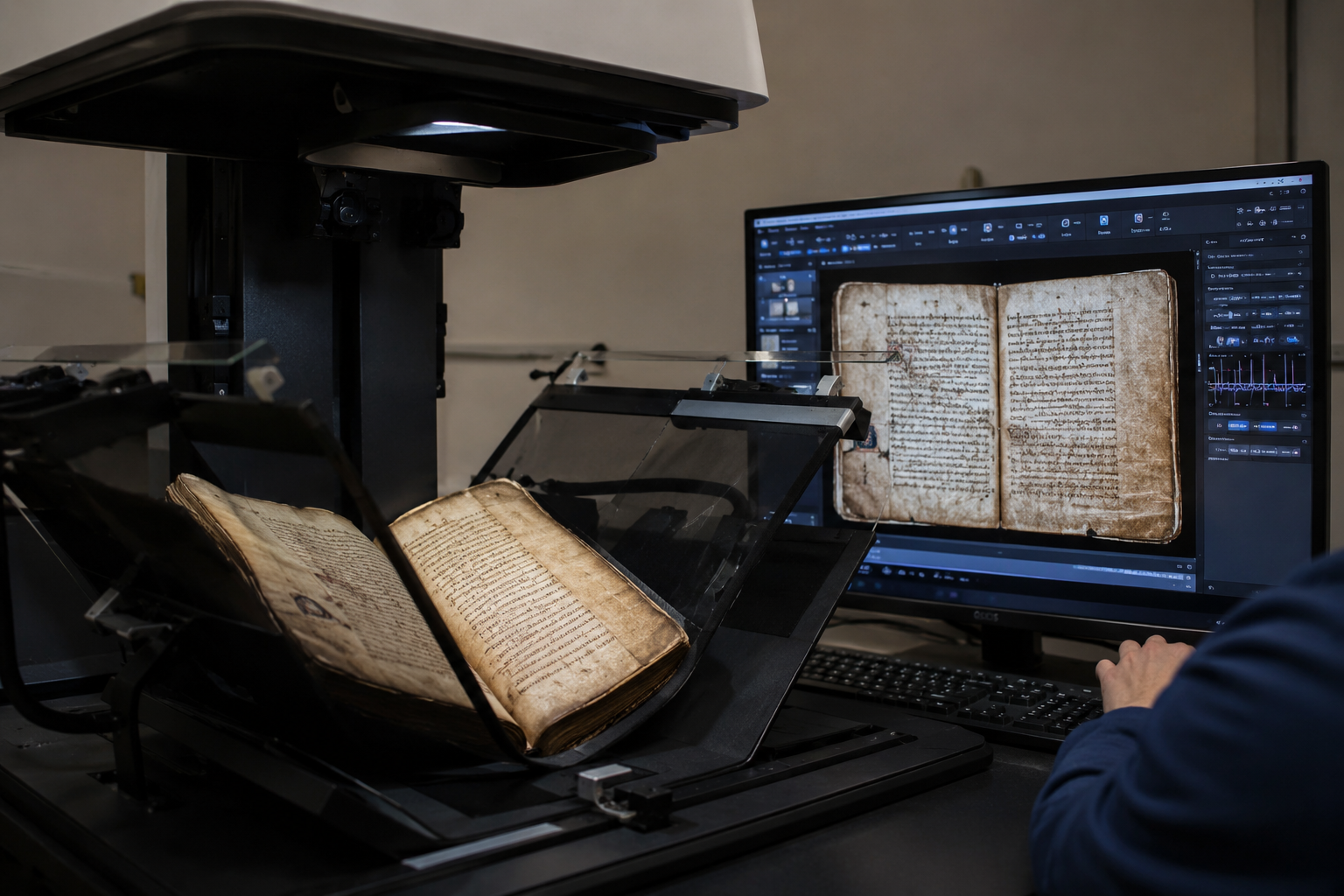
AI sees the entire text at once – humans practically cannot
Large language models have revolutionized text recognition (OCR). And it's not that scientists have learned to read individual characters from an image more accurately. The breakthrough is that AI analyzes not individual characters, but the entire text at once.
Thanks to statistical data, it became possible to understand what word a given sequence of characters might represent, based on the context of the entire rest of the text. Because of this, it became possible to accurately recognize OCR errors – and then automatically correct them or prompt a person about questionable places that should be paid attention to.
If part of a manuscript is faded, the AI analyzes the entire sentence, then the entire text, and, based on the context, "reconstructs" the missing word with high accuracy.
Translators can gain "superpower"
The question arises: "How much will the new development speed up translation?" With good document quality, the translator spends time only on final proofreading, and with complex or damaged text, the work is accelerated by 2–3 times.
Specialists' estimates when working with the system range from "30% acceleration of work" to "2–3 times acceleration of work."
Previously, a person had to read the document in the original, retype it on a computer, then translate it, constantly checking against two texts. Now, 90% of this routine work is done by AI.
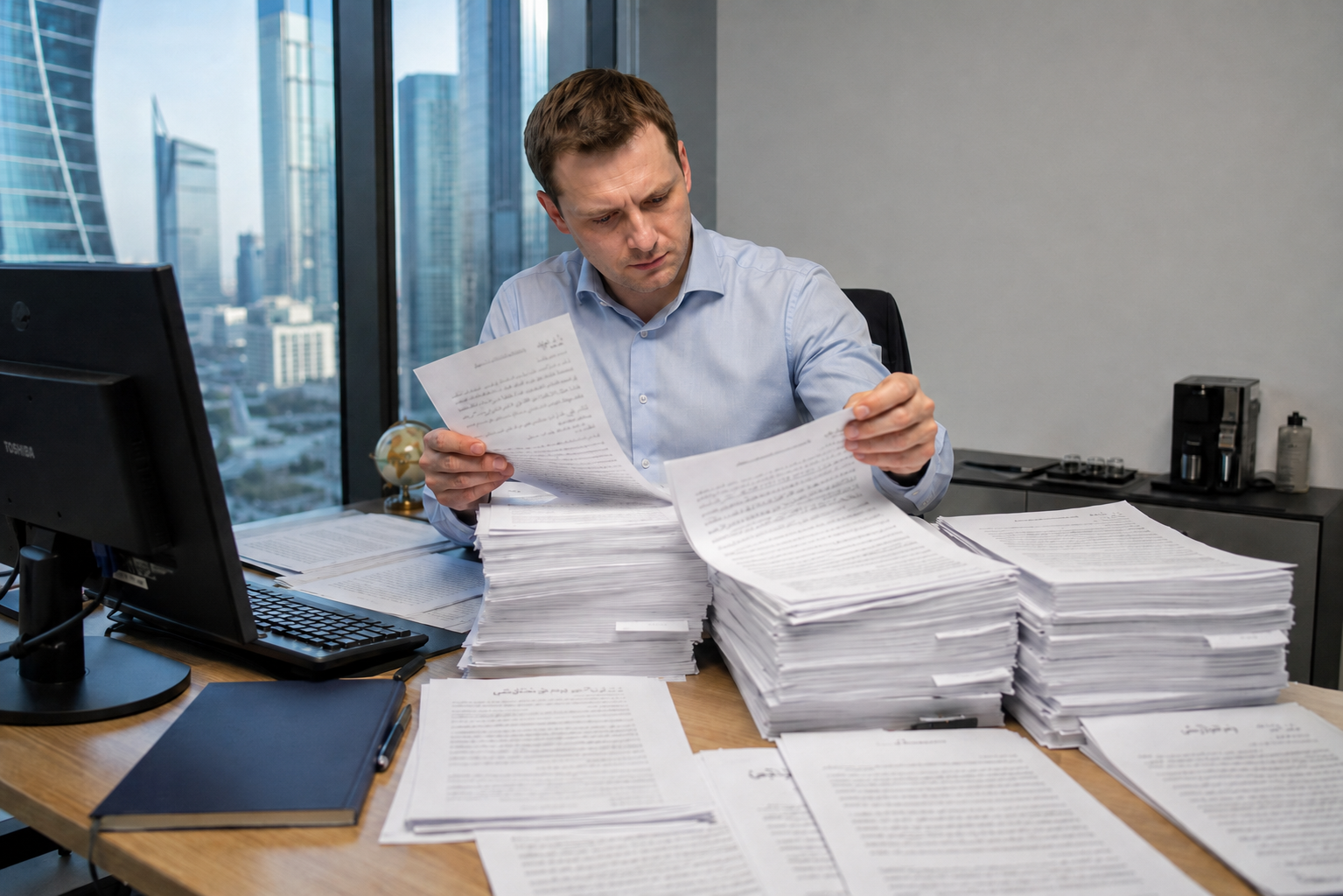
People will be able to ask questions to ancient sources and modern documents
Russia holds a huge treasure trove of ancient manuscripts. According to various estimates, there are more than 200,000 documents. Manuscripts are preserved and described, but there is a catastrophic shortage of specialists. Ancient texts wait decades for their turn to be studied.
AI converts a scan into text that can be searched, compared across text versions, and used to find new intersections and facts. This is an opportunity to ask new questions to the sources.
The significance of this breakthrough extends far beyond academic science. The same algorithms that read medieval scrolls also work with modern documentation, scientists noted. According to experts, business and media will gain the ability to quickly process reports, archived scans, and conduct cross-language searches in mountains of data. Instead of spending weeks studying dozens of volumes of internal documents, a new employee can get an accurate answer in seconds by asking the system a question. The new AI is planned to be scaled to other Eastern languages.
Read more on the topic:
- AI Taught to Understand the 333-Volume Buddhist Canon: Institute of Oriental Studies Creates Digital Assistant-Translator from Tibetan - TRAIT
- Institute of Oriental Studies of the Russian Academy of Sciences and Yandex created an AI system for accelerated analysis of oriental sources
- AI Accelerates Science and Changes Education: How Russian Universities Adapt to the New Reality
Never miss our newsAdd this site to your preferred sources to see us more oftenAdd on Google

















