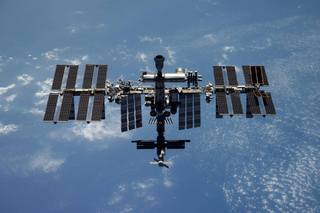
Muscovites Will Be Able to Observe the ISS Without Telescopes Until the End of September
The ISS will look like a very bright star - its solar panels reflect light well
The ISS will look like a very bright star - its solar panels reflect light well
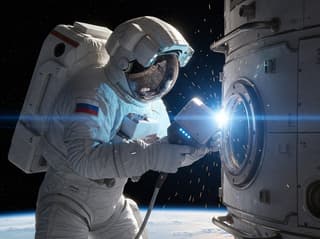
Cosmonauts use ultrasonic and eddy current devices to diagnose the hull
The leak was reduced tenfold, but air loss is still ongoing
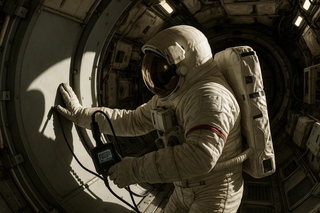
Repair work slowed the leak in the "Zvezda" module, but it has not yet been completely eliminated
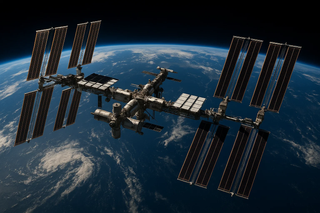
Roscosmos Deputy Head Sergei Krikalev: the station is planned to be deorbited no earlier than 2030
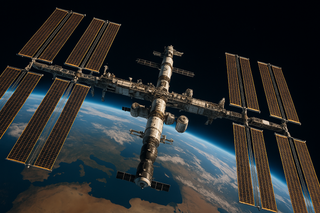
Head of Roscosmos Dmitry Bakanov arrived in the USA to discuss the flooding of the ISS and joint space programs with NASA
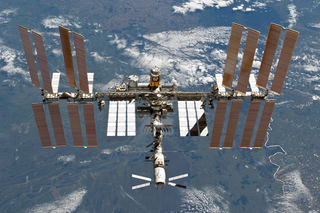
Russia and the United States have agreed to jointly operate the ISS until at least 2028, with a possible extension to 2030
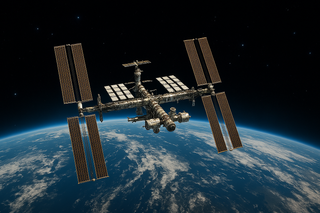
The orbit correction was carried out due to the gradual decrease of the station from the effects of the Earth's atmosphere
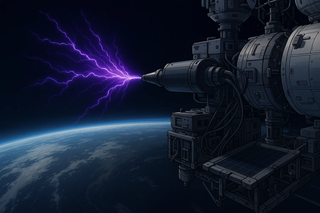
The new device will help study technogenic changes in near-Earth space
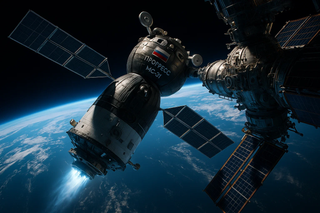
The Russian spacecraft delivered critical resources to the station for the crew and scientific experiments
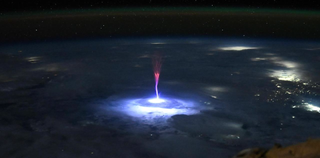
Space lightning striking upwards filmed from the passing station
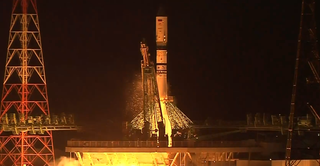
The ship will deliver important equipment for experiments, cargo for the crew, as well as fuel and nitrogen for the station
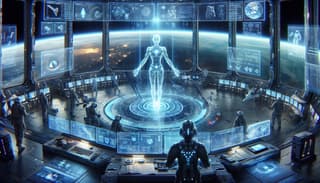
Sber's system will help astronauts decipher medical indicators directly on board
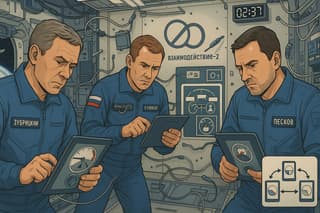
The test aims to study team dynamics and psychological support for the crew
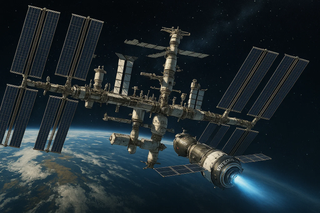
Roscosmos: ISS orbit increased by 520 meters